
Home / Granada / After Hours Emergency in Granada
Night dispatch in Granada
After Hours Emergency Locksmith Help in Granada
When you cannot get in and it is dark, the first job is staying safe and clear headed. This page covers what to do in Granada, what to tell the dispatcher, and which details matter most on rural property.
Safety first, lock second
A locked door at night feels urgent, but the lock is rarely the most important thing. The most important thing is that you and the people with you are safe, warm and in a place where you can think. Everything else can be solved with some calm work.
Before you do anything about the lock, look around. Is the ground safe to walk on. Is there light. Is anyone inside who might need help. Are there animals loose on the property. Rural places hold more unknowns after dark, and a moment spent looking is a moment well spent.
If anyone is hurt, ill or in danger, call emergency services first. A locksmith is the second call in those cases. Once everyone is safe, the lock becomes a practical problem with a plain solution, and the rest of this page is about solving it well.
One more safety point: tell someone where you are. A text to a family member or a friend takes seconds and puts a second person in the loop. On a rural property, where passersby are rare, that second person matters more than it would in a town. The guide on rural road lockouts after dark adds more.
A newcomer on the first nights in a rural home
Picture someone who has just bought a house near Granada. The move is recent. The property has a gate, a long drive and a couple of outbuildings. The previous owner left a ring of keys, none of them labeled, and the new owner has worked out which opens the front door but not the rest.
Tonight the owner steps out to bring in a box from the car, the wind shuts the door, and the one key that works is inside. The nearest neighbor is a field away. The phone is on the kitchen counter, or in the car, or in a pocket with a low battery. It is dark and cold.
This is exactly the case where a calm plan beats a hasty fix. A newcomer does not yet know the property's habits: which windows stick, which doors are weak, which lights work. That makes forcing a way in a poor idea, and a call to a professional a sound one.
There is a quiet advantage in being new. Nothing about the house is routine yet, so every detail you note tonight is a detail you will know tomorrow. Which door sticks. Which light is on a switch you could not find. Which neighbor you might knock on. Treat the lockout as a first lesson in the property.
Tell the dispatcher you are new. It changes the questions. A technician who knows you are still learning the place will ask for the basics, like how many doors there are, what the gate does and whether any alarm is fitted. A good technician is patient with this and happy to explain.
The call itself, step by step
Start with your name and where you are. Then say what has happened in one sentence: locked out of the house, locked out of the car, key broken, door damaged. Short, plain statements are easier to act on than a long account.
Next the dispatcher will ask about safety. Is anyone inside. Is anyone hurt. Is a child or pet locked in a vehicle. Answer truthfully. If the answer to any of these is yes, emergency services come first, and the dispatcher will tell you so.
Then come the practical questions: the road, the gate, the building, the lock, and how to reach you. Have your phone charged and your answers ready. If you are not sure of a detail, say so, and the technician will work it out on arrival.
At the end of the call, ask what happens next. You should leave knowing who is coming, what to have ready and how to reach the dispatcher if plans change. If anything is unclear, ask again. A clear call is the start of a calm visit. Write down what you were told, and keep the phone close until the technician arrives.
Stay calm: a short routine
Calm is a skill, and a short routine helps. Stop moving for a moment. Breathe. Put a hand on the door to confirm it is really locked. Check your pockets once. Check the car. Check the porch for a spare you might have hidden earlier. Then decide what comes next.
Decide where you will wait. If the car is open, it is a warm, lit and dry room. If the car is locked too, find a porch, a lit shed or a sheltered corner. Put on whatever warm layers you have. If anyone is with you, make sure they are comfortable first.
Then make the call. Having a plan reduces fear. You are not stuck forever. You are waiting for a technician who has done this many times. Say that to yourself if it helps, and then move on to the details the dispatcher will need.
- Stop and breathe before you try anything on the lock.
- Check pockets, car and porch once, not ten times.
- Choose a safe, sheltered place to wait.
- Put on warm layers and look after anyone with you.
- Call the dispatcher with your location and facts ready.
Give the details that matter
On rural property, location is the hardest detail and the most important. Streets may be few, house numbers may be hard to see, and a mailbox at the roadside may be far from the house. Give the dispatcher the road you are on, the direction of the nearest town and any landmark that stands out in the dark.
A gate is the next detail. Tell the dispatcher whether the gate is open, closed or locked, and whether you have a code or a key for it. A technician who cannot get through a gate cannot reach your door. If the gate has a keypad, give the code only if you are comfortable doing so, and change it afterward if you wish.
Describe the building. Is it a house, a mobile home, a barn or a shop. How many doors does it have. Is the locked door the main one. Is there a garage door with a keypad or an opener. The technician uses this to decide what to bring, and a few plain words are enough.
Granada's setting and what it means for a call
Granada is a small community in the Shasta Valley area of Siskiyou County, near Montague. The land is open ranch country with rural homes, outbuildings and gates. Distances between buildings are larger than in a town, and lighting is often limited to what the owner has put up.
That setting shapes the call. A technician arriving at night needs a clear route and a lit place to work. A porch light, a yard light or a vehicle with its headlights on can make the difference. If you can switch on any outdoor light, do so before the technician arrives.
It also affects how you wait. Open country can be windy and cold, and a long drive with no cover is not a comfortable place to stand. Wait near the house, in a lit and sheltered spot, and keep your phone with you. If cell signal is weak, tell the dispatcher so they can plan how to reach you.
Weather in the valley swings between hot, dry summers and cold winters. On a summer night, the main risks are dehydration and a long wait in the open. On a winter night, cold is the larger concern. Either way, tell the dispatcher what the weather is doing where you are, and take care of yourself first.
Animals are another feature of rural life. Dogs, livestock and wildlife may be loose near a house or an outbuilding after dark. If a gate has livestock behind it, keep it closed. If a dog on the property is unfamiliar to the technician, say so, and offer to secure it before the visit.
Describe the door and the lock
Look at the lock as clearly as the light allows. Is there one lock or two. Is there a deadbolt above the handle. Is the handle a knob or a lever. Does the key go in at all. These details tell the technician which tools and parts to load.
If the door is old, say so. Older rural houses often have older locks, and some have doors that have warped with the seasons. A door that sticks or swells may have been hard to lock even before tonight. The technician can often open it without trouble, but should know what to expect.
If the door has been damaged, say that too. A lock that has been forced, a frame that has split, or a latch that has been pried changes the work. It moves from opening a door to repairing one. You will not be judged for the damage. The aim is to arrive prepared.
If the door has a keypad, a smart lock or an electronic part, mention that as well. Batteries run flat, especially in cold weather, and a lock that has gone dark may only need a fresh set or a backup key. Look for a small port or a hidden key cylinder under a cover on the lock body. Do not pull the cover off by force; describe what you see.
What not to do on a dark rural property
Do not force the door. A shoulder, a screwdriver or a bar will damage the frame and may hurt you. On an older house the wood may be soft and the damage large. A professional opening costs less trouble than a broken frame.
Do not climb onto a roof or through a high window in the dark. A fall in a rural place is a serious matter, because help is further away than in town. If a ground floor window is unlocked and low, it may be an option in daylight, but not at night.
Do not leave a door or gate unsecured and walk off to look for help. If you have to move, tell the dispatcher or a person you trust where you are going. Do not wander across open ground in the dark. Stay where you can be found.
What the technician will ask of you
A technician opens locks for people who are entitled to have them opened. Expect to be asked for identification and for something that ties you to the property. A new owner might offer a closing document, a utility bill, a letter or mail with the address.
If your papers are inside, say so. A photo on your phone, a neighbor who knows you, or a lender's letter in the car may be enough. Rules vary and the technician will tell you what is acceptable. Do not argue with the request. It protects you and every other owner in the valley.
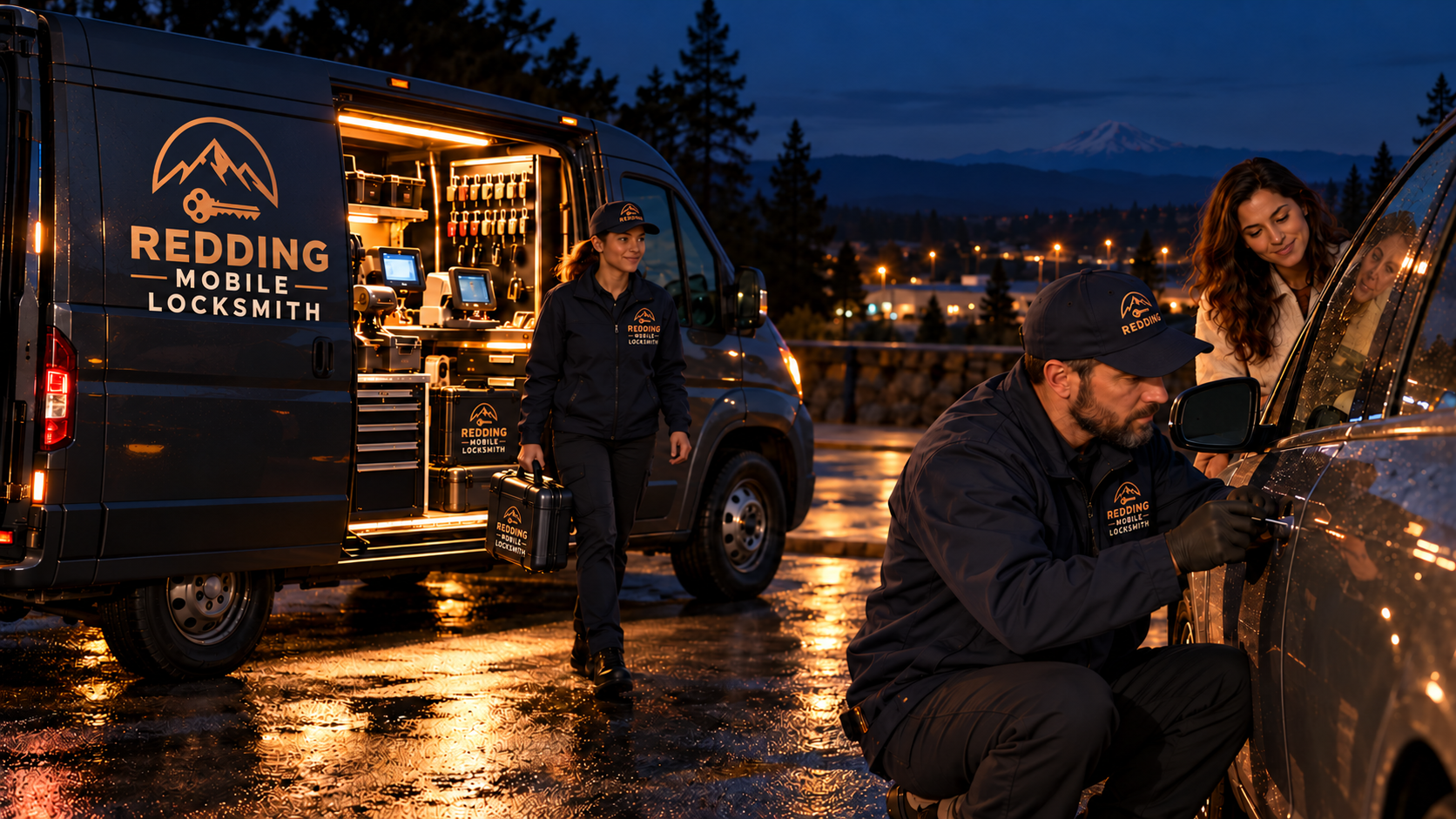
Look at the branded service van and the uniform before you open your door or step forward. If something does not match what the dispatcher told you, ask a question. The guide on confirming who is arriving at your door gives a checklist.
After the door opens: fixing the real problem
Once you are inside, ask what the visit has shown. A new owner often finds that the old keys are a mystery. Rekeying the locks so that you hold the only working keys is a sound step, and the van carries the tools to do it. The local note on rekeying in Granada explains how it works.
Think about the outbuildings too. A shed, a barn or a shop may have its own padlock or lock, and the keys may sit on the same unlabeled ring. Match each key to a lock, label them privately and keep a spare in a safe place. The page on rekey locks has more.
If the cause of the lockout was a door that closes by itself, ask the technician about a simple fix. A latch can be adjusted, a weather strip trimmed or a handle replaced. Small changes can prevent a repeat on a cold night. The guide on being locked out of your home late at night gives further ideas.
More help in Granada and nearby
This page is one of six local notes for Granada. The same community has notes on a night car lockout, a night house lockout and vehicle key replacement. The Granada coverage page gives the overview.
Montague is the neighboring community, and its coverage page may be useful if you are traveling that way. The general after hours emergency service page covers what happens on any call.
Our phone line is coming soon. For now, use the request form. Give your location, the road, whether there is a gate and what you can tell us about the lock. If anyone is in danger, call emergency services first.
Common questions
What should I do first if I am locked out on my rural property?
Check that everyone is safe, then find a lit and sheltered place to wait. If anyone is hurt or in danger, call emergency services. Otherwise, gather your thoughts and the details a dispatcher will need: your location, any gate, the building and the lock. Do not force the door.
How do I describe my location if my road has no clear name?
Name the nearest road or highway, the direction of the nearest town and anything distinctive, such as a gate, a barn or a mailbox. Say which side of the road you are on. Avoid guessing at street names. A clear landmark is more useful than a doubtful address.
What if my gate is locked or has a keypad?
Tell the dispatcher. A technician who cannot pass a gate cannot reach your door, so the gate must be dealt with first. If you have a code or key, say how it works. If you do not, say that too, and the dispatcher will help plan a way forward.
I am new to the property and cannot find my papers. Is that a problem?
Not necessarily. A closing document, a utility bill, a letter or a photo on your phone may serve. Rules vary, so ask the dispatcher what is acceptable. If your papers are inside, explain that clearly and the technician will tell you what else can confirm your connection to the property.
Is it safe to wait outside in the dark?
It can be, if you pick a lit and sheltered place near the house and keep your phone with you. Wait in a car if you can open it. Dress for the cold and wind. If anything makes you uneasy, tell the dispatcher and move to a safer place.
Can outbuildings be dealt with on the same visit?
Often yes. The service van carries tools and common hardware, so the technician can rekey or replace locks on a shed or barn while on site. Tell the dispatcher about every building and every lock so the right parts are brought. Whether the work fits your plans is your decision.