
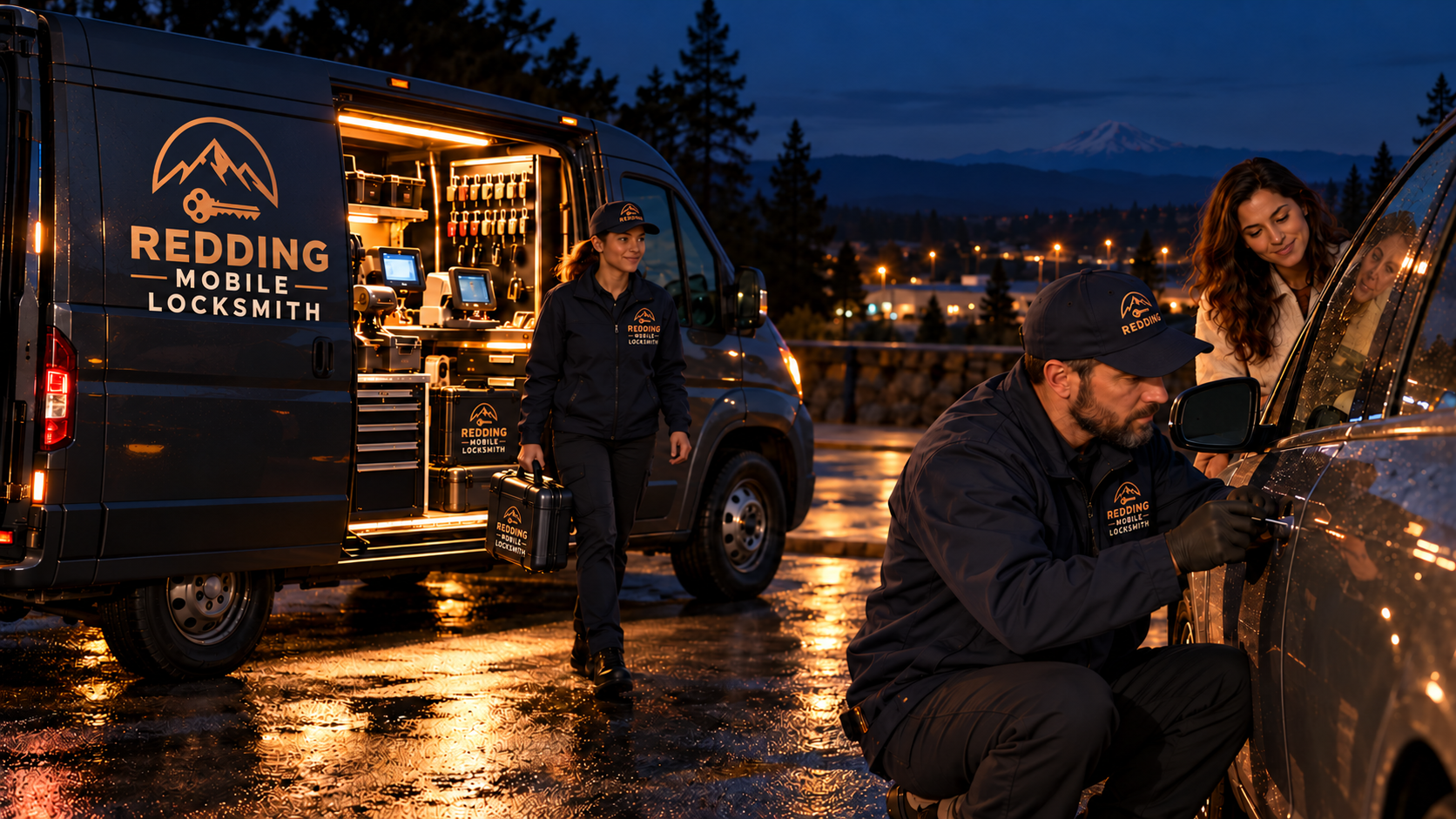
A key you cannot account for
Picture someone coming off a river or a ridge trail at dusk, reaching the truck at the trailhead, and finding the pocket where the house key rode all day is empty. The key might have slipped out on a rock scramble. It might be at the bottom of a pool. It might be lying in the dirt for any stranger to find.
Getting home is one problem. The second problem comes later, and it is quieter. A key you cannot account for is a key that still opens your door. Nothing about losing it changed the lock. Whoever finds it can use it, if they ever learn which door it fits.
That is the job rekeying does. It does not give you a new door or a new lock. It makes the old key stop working and gives you a key that does. For the full service description, see Rekey Locks. This page is about how that plays out in Granada.
A hiker or angler is only one example. The same quiet worry follows a farmhand who dropped a ring in a field, a parent who handed keys to a teenager, or anyone who cannot say for sure when they last saw the key. The question is always the same: do I know who can open my door?
How rekeying actually works
Most house locks are pin tumbler cylinders. Inside the cylinder is a row of small pin stacks. Your key lifts each stack to the exact height where the split between the pins lines up with the edge of the cylinder, called the shear line. When every pin sits at the right height, the plug can turn and the lock opens.
To rekey, a technician removes the cylinder, takes out the old pins and fits new ones of different sizes. The cylinder is then reassembled to match a new key. The old key still slides in but the pins no longer rise to the shear line, so the plug will not turn. The lock itself stays in the door. The latch, the bolt, the handle and the strike are not touched.
That is why rekeying is often described as the sensible middle option. It costs less in parts than a new lock, takes less time than a replacement, and gives you the same practical protection against the old key. A worn or damaged lock may still need replacement, which is covered at install new locks.
One detail surprises people. A rekeyed lock can be set up so that the new key is cut to a pattern you choose. If you already hold a key that you trust, the technician can sometimes pin the lock to that existing key, so you do not have to replace every copy. That is useful when a lost key is the only one in doubt and the others are safe.
Four reasons Granada households rekey
The first reason is a move. When you buy or rent a home, you do not know how many keys exist. Former owners, relatives, contractors, neighbors who watered plants and a real estate visit may all have held one. Rekeying on the day you move in resets the whole history.
The second reason is a breakup or a household change. A partner or roommate leaves and takes a key, and sometimes the relationship ends badly. You may not suspect anything. You simply want certainty. A rekey creates it without any discussion at the door.
The third reason is a tenant. A landlord who finishes a lease, or an owner whose renter has moved out, will usually want the keys reset before the next person arrives. Leases and local rules vary, so this page does not say who must do what. It says that rekeying between tenants is a common and reasonable practice.
The fourth reason is a lost or stolen key, which is where we began. In the stolen case especially, rekey that night or the next morning if you can, because the thief may also have your address. See Night House Lockout in Granada if you are also locked out.
Another reason deserves a mention: a lingering sense that something is off. A door that was found unlocked, a spare that is missing from its hook, or a former helper who still has a key. You do not need a proven problem to rekey. Wanting to know who holds the keys is reason enough.
Doors, gates and outbuildings
Granada homes often mean more than one lock. The front door, the back door, a garage side door, a shop, a barn, a feed room and a gate may each have their own key, and over time those keys multiply. A key ring that holds eleven keys is a sign that rekeying could simplify life.
Rekeying can make several locks work with one key. This is called keying alike. A property owner might choose to key the house doors alike and the outbuildings alike on a second key. That way a farmhand or a house sitter gets the shop key without getting the house.
Padlocks and gate locks may also be rekeyed in some cases, depending on how they are built. Say which locks you want covered when you send the request. Bring the list rather than guess at it.
A small ranch or acreage often has keys that no one remembers cutting. The old padlock on the shed might use a key that three former neighbors once borrowed. Make a short list of everything locked on the property. You may be surprised how long it is.
- Front, back and side entry doors.
- Garage entry door and any overhead door lock.
- Shop, barn and feed room doors.
- Gate locks and chain padlocks, where the hardware allows.
- Mailbox, safe room or storage cabinet locks, if you want them on the same system.
What you can do before the technician arrives
Gather every key you have for the locks being changed. The technician needs at least one working key to the lock if it can be removed in the usual way, and it helps to have all the keys, because old ones can be collected and set aside. If you have no working key, mention that.
Walk the property and note each lock that is part of the job. Take a photo of each door. Write which doors share a key and which do not. Decide who should get a copy of the new key and how many keys you want made.
Clear the area around each door so the technician can work. A cluttered porch or a locked gate with a dog behind it slows the job. Put animals away and have light at the door if the visit is after dark.
If you are doing this with a household, agree beforehand on who gets which key. Decide whether a farmhand, a child or a visiting relative should have a house key, a shop key or neither. The technician cuts what you ask for, and changing your mind afterward costs more time than deciding in advance.
What to ask and what to expect
Ask what the job covers. Does the price include the new keys? How many? Does it include testing each lock? Does it include rekeying only the cylinders you name? These are fair questions and a clear company answers them without hesitation. Pricing is set by the company and is not stated on this page.
Expect the technician to verify that you live at the address or have the right to authorize the work. That can mean identification with the address, a lease, or a utility bill. If you rent, the landlord may need to approve work on the locks. Rules vary, so ask early.
Expect each rekeyed lock to be tested several times with the new key and with the old one. The old key should no longer turn. If it does, the job is not finished.
Be ready, too, for a sensible refusal. If the person asking cannot show a connection to the property, a technician may decline the work. That is not an insult. It is the same safeguard that protects you when you are the one calling.
When rekeying is not enough
Sometimes the cylinder is the problem. A lock that sticks, spins, drags or feels loose in the door may have worn parts that rekeying does not fix. Fresh pins in a failing cylinder only produce a freshly keyed failure.
Sometimes the door is the problem. A deadbolt that does not extend fully into the frame offers little protection however its pins are cut. A strike plate held by short screws can split under force. Door frames that have dried and cracked in the valley summers are common in older homes.
In those cases the right advice is to repair or upgrade hardware. A technician will tell you what they found. You can read about those options at deadbolts and door frames at night and at home locksmith services.
Keep in mind that a door in good hardware shape with a rekeyed lock is a strong, simple combination. When the hardware is old, ask the technician what they see. A candid answer is better than a sale. For the shorter list of tasks that sit around rekeying, see broken lock repair.
Smart locks, keypads and older hardware
Not every lock uses a pin tumbler key. A keypad lock is reset by changing the code, which you can often do yourself. A smart lock has its own app and its own list of authorized users. For these, rekeying is replaced by removing users and changing codes.
Older hardware is another case. Some very old mortise locks and padlocks have cylinders that are harder to rekey than modern ones. In some cases a replacement cylinder is the cleaner route. Describe what you have as well as you can, and send a photo.
A mixed system is common. A house might have a keyed deadbolt on the front door, a keypad on the garage and a padlock on the shop. Each part gets the treatment that suits it. A technician is used to this and can tell you where rekeying makes sense.
If you are comparing, ask what the technician recommends for your specific door. A rental may benefit from the simplest sound option, and a home with young children may justify a keypad. Whatever fits your household is the right choice, and it can change as life changes.
Rekeying as a quiet daytime job
Rekeying does not have to happen at night. The after hours service exists for emergencies, but most rekeys are calm daytime jobs. If you can wait until morning, you often get a more relaxed visit and a better chance to walk through each door with the technician.
If the key is truly at risk, for example a stolen wallet with an address inside, do not wait. A rekey on the same night is reasonable. The team operates around the clock, as a 24 hour mobile service.
If you are unsure, send the request and describe the situation. The team can help decide how soon the work should happen. A lost trailhead key with no identification and no address is less urgent than one lost with a wallet.
Dusk at a trailhead is a good reminder that outdoors work and play are hard on keys. Pockets, packs, rivers, brush and tailgates all lose things. Consider a key that lives on a zipped pocket or a lanyard, and a second key that never goes outdoors with you.
After the rekey
Count the keys. Make sure you know where each one is. Label them in a way that does not reveal your address if they are lost. Give a spare to someone you trust and keep a note of who holds each key.
Update everyone who needs access: family members, a house sitter, a regular helper, or a tenant. Collect the old keys from anyone who no longer needs them, and do it politely. A rekey does not make old keys evidence of anything. It makes them useless.
Build a simple routine. At bedtime, check the main doors, the side door and the garage entry. A tidy routine is covered at a bedtime lock check routine. A rear door matters as much as the front, and rear and side doors is worth a read.
Write down the date of the rekey and the number of keys issued, and store that note somewhere safe. Next year, when someone asks whether the locks were changed after the last tenant, you will know. A short record is one of the most useful pieces of home security paper you can own.
Asking for a rekey in Granada
The phone line is coming soon. For now, use the request form: send a request. Say that you want to rekey, list the locks, and note how many keys you want. Mention whether you rent or own.
If you are standing outside right now with no way in, the better page is trailhead lockouts for vehicles or the house lockout page above. Rekeying can follow once you are inside.
Granada is part of a group of seventeen communities served across Shasta County and Siskiyou County. Everything for the town is on the Granada page, and nearby Montague has its own set of pages.
Whatever the reason for the call, say it plainly. A short, honest request gets the right preparation. The team would rather hear "I lost a key at the river and want my locks changed" than a vague message, because the first one tells them what to bring and how to plan the visit.
Common questions
What is the difference between rekeying and replacing a lock?
Rekeying changes the internal pins of a cylinder so a new key works and old keys do not. The lock hardware stays in the door. Replacing a lock removes the whole device and installs a new one. Rekeying is often simpler when the lock is in good condition.
Should I rekey after I move into a house in Granada?
It is a sound habit. You cannot know how many keys exist from former owners, tenants or contractors. A rekey resets the history and gives you a key set you control. It also lets you key several doors to one key if you prefer.
Can the locks on my barn, shop and gate be rekeyed too?
Often yes, depending on how each lock is built. Padlocks and gate locks vary. List every lock when you send the request, and describe or photograph each one. The technician can tell you which can be rekeyed and which are better replaced.
Will my old key still work after rekeying?
It should not. After rekeying, the old key may still slide in but it will not turn the lock. A technician should test each lock with the new key and the old key before leaving. If the old key still turns, the job is not complete.
I rent my home. Can I ask for a rekey?
You can raise it, but approval may be needed because the locks are often the landlord's property. Lease terms and local rules vary, so ask the property contact first. Tell the locksmith team that you are a tenant when you send the request.
Does rekeying have to happen at night?
No. Most rekeys are calm daytime jobs. If a key was lost with your address or stolen with a wallet, a same night visit may be reasonable. Describe the situation in your request and the team can help you decide how soon to book the work.