
Home / Shasta Lake / Night House Lockout in Shasta Lake
House lockout, Shasta Lake
House Lockout or Failed Lock? Telling the Difference in Shasta Lake
Two problems look alike at the door: no key, and a lock that has stopped working. Knowing which one you have changes the call, the tools and the plan. Here is how to tell them apart in Shasta Lake.
Two problems that feel the same
At the front door, a lockout and a failed lock feel identical. In both cases you stand outside, the door stays shut and you cannot get in. The difference is hidden inside the lock. In a simple lockout the mechanism is healthy and you lack the key. In a failed lock the mechanism has a fault, and even the right key may not work.
This matters because the next steps differ. A healthy lock can often be opened with no damage and left as it was. A failed lock may need repair or replacement before the home is secure again. If you tell the dispatcher which you think you have, the technician can pack for the right job.
Imagine a household with a new baby, home from the hospital a few weeks ago. Sleep is thin, routines are new and the mind is elsewhere. One evening the parents step out to the car, and the door swings shut. Is it a lockout, or has the lock stuck? Getting that answer calmly is the point of this page.
First, safety and the people inside
If a baby, a young child or any person who cannot manage alone is inside the home, call emergency services before anything else. A locksmith is a second call in that case. Responders can enter safely and make decisions that a technician cannot.
If the household is all outside, this is simpler. Everyone can wait together, and nobody is in danger. Take a moment to check that the family is warm, that the baby is held and fed if needed, and that you have a safe place to wait. A parked car with doors locked can serve well if it is open.
Then settle your mind. A lockout is a short, solvable problem. Say to yourself that a trained person will open the door, and that your job is to be safe and give clear information. That steadiness helps the whole household.
Signs of a simple lockout
A simple lockout has a clear story. You closed the door, the key is inside or lost, and the lock was working the last time you used it. The knob or deadbolt turned smoothly before. If you try the handle, it feels solid and does not move. Nothing about the lock has changed.
Smart locks and keypad locks add one more layer. If your lock has a code, try it once, calmly, and avoid repeated attempts that can lock the keypad for a time. Check whether a phone app or a backup key can open it. A dead battery is a common reason a keypad lock refuses to respond, and it counts as a simple case, not a broken one.
Another sign is a spare that would work. If your spare key is with a neighbor, the key turns in the lock without trouble. In a simple lockout, a working key is all that is missing. That is the cleanest case, and it is also the most common.
Think about the door itself. Is the latch fully extended, and does the door sit snugly in its frame? If so, the lock is almost certainly fine. A technician can tell for sure once they see it, but this picture helps you describe the situation.
Take a moment to look for other clues. Is there a light on inside that was on when you left? Can you hear a sound that suggests someone is moving about? Is a window open or a screen out of place? If anything seems wrong, step back and call emergency services. A calm look costs nothing and tells you whether this is a key problem or something more.
- The lock worked normally earlier in the day.
- The key is inside the home or has been lost.
- The handle feels firm and does not spin loosely.
- The door sits snugly in its frame.
- A spare key would turn the lock without trouble.
Signs of a failed lock
A failed lock behaves differently. The key goes in but will not turn. It turns halfway and stops. The knob spins without moving the latch. The deadbolt sticks, or the bolt refuses to retract. These are signs that something inside has worn out, jammed or broken.
You may have seen warning signs earlier. A key that felt stiff for weeks, a handle that rattled, a door that needed a shove to close. A lock rarely fails without notice, and the notice is easy to forget. Tell the dispatcher any history you remember, because it helps the technician guess the fault.
Weather can add to the picture. A door that swells with damp can press the bolt against the strike and make a healthy lock act like a failed one. Shasta Lake sees cool, wet seasons and hot, dry summers, and doors respond to both. A technician can tell a swollen door from a worn cylinder.
Do not lubricate a failing lock in the dark in the hope that it will recover. Oil can gather dust and make a mechanism worse over time, and it can mask the real fault. Leave the lock as it is, and describe exactly what it does. A technician will clean or replace parts as needed with the right products.
Why the difference changes the visit
For a simple lockout, the technician aims to open the door with care and leave the lock intact. After that, the work may end, or you may choose to rekey if a key was lost. The visit is short and the cost of hardware is nil, because nothing broke.
For a failed lock, the technician has a second task. Once the door is open, they must make the home secure. That may mean repairing the cylinder, replacing a latch or fitting a new lock. The van carries common hardware for this reason. If the right part is not on board, the technician may suggest a temporary step and a return visit.
Either way, you deserve a clear explanation before any work. Ask the technician to name the problem, the options and what each involves. See night house lockout and broken lock repair for the services in full.
If a repair is needed, ask whether it is a lasting fix or a temporary one. A temporary measure can hold the door closed for the night and be replaced in daylight. A lasting fix may need a part that is not on the van. Either is acceptable as long as you understand which you are getting and when the next step will happen.
What to tell the dispatcher
Start with where you are. Give the street, the nearest cross street and the door you are standing at. Shasta Lake has family homes, rentals and homes near the lake, and house numbers can be hard to read in the dark. Mention a gate, a dog or a steep driveway if they apply.
Then describe the lock and what it does. Say whether it is a knob, a lever, a deadbolt, a keypad or a smart lock. Say whether the key goes in, turns or sticks. Say whether the handle feels firm or loose. These few facts tell the technician which of the two problems you have.
Mention the people. Say how many adults and children are waiting, whether the baby is with you and whether anyone is cold or distressed. Add a note if anyone inside needs care, and remember that emergency services come first in that case. The request form on the contact page has room for all of this.
Proof that you live there
A technician will ask for some sign that you live at the address. A license with the address, a bill, a lease or a piece of mail can all help. For a family with a new baby, the paperwork may be scattered. A hospital letter, an insurance card or a delivery notice can serve as a sign if it carries the address.
Keep in mind that this check protects you as much as it protects the home. The same tools that open your door could open the door of someone who has no claim to it, so a technician who asks questions is doing the job properly. A technician who asks nothing at all deserves your caution. Answer plainly and without irritation, and the exchange stays short.
Renters should be ready to name the landlord or manager. Some rentals have rules about changing locks, and rules vary. If you cannot reach the landlord, say so, and show whatever links you to the home.
If your wallet is inside, do not worry. A phone with a message thread, a photo of a lease or a neighbor who knows you may do the job. Explain honestly and let the technician decide. Read why a locksmith may ask for identification for the thinking behind the questions.
Doors that fail in particular ways
Front doors with a deadbolt and a knob can fail in either part. The knob lock may keep working while the deadbolt sticks, or the reverse. Tell the dispatcher which lock you used last and which one you think failed. If you only ever lock the knob, say so, because a door that was never deadbolted behaves differently from one that was.
Sliding patio doors are another case. They often use a small latch with a hook, and the latch can slip, bend or wear. A sliding door that will not open may be locked, jammed on its track or blocked by a bar placed in the channel. Describe what you can see through the glass, and avoid forcing the door, because glass panels are heavy and can break.
Garage entry doors are often forgotten. A door between the garage and the house is usually a solid interior grade door with a basic lock. If you are locked out of the garage and the house, tell the dispatcher about both. See garage entry doors at night for how these doors are usually secured.
Waiting with a baby or small children
Keep the family together and warm. A baby needs a steady place, not a dark yard. If you have a car and it is unlocked, sit inside with the doors locked. Use the engine only as needed, and keep the air moving. Do not leave a child alone in a vehicle, even for a moment.
If the night is cold, add layers. A blanket in the car, a jacket draped over the carrier and a hat for the baby all help. Keep your phone charged and in reach. If anything about the baby's condition worries you, call emergency services and follow their advice.
Share the waiting. If two adults are present, one can watch the street while the other stays with the child. One can talk to the dispatcher while the other gathers proof. Dividing the small jobs keeps the evening orderly and gives each person something to do besides worry.
Read locked out with children for more steps. The common thread is calm. Children read a parent's mood, and a steady voice helps. Tell them that someone is coming to open the door, and keep the wait as ordinary as you can.
Confirming the person at your door
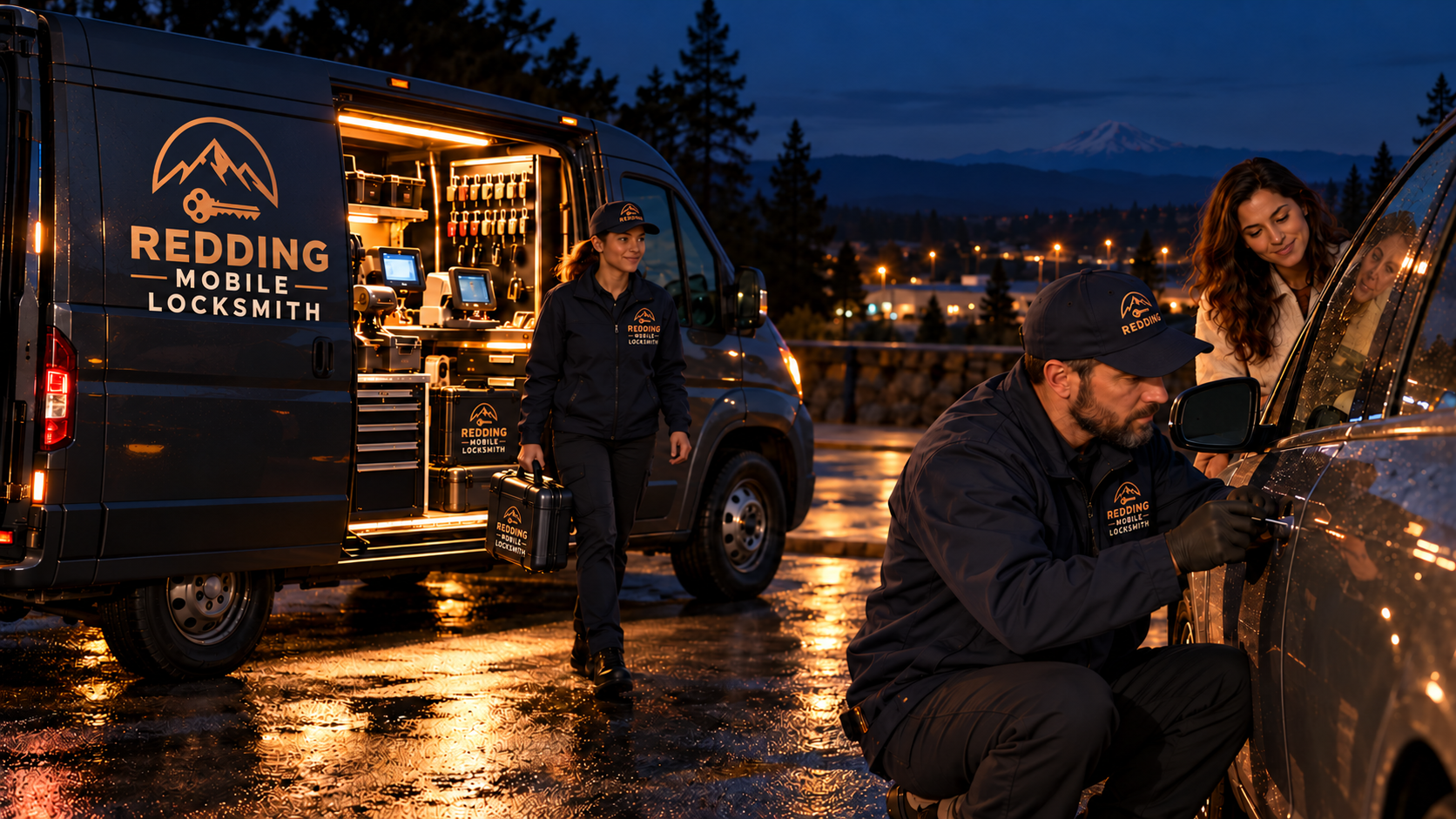
When the van arrives, check who steps out. A branded team in uniforms and a branded service van should match the company you contacted. Ask for the company name and the reason for the visit before you point at the door. A real professional will not mind.
Do not open the door to anyone you did not contact. A stranger who walks up and offers to help is not part of your plan. Read confirming who is arriving at your door for a short checklist.
If something feels wrong, step away and contact the dispatcher or emergency services. You are the one who decides who touches your door. A good technician understands and respects that.
Making the home secure afterward
Once inside, ask the technician to confirm the lock works. Turn the key from outside and inside. Pull the handle after locking. If the lock was repaired or replaced, test every door that shares the key.
Think about the lost key, if there was one. If it could be found by a stranger, ask about rekeying so the old key no longer works. For a family with an infant, the peace of mind is worth a short conversation with the technician.
Plan for next time. Put a spare with someone you trust. Keep a recent piece of mail in the car. Learn the steps in the first ten minutes of an after hours emergency and the guide to being locked out of your home late at night. Nearby towns include Redding and Anderson.
A household with an infant has one more reason to prepare. Keep a small bag by the door with the items you would want during a long wait outside: a blanket, a spare bottle or pacifier, a charger and a copy of the address. It sounds like a lot, and yet it fits in a corner of a closet. Most families never use it, and the few who do are glad they had it.
Common questions
How can I tell a lockout from a failed lock?
In a lockout, the lock worked earlier and you simply lack the key. In a failed lock, the key goes in but will not turn, the handle spins freely or the bolt sticks. Describe what you see and feel to the dispatcher. The technician will confirm once they inspect the door.
What if my baby is inside the house?
Call emergency services first. Do not wait for a locksmith. Responders can enter and check on the child. Once the situation is safe, a locksmith can help secure the door. Stay near the entrance and give clear details to everyone you speak to.
Will the door be damaged when you open it?
A working lock can often be opened without damage by a trained technician. A failed lock may need to be repaired or replaced, and the technician will explain the options before beginning. Forcing the door yourself is far more likely to cause damage.
I rent. Do I need my landlord to approve the work?
Lease terms and local rules vary, so check yours. For a simple lockout, a technician can often help you get in with proof that you live there. For a lock replacement or rekey, the landlord may need to approve. Ask the dispatcher what the technician will need.
Can a swollen door cause a lockout?
It can make a lock act stuck, because the bolt presses against the strike. Damp weather is a common cause. A technician can tell a swollen door from a worn cylinder and may adjust the strike or plane the edge, depending on what they find.
How do I contact you tonight?
The phone line is coming soon. Use the request form on the contact page and include your address, the door, what the lock does and who is waiting with you. Keep your phone nearby so the team can reach you.