
Home / After dark / Lakeside parking lockouts
Lakeside guide
Lakeside parking lockouts: wet keys, boat ramps and late returns
Water and keys do not mix. A fob that went swimming, a key left in a wet bag, or a door shut at the boat ramp can all end the same way: you, your gear and a locked vehicle in the dark.
What makes lakeside lockouts different
Picture a family loading a boat onto a trailer near the end of a summer day. The sun is low, towels are wet, and the vehicle is idling at the top of the ramp. Someone steps out to guide the trailer, the door swings shut, and the keys sit in a cupholder. Or picture an angler who drops a fob into the shallows while wading, and spends the next hour looking at the bottom.
Lakes and reservoirs in the north state draw people who spend hours outdoors with wet hands, wet pockets and full arms. The area around Shasta Lake and Lakehead is a good example, with long summer days, busy ramps and parking areas that stay crowded until dusk and then empty out. In the mountain counties to the north, smaller lakes and rivers bring the same pattern.
Water brings three problems that dry parking lots do not. Keys and fobs get wet or lost. Hands are slippery, so keys slip out of pockets and fingers. And the end of the day arrives with tired, cold people who need to leave, not wait.
This guide covers what to do from the first moment of the lockout, through the wait, to the final check. It is written in a calm tone, with safety placed first. If anything involves a person or animal inside the vehicle, skip to the section on emergencies and call emergency services right away.
Check people and surroundings before the key
Start with everyone in your group. Count heads, including children and anyone still near the water. Make sure no one is in or near the water without supervision. If anyone feels unwell, chilled or shaken after time in the water, that is a matter for emergency services, and this guide cannot give medical advice.
Look at the parking area. Is it lit, or dark? Is it empty or busy? Are there other people nearby, such as other boaters, fishermen or campers? A busy ramp can be a comfort, since people are around. A deserted one at night calls for more caution. Keep your group together and keep your belongings close.
Check the ground around the vehicle. Ramps, docks and lots near water can be wet, slick with algae or littered with line and hooks. Walk slowly in the dark. Use a flashlight pointed at the ground.
If your trailer is attached, make sure the vehicle and trailer are secure, in park with the brake set if possible, and not rolling toward the ramp. If you can't reach the controls, stay clear of the slope. A vehicle on a ramp is a hazard when it is not secured, so keep your group away from the water side.
Then, once people are safe, begin the key search.
Searching for a wet or missing key
Check every pocket, including swim trunk and jacket pockets, then the bags that were in the water or near it. A key in a wet bag may have slid to the bottom. Empty each bag onto a towel and check seams and folds. Look in the boat, if you have one, in the console, the bilge area, the cooler and the dry box.
If you think the key dropped into the water, think about where. In shallow water at the ramp edge, a key may sit on the bottom within reach. In deeper water, near a dock, it may be gone. Do not go into the water at night to look. Poor light, slick surfaces and cold water create real danger. A lost key can be replaced. A person cannot.
Check the ground in the lot and along the path you walked. Keys can slip out while you step from the boat or carry gear. Shine your light across the gravel or pavement and look for a glint.
Also check the vehicle. Look through the windows for the key on the seat or in the ignition, and try every door once. If you find it inside, you have a lockout. If the key is truly gone, you have a lost key, which may need a replacement key made and programmed. Tell the dispatcher which one it is.
Wet fobs and what water does to them
A fob that has been in water is a common cause of a mysterious failure. Modern fobs have a small circuit board, a battery and sometimes a transponder chip. Water can corrode contacts and short the circuit. The fob may work for a few hours and then stop, or it may not work at all.
If you have a wet fob in your hand, do not press buttons repeatedly. Take it out of any case, open the battery cover only if you can do so with a tool and care, and let it dry in a warm, dry place. Do not use a heat source such as a hair dryer or an oven, which can damage the plastic and the board. A dried fob may recover, but a fob that was in salt or heavily contaminated water may need replacement.
Even a dead fob often contains a mechanical key blade. Check the fob for a small release latch. If you have the blade, try the door lock, which is often covered by a small cap on the handle. This may let you in even when the electronics have failed. Starting the engine may require the fob to be near a marked spot or in a certain slot. Details vary by model and year, so look at the owner's manual when you can.
Our guide to transponder keys explained for night emergencies explains why a key can open the door but not start the vehicle.
Emergencies first: people and animals inside
If a child, a baby or a pet is locked inside the vehicle, call emergency services before anything else. Summer heat at a lake parking lot can build up inside a closed vehicle, and the situation can change with little warning. Do not wait for a locksmith. Do not spend time looking for keys. Give your location, say who is inside and follow the operator's instructions.
The same applies if the engine is running and the doors are locked with a person inside who cannot get out, or if anyone feels unwell. Call emergency services.
For a calm explanation of the order of calls, read about a child inside a locked car, which applies on any lot. Once everyone is safe, the key problem becomes a manageable one.
At night the weather is cooler, but cold also affects the people in the vehicle, especially children and pets. In winter, lakeside air is damp and cold. Do not assume that night makes the situation less urgent. Contact emergency services whenever a living being is locked in.
Describing a lakeside location to a dispatcher
A dispatcher needs a location that works without an address. Lakeside lots are often named in local conversation, but a name does not help someone who has never been there. Start with the road you drove in on, the highway you left and the direction of the turn. Then name the landmarks you can see or read: a launch ramp, a fee station sign, a restroom building, a boat wash area, a gate, a bridge, a campground entrance.
Say whether the lot is paved or gravel, lit or dark, and whether it is near the water or set back. If there are multiple lots, say which one: the lot closest to the ramp, the overflow lot, the upper lot. Mention which side of the lot you are in, and the color and type of your vehicle, since a technician will be looking for it.
If the lake road is narrow and winding, say so. A service van may need to plan its approach. If the lot has a gate that closes at night, tell the dispatcher, since a technician cannot enter a locked gate. If rules about the lot or the area limit access after dark, ask what applies, since rules vary.
For a full list of details worth gathering, read the location checklist for dispatchers. Keep the key points in your phone notes.
Information to prepare about the vehicle
The technician will need the year, make, model and trim of the vehicle. Key types vary by model and year, and two trims of the same model can differ. Have the color too. Say what type of key you use: a plain metal key, a key with a plastic head, a remote key or a push to start fob.
Tell them whether the key is inside the vehicle, in the water, lost on land or damaged. If you are towing a trailer or boat, tell them. A vehicle with a trailer attached occupies more room, and a technician needs to find a spot to park the service van safely.
Have your identification ready. A professional will usually ask you to show that you are entitled to enter the vehicle. A driver license is the usual proof. If the registration is inside the vehicle, other details may help. Our guide on why a locksmith may ask for identification explains why this is a normal part of the process.
Also say whether anyone has a spare key and can reach you. If a family member lives nearby and can bring a spare, that may be the simplest answer. Tell the dispatcher so you do not request service you will not need.
Waiting by the water at night
Waiting near water at night calls for care. Keep children and pets away from the edge, and keep your group together. Choose a spot away from the ramp, where a vehicle could roll or another driver could back down without seeing you. A lit area near the road is better than a dark corner by the shore.
Stay dry and warm. Wet clothing chills people once the sun goes down, especially in the cooler mountain air that settles over lakes. Change into dry layers if you have them. Wrap in towels or a spare jacket. Do not stay in wet swimwear.
Keep your phone safe and charged. Water is the enemy of phones too, so keep yours in a dry pocket or bag. If it is wet, dry it gently and do not charge it until it is dry. Keep the screen dim to save power.
Stay visible. If you have a flashlight, use it in short bursts. When headlights approach, step to a safe place and let them identify themselves. If a car stops and you do not know the driver, you do not have to accept help, and you can ask them to call for assistance if they have signal.
Wildlife, such as raccoons, deer or geese, may be around. Keep food sealed and give animals room.
When the technician arrives
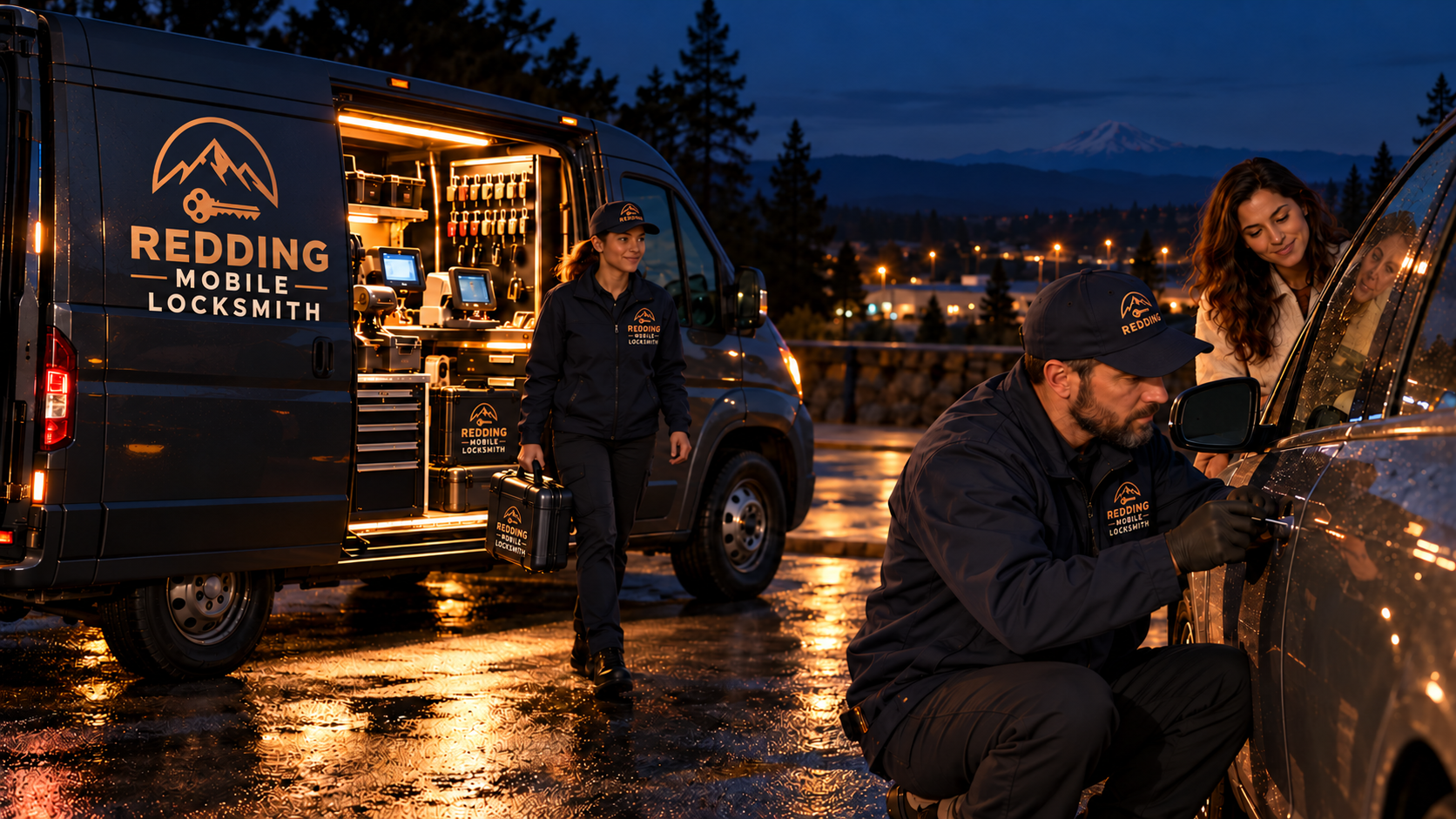
Expect a professional arrival to be calm and orderly. A technician in a branded van and uniform should introduce themselves and confirm who you are and what vehicle is involved. They will usually ask you to show proof that you are entitled to the vehicle. For more on the habit of checking who arrives, see confirming who is arriving at your door.
The technician will look at the vehicle and the lock before starting. A mobile technician carries professional tools, key cutting and programming equipment, and common hardware, so many problems can be solved on site. If your key was lost in the water, the technician may be able to cut and program a new one. The time this takes depends on the vehicle and the key system, and they can explain it to you.
Once the door is open, take out your belongings and test the key. Press the buttons on any remote. Start the engine if you can. If you had a wet fob, ask whether it is worth keeping or replacing. A damaged fob may fail again at a bad time.
Before you leave the lot, check that your trailer lights, your gear and your group are all accounted for. Drive away slowly, since wet ramps and gravel are slick at night.
Habits for people who spend time at the lake
Prevention here is mostly about where the key lives. Choose a spot that is not a pocket in your swimwear and not a cupholder in the vehicle. A waterproof pouch on a lanyard around the neck works well. A floating key ring helps if you lose a key in water, and a zipped dry bag in the boat helps too.
Leave a spare key with someone who can reach you, or in a secure place at home. Avoid a magnetic box under the vehicle, since those are an obvious place to look and are exposed to water. A spare you can reach is worth more than one hidden in a place you cannot.
Replace your fob battery before the season and keep a spare. If a fob has been wet, have it checked. Consider a spare key kept separate from the main set, particularly for a vehicle that gets heavy use around water. Our guide on why a spare key matters before you need it goes deeper.
If you live near the lake in places such as Shasta Lake or Lakehead, the Shasta Lake coverage page and the Lakehead coverage page describe how local service works, and the night car lockout page explains the service itself.
Common questions
What should I do if my key fob fell in the water?
Do not press the buttons repeatedly. Dry the outside, remove the case, and let it dry in a warm, dry place without a heat source. Check whether it holds a hidden mechanical key. A fob that stays dead may need replacement, and a technician can advise on programming a new one.
Should I go in the water to look for a lost key at night?
No. Poor light, cold water and slick surfaces create real danger. A key can be replaced, and a person cannot. Check the shore and the ground in daylight if you wish. If the key is gone, tell the dispatcher it is a lost key rather than a lockout.
What if my child or pet is in the locked vehicle at the lake?
Call emergency services immediately and follow the operator's instructions. Do not wait for a locksmith or search for keys. Heat and cold can change conditions, and a living being locked inside is an emergency. Handle the key problem only after everyone is safe.
How do I describe a lakeside lot without an address?
Name the road and highway you drove in on, then the nearest landmarks such as a ramp, a sign, a restroom or a gate. Say whether the lot is paved or gravel and which part of the lot you are in. Add your vehicle color and type.
Can a technician make a new key if mine is lost in the water?
Often yes, depending on the vehicle and key system. A mobile technician carries key cutting and programming equipment. Have the year, make, model and trim ready, along with identification showing you are entitled to the vehicle. Complex systems can take longer, and the technician can explain.
Is it safe to wait at a lake parking area at night?
It can be, with care. Keep your group together, stay dry and warm, and wait away from the ramp and the water edge. Stay visible, keep your phone charged and dry, and do not approach drivers you do not know. If you feel unsafe, contact emergency services.