
Home / Cottonwood / Rekey Locks in Cottonwood
Rekeying, Cottonwood
Rekey Locks in Cottonwood: Rekeying Explained in Plain Words
Rekeying gives the locks you already have a new set of keys. It is a calm, tidy way to retire old keys when you are not sure who still holds one.
A plain description of rekeying
Every key lock has a secret shape inside it. When you insert the right key, a row of small pins lifts to exactly the right height, the cylinder turns and the bolt moves. A different key lifts the pins to the wrong heights, and the cylinder stays put.
Rekeying changes that secret. The technician takes the cylinder out, replaces the pins with a new combination and cuts a key to match. The lock goes back in the door. It looks the same, feels the same and sits in the same place, but it answers to a different key.
The old key still slides into the keyway, which surprises some people, but it no longer lifts the pins correctly and will not turn. That is the whole point. Every copy of the old key becomes a useless piece of metal.
There is no need to replace the lock itself unless it is worn out. That is why rekeying is a favorite of people who want a fresh start without a larger project.
It may help to think of the key as a password and the lock as the door that checks it. Rekeying changes the password. The door stays the same, and anyone who knew the old password is out. That picture makes the idea easy to explain to a family member who is worried about the cost in hardware or the mess.
Why people in Cottonwood choose it
Cottonwood is a rural community south of Anderson in Shasta County, close to Interstate 5. Homes sit on acreage, ranch properties and quiet roads, often with long driveways and gates. Neighbors know one another, which is lovely, and it also means keys wander more freely than in a town.
A key may have been loaned to a hired hand, a house sitter, a relative or a contractor. A property may have changed hands without anyone gathering the old keys. A former partner may still carry one. In each case, the question is simple: who has a key, and can I be sure?
Rekeying answers that question without argument. You do not have to chase anyone for a key, and you do not have to decide who is trustworthy. You change the lock, and the old keys stop working. The approach is also useful after a theft of keys or a burglary, when peace of mind matters.
See the broader rekey locks service page for the general description.
Rural communities also tend to keep things the same for decades. A lock installed by a previous owner may have been in place long before you arrived. Nobody knows how many keys were cut for it. Rekeying is a good first step after taking over a family property, an inherited house or a place bought from an estate.
Seasons bring visitors and workers: shearing crews, hay haulers, pickers, hunters and friends passing through. Each may leave with a key by accident. A rekey after a busy season is a common habit among property owners who like to start the quiet months with a known set of keys.
A retiree living alone
Picture a retiree who lives alone on a few acres near Cottonwood. Over the years, a handyman, a neighbor who fed the cat, a nephew and a cleaner have all had a key. The retiree cannot recall who returned theirs.
This is an illustration, not a real customer. It reflects a very common worry. Living alone, with a quiet road and a long drive, makes people think harder about who can walk in. A written list of past key holders is often longer than expected.
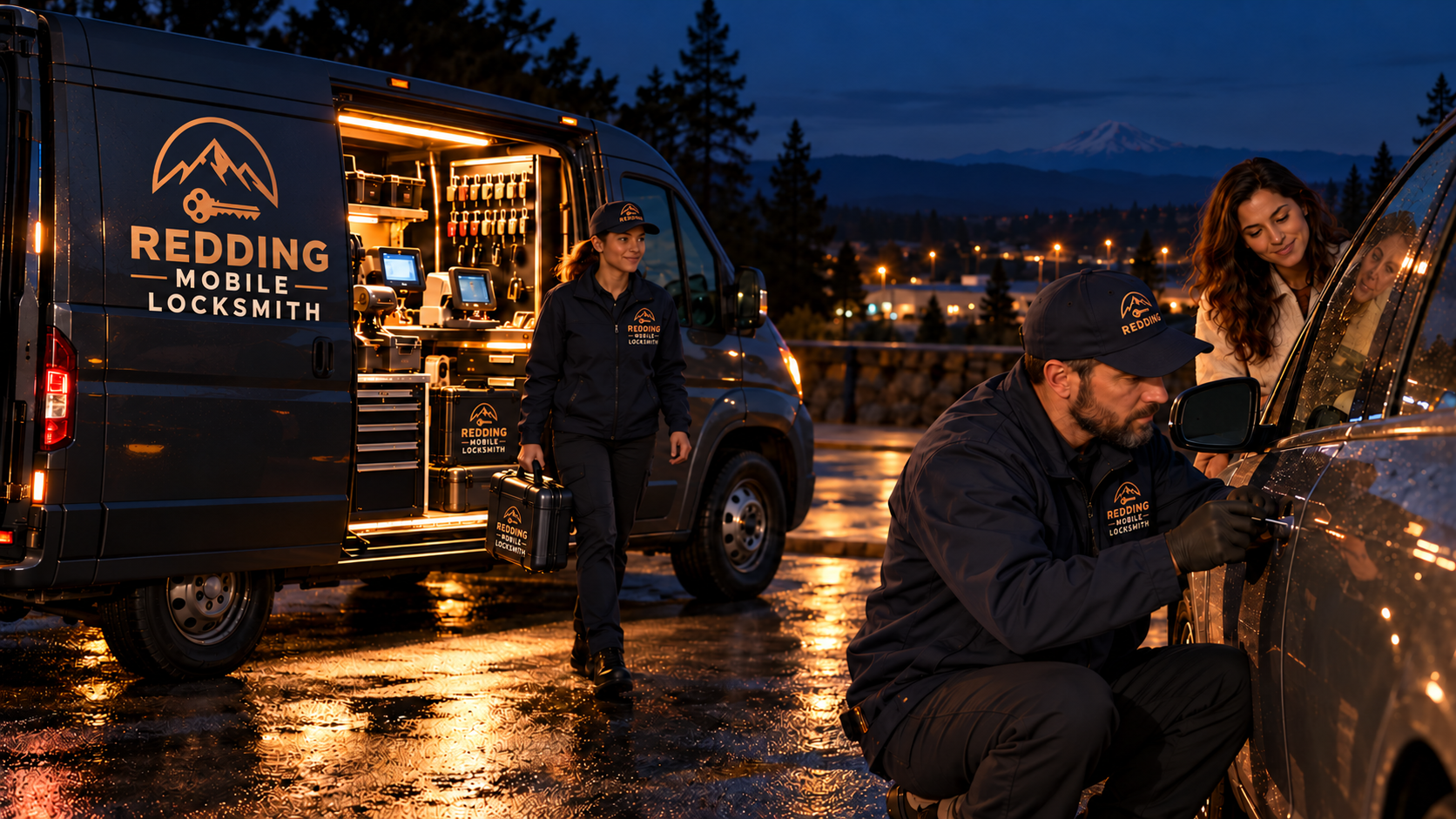
A rekey gives the retiree a clean slate. A technician arrives in a uniform and a branded van, explains what will happen, and does the work at the door. The retiree watches, asks questions and receives new keys. The old ones, wherever they are, no longer matter.
What the retiree does after matters too. A short list of who gets a new key, and a note of who has asked for one, keeps the new set under control.
Living alone also makes a retiree think about emergencies. A trusted neighbor or relative may need a key in case of a fall or a medical event. A rekey is a good moment to decide who that person is and to give them one new key, clearly marked as theirs and kept safe.
Rekey, replace or add
There are three common choices. A rekey keeps the lock and changes the key. A replacement swaps the lock for a new one. An addition installs a new lock where there was none. Each solves a different problem.
Choose a rekey when the lock is in good shape and your only worry is who holds keys. Choose a replacement when the lock is worn, loose, damaged or too light for the door. Choose an addition when a door has no deadbolt, or when you want a second lock above or below the first.
Ask the technician to look at each door and explain. A front door may suit a rekey, while a back door deserves a stronger deadbolt. The install new locks page describes what a fresh installation involves.
Think about cost in effort as well as money. A rekey takes less time than replacing every lock, leaves less waste and keeps hardware you already know. A replacement gives you a chance to upgrade. Pick the option that matches your wish for the door, not the one that sounds more impressive.
Imagine standing in front of your front door with a pen in hand. Write the answer to three questions: which keys exist, who holds them, and who should not. The gap between your answers and your hopes shows how big the job is, and the technician can take it from there.
How the visit goes, step by step
The technician first walks to each door and looks at the locks. A cylinder that is worn or damaged may need replacement, so it is better to check before starting. Then the work begins, one lock at a time.
For each lock, the cylinder is removed from the door. The pins are taken out and new ones placed in a pattern that matches the new key. The key is cut and tested in the lock. The cylinder goes back into the door, and the technician checks that the bolt moves freely and the door latches properly.
The whole job for a handful of locks is often finished in a single visit, with the van parked close to the door. That is the advantage of a mobile service with key cutting equipment on board: the keys are cut where you stand, and you test them before the technician leaves.
When the job is done, ask the technician to show you how to tell the new key from an old one. Mark it in a way you can feel in the dark, such as a ring of colored tape or a small notch in the plastic head, so there is no mix up on a night when the porch light has failed.
- The technician inspects each lock and notes anything worn or loose.
- Each cylinder is removed and its pins replaced with a new combination.
- A new key is cut and tried in the lock several times.
- The cylinder is refitted and the bolt and latch are tested with the door closed.
- You try every new key yourself before the technician leaves.
Keyed alike or keyed apart
When several locks are rekeyed, you can choose to have them all open with one key. This is called keyed alike. One key then opens the front, the back, the garage entry and anything else you include. Most households find this convenient.
You may also want some locks to stand apart. A workshop, a shed or a rental room might have its own key so that a visitor can use it without reaching the house. This is called keyed differently. Mixed arrangements are common.
Decide before the visit and tell the technician. Write down each door and say which key set it belongs to. A written plan keeps the work simple and prevents the mix up of a key that opens the wrong door.
If your household has several adults, ask how many keys each should carry. A key on a ring with a vehicle key and a work key travels widely. Some families prefer a separate house key on a neck cord or a small fob so it never gets mixed up with other items.
What to prepare before the technician arrives
Gather every current key you have. A technician may need one to remove a cylinder gently. Walk the property and list each lock to be rekeyed, including gates, outbuildings and storage rooms.
Clear the path to each door and make sure the porch is lit. Secure pets in a different room or yard. If you have a gate, make sure the technician can reach it. A little preparation makes the visit calmer and shorter.
Have something ready that shows you live at the home, in case the technician asks. The request is about protecting you and the building. A recent piece of mail or a utility record is enough in most cases.
If you rent, check whether you need your landlord's permission. Rules vary, so ask rather than assume.
Do not leave a list of your lock locations or key stashes where a visitor can see it. Keep notes private, and share the plan only with those who need it. A tidy plan is a strength only when it stays in the right hands.
Rural doors, gates and outbuildings
A rural property usually has more locks than a town house, and they are often the ones people forget. A barn door, a tool room, a feed shed and a pump house may each have a padlock or a small cylinder lock. Many were bought one at a time over the years, each with its own key.
A rekey can bring order to this. Padlocks with removable cores or cylinders can sometimes be rekeyed to match your house set. Others are simpler to replace with a lock that shares your key. The technician can tell you which is which and show you what suits the building.
Gates deserve a close look as well. A gate lock lives in rain, dust, heat and cold, and it wears out early. If a gate padlock is rusty or hard to turn, a rekey will not help. Replace it, and consider a lock designed for outdoor use.
Think about who needs a gate key. A delivery driver, a farrier or a hired hand may need access to the gate but not the house. Keying the gate separately lets you grant that without giving away the rest.
Shop buildings often hold the most valuable items on a property: tools, equipment and supplies. Treat their locks with the same care as the house. A shop door with a strong deadbolt and a rekeyed cylinder, matched to a short list of key holders, closes a gap many owners leave open for years.
Locks that cannot be rekeyed
Not every lock can be rekeyed. Some very light or very old locks have fixed parts that cannot be changed. Some locks are so worn that new pins would not help. A damaged cylinder or a bent bolt calls for replacement.
A technician will tell you which of your locks suit rekeying and which do not. Do not feel pressure to rekey a lock that is beyond saving. A fresh lock is a better answer in that case, and the technician can fit it during the same visit.
Garage entry doors and side doors are sometimes the weakest. They may carry an older lock that was never part of the main set. Include them in your list so that the whole property ends up on one plan.
A rekey also pairs well with a quiet look at the rest of the door. Check the screws in the strike plate, the gap between door and frame and the condition of the hinges. A strong lock on a loose door is a weak combination, and a few minutes of attention make the whole opening stronger.
After the work: keeping the new keys under control
New keys are only helpful if you manage them. Write down who has a key. Keep one spare in a safe place, not outside the door. If someone asks to borrow a key, think about whether a short visit and a returned key will do.
If a key goes missing later, you will know which locks it opens. You can decide whether to rekey again. A written note turns a vague worry into a simple decision.
Test each lock once or twice a year. A key that starts to stick or a lock that turns stiffly is giving notice. Early attention is easier than an emergency. For more on this, see worn key symptoms.
Keep this page in mind the next time a key goes missing. The answer is rarely panic. It is a plan, a visit and a new set of keys, and then a note in your records for the day it happens again.
Related help in Cottonwood
Rekeying often sits beside other needs. If a night lockout is the reason you are thinking about it, see night house lockouts in Cottonwood. If you need help at an unusual hour, read about after hours emergency help in Cottonwood.
If the keys in question belong to a business, a shop or a work site, the business security page for Cottonwood covers key control in more detail. For neighbors in nearby communities, see Anderson.
To begin, use the request form on the contact page. List your locks, say how many keys you want and mention anything that sticks. The phone line is coming soon, so the form is the way to reach the team for now.
Common questions
What exactly changes when a lock is rekeyed?
The pins inside the cylinder are replaced with a new combination, and a new key is cut to fit. The lock stays on the door. The old key can still enter but no longer turns it, so lost or loaned copies stop working.
Do I need new locks to get new keys?
Not usually. If a lock is in good shape, rekeying gives it new keys without new hardware. If it is worn, damaged or too light for the door, the technician may suggest replacing it, and you choose.
Can several doors share one key?
Yes. Locks can be keyed alike so one key opens the front, back and garage entry. You can also keep a shed or workshop on its own key. Tell the technician your plan before the work begins.
Will the old key still go into the lock?
It usually will, since the keyway has not changed. But the old key lifts the pins to the wrong heights, so it will not turn the cylinder. That is how rekeying cuts off every earlier copy.
What should I have ready for the visit?
Gather your current keys, list every lock to be done, clear the path to each door and secure pets. Have something ready that shows you live there. If you rent, check whether permission from the landlord is needed.
How do I ask for a rekey in Cottonwood?
Use the request form on the contact page. List your locks, the number of keys you want and any trouble spots. The phone line is coming soon, so the form is the way to start for now.