
Home / Millville / Rekey Locks in Millville
Millville rekeying
Rekeying Locks on a Millville Property
Acreage means more locks than most owners remember. Rekeying lets one new key work across gates, doors and outbuildings while old keys stop working. A little planning beforehand makes the work orderly and complete.
Picture an owner with a gate and five outbuildings
Imagine a person who owns a few acres outside Millville. There is a front gate on the long private road, a house with two entrances, a barn, a workshop, a pump house, and a storage shed. Over the years each door got its own lock, and each lock came with its own key. The key ring in the kitchen drawer now weighs as much as a small tool.
Millville, ZIP 96062, is a small rural community in the Shasta County foothills east of Redding. Country properties here often grow by additions. A previous owner installed one lock, a contractor installed another, a tenant added a third. Nobody wrote down who holds what. That is exactly the situation where rekeying shines.
Rekeying changes the inside of a lock so a different key works and the old key no longer does. The hardware stays in place. This page explains how to count your locks, how a key set is defined, and how to plan a rekey so nothing is missed.
What rekeying actually changes
A common pin tumbler lock has a cylinder with small spring loaded pins of different lengths. The right key lifts every pin to the same height, which lets the cylinder turn. To rekey, a technician removes the cylinder, replaces the internal pins with a new arrangement, and cuts new keys to match. The old key still enters the lock but no longer lifts the pins correctly.
The lock body, the latch and the door are untouched. That is why rekeying is usually less work than replacing hardware. If the locks are in good condition, rekeying gives you the same security change as a replacement, in the sense that old keys stop working, without buying new hardware for every door.
Not every lock can be rekeyed. Some are worn out, damaged, or built in a way that does not allow it. A technician will check each one. If a lock is beyond saving, the better answer may be installing a new lock, and the technician can tell you which doors fall into that group.
Hot dry summers and cold winter mornings both affect locks. Dust works into keyways, and moisture can corrode springs. A lock that turns with effort is a sign of trouble even if it still opens, and forcing it can turn a rekey into a repair. Mention any stiffness when you describe the job, because it tells the technician which cylinders to inspect first.
Counting every lock before you start
The first planning step is a walk. Carry a notepad and visit every lockable thing on the property. Include the house, the garage, the gate, outbuildings, any gun cabinet or tool chest with a key, and any padlock that secures equipment. Write the location, the type of lock, and who currently has a key.
Padlocks and cabinet locks are easy to forget, but they matter. A padlock on a gate that looks like it protects a field may actually protect valuable tools. Count them too. Some padlocks can be rekeyed to match your set and some cannot. A technician can tell you which, based on the model in front of them.
Do not guess about a lock you have never opened. If you are not sure what a particular key goes to, mark it and test it later. A map of the property with each lock marked is a surprisingly helpful document. It also gives a technician a clear picture of the job without needing to walk everything twice.
- List every exterior door on the house and any attached garage.
- Add each outbuilding, shed, barn and workshop.
- Note gates, padlocks and any locked cabinets.
- Write down who currently holds a key to each.
- Mark any lock that sticks, spins or feels worn.
What a key set means
A key set is a group of locks that all open with the same key. Most households do not need a separate key for every door. They need one key for the house, perhaps a second for the shop, and a third for the gate. A rekey can bring everything under one key, or split things into a few groups. You decide.
Picture the owner at the kitchen table with the key ring spread out. Each key gets a small piece of tape and a pencil note: house front, barn side door, gate. After ten minutes the owner knows which keys are duplicates and which belong to locks that no longer exist. That sorting step alone makes the work clearer for everyone.
The choice is a trade off. One key for everything is convenient, but losing it exposes every lock. A few separate keys limit the exposure, but they weigh down your pocket. Many owners pick a middle path: one key for the house and garage, one for outbuildings, and a separate one for the gate that visitors or workers might hold.
Talk through the groups before work begins. Who needs to open which door? A farrier or a ranch hand may need the barn but never the house. A family member may need every lock. Write the groups down and give the plan to the technician. That list is the core of a clean rekey. See home locksmith services for related work.
Planning around gates and outbuildings
Gates and outbuildings bring their own questions. Many gate locks are padlocks, chain locks or latch bolts, not standard door cylinders. Some can be rekeyed, and some need to be replaced. Weather matters too. A lock that sits in sun, dust and winter damp for years may be stiff or corroded and may not be worth working on.
Think about the order of work. If a gate is the main route to the property, the technician may want to schedule it so you are not locked out of your own land partway through. Keep a spare key to the new set on hand while the work continues. Do not leave an outbuilding unlocked overnight because the rekey was not finished.
If a gate is shared with a neighbor, talk to them before changing it. A shared access road is a social agreement as well as a lock question, and a key that suddenly stops working can cause friction. Rules about shared access vary, so ask a qualified person if you are unsure what you are allowed to change.
Also ask about the keys you receive. A rekey usually produces a set of new keys, and extra copies can be made on request. Decide how many you need and for whom. A property with workers coming and going may need several. A quiet home may need only a few.
Rekey after a move, a loss or a change
There are common reasons to rekey. You bought the property and do not know who has keys. A tenant moved out. A contractor finished a project. A key was lost on a hike or a drive. A relative left the family circle. A seasonal worker returned a key but may have copied it. In every case the question is the same: who can still open these doors?
In a rural area, that question has a particular weight. Neighbors are far away and a property can sit unwatched for a day or more. Rekeying gives a clean slate. The old keys stop working, and you decide who holds the new ones.
It also helps with peace of mind. Many people who rekey say they sleep better knowing that a former tenant or a worker from last season cannot walk in. You do not need to accuse anyone. A lock change is simply routine care for a property, like changing the batteries in a smoke detector.
Rekeying does not fix a broken door, a poor frame, or a window left open. It handles the key. For the rest of your security, look at deadbolts and door frames and a bedtime lock check routine. Both are plain, practical reading.
How a mobile rekey visit works
The service van arrives with tools, key cutting equipment and common hardware. The technician looks at your list and then at each lock. For locks that can be rekeyed, they remove the cylinder, change the pins, and cut keys. They test every lock with the new key before moving on. Locks that cannot be rekeyed are noted and discussed.
Working on site matters for a property like yours. You do not need to carry a dozen cylinders to a shop. The work happens where the locks are. You can stand with the technician at each door, ask questions, and approve changes as they come up.
Right now the phone line is coming soon. Send your request through the request form on the contact page. Mention how many locks there are, what kinds, and how the property is laid out. We do not publish prices or time promises, and the technician will explain the work before it starts.
Before the technician arrives
Gather every key you can find, including old ones. The technician may use them to match existing key types or to check which locks they open. Put them in a tray near the first door. If a key goes to a lock you cannot find, say so. It may be a lock that was removed or one that sits somewhere you have not looked.
Clear a path to each lock. Move equipment away from shed doors. Make sure gates can be reached on foot. If dogs or livestock are loose, secure them before anyone walks the property. A calm job starts with an orderly site.
Decide the key groups ahead of time and write them down. Decide who gets copies. If a worker or a tenant is involved, tell them the old key will stop working so they do not show up confused. Our guide on why a locksmith may ask for identification explains the verification step you should expect.
Rekey or replace
Rekeying is not always the right choice. If a lock is damaged, loose, or very old, replacing it may give a better result. If you want a different style of hardware, such as a deadbolt added to a door that has only a knob, replacement is the way. If a door has no lock at all, a new one is needed.
Rekeying retires the old key, which is the point. Replacing retires the old lock. When you are unsure, ask the technician to examine each lock and explain which choice makes sense. A good technician will tell you when a lock is worth keeping. Ask about the condition of the latch and strike as well, because a fresh cylinder in a loose door still leaves the door easy to push open.
For commercial or working properties, you may also want to compare notes with business security in Millville. The same ideas about controlling who holds a key apply when a property has employees, tenants or visitors.
Keeping the new key set under control
After a rekey, the new system is only as good as how you manage it. Keep a simple record of who holds each key and when it was given. Do not mark keys with the property address. If a key is lost, you can act promptly because you know which doors it opens.
Avoid giving out the key that opens everything when a narrower one will do. A worker who only needs the shed does not need access to the house. Fewer people with fewer keys is the oldest way to keep a property secure and it still works.
When someone leaves the arrangement, such as a ranch hand who moves on, ask for the key back and think about whether the group they held should be rekeyed again. This does not need to be a dramatic event. It is a normal part of running a property with more than one person on it.
Check the system once a season. Walk the property, test each lock, and confirm that the keys on your ring match your notes. It takes little time and catches a worn lock before it fails on a night when you most need it. For a night problem, read about night house lockouts in Millville.
Serving Millville and nearby communities
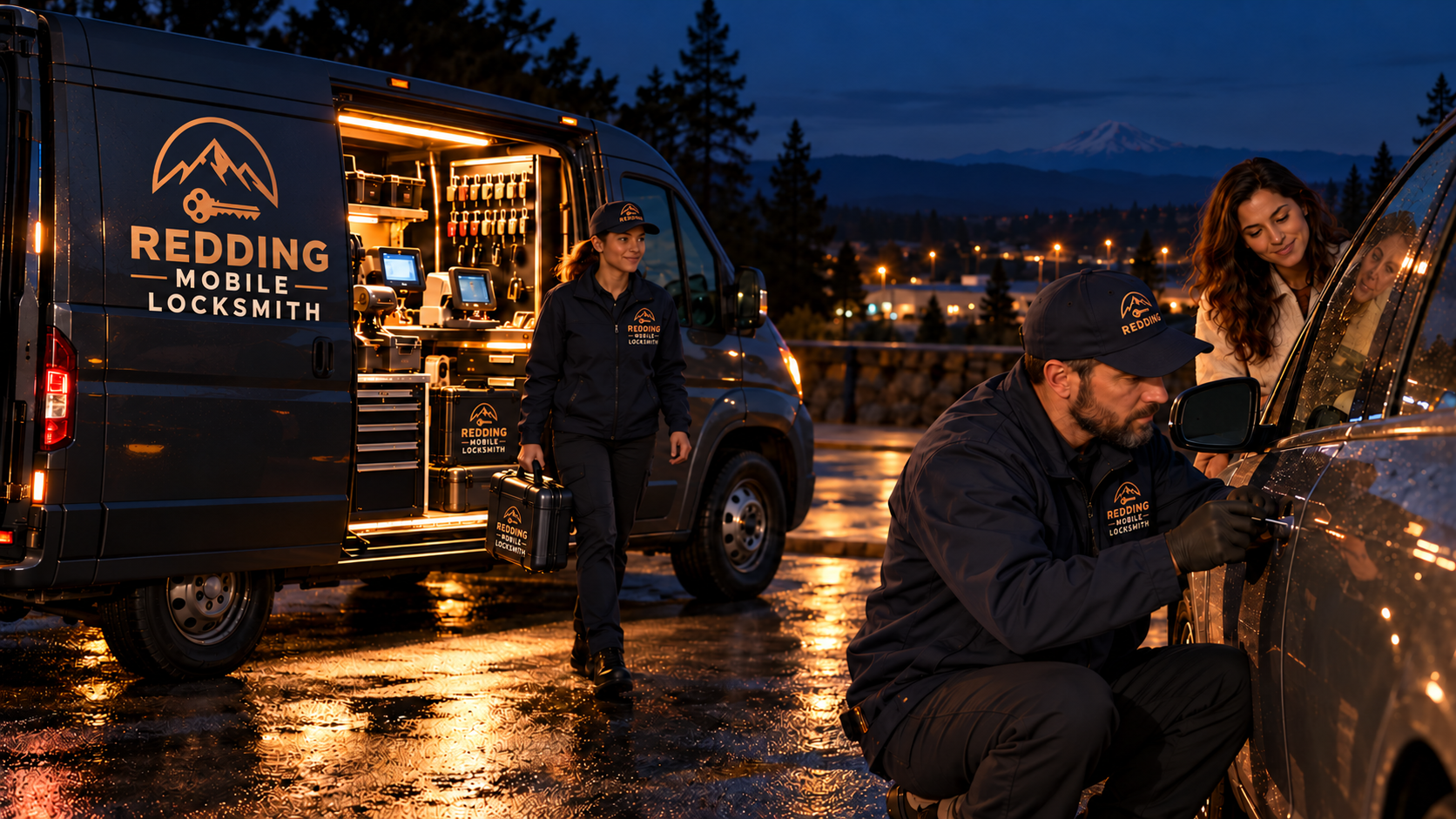
Redding Mobile Locksmith is a 24 hour mobile service with a branded team in uniforms and a branded service van. We cover Millville and sixteen other communities across Shasta and Siskiyou counties, including Palo Cedro, Anderson and Redding.
See the Millville coverage page for the full set of local pages and Palo Cedro if you are just on the other side of the line. Anyone near Anderson will find the same service described there.
A rekey is a calm, planned job, but we also answer urgent calls at night. If a lock fails in the dark, see after hours emergency service. Between the two, most of what happens to the locks on a rural property is covered.
Common questions
Does rekeying make the old key useless?
Yes, for the locks that are rekeyed. The internal pins are changed so the old key no longer lifts them to the correct height. It may still slide into the lock, but it will not turn. The new key becomes the only working key for that lock.
Can all my locks share one key?
Often, yes, as long as the locks are the same type and can be rekeyed. A technician can match many locks to a single key. Padlocks and some specialty locks may need different handling. The technician will tell you which locks can join the set, and which ones should stay on their own key for good reasons.
Is rekeying better than replacing the locks?
It depends on the condition of the hardware. If the locks are sound, rekeying changes who can open them without replacing everything. If a lock is worn, damaged or the wrong style, replacement is the better choice. The technician can examine each lock and advise, and you can decide door by door instead of choosing one answer for the whole property.
Should I include padlocks and gate locks?
Yes, count them in your plan. Many padlocks and gate locks can be rekeyed or matched to your set, while others need to be replaced. Weather and age affect them, so bring every one to the technician's attention. A padlock that looks fine can still be worn inside, and a rusted gate latch may be better replaced than rekeyed.
How many keys will I receive?
A rekey normally produces a working set of new keys, and more copies can be made on request. Decide how many people need access before the work begins so the technician can cut the right number. Think about workers, family members and anyone who helps with the property, and keep the list short.
How do I request a rekey while the phone line is coming soon?
Use the request form on the contact page. List how many locks you have, what types they are, and how the property is laid out. A clear list lets the technician bring the right supplies.