
Home / Millville / After Hours Emergency in Millville
Millville Night Dispatch
After Hours Emergency Lockout Help in Millville
A lockout on a long private road in the Millville foothills asks for a steady plan. This page covers the first ten minutes: what to check, what to avoid and what to prepare, especially if you live alone.
A retiree living alone on a country property
Imagine a retired man who lives alone on a few acres in the Millville foothills. He goes out after supper to check the barn, the well house and the dog, and the kitchen door swings shut behind him. The key is on the hook inside. It is dark, the nearest neighbor is down the road, and his phone is on the counter. Nothing is wrong, yet everything feels precarious.
This picture is not meant to alarm anyone. It is meant to show what a good plan looks like when you are by yourself in a quiet place. The plan has three parts: keep yourself safe and warm, make contact with someone who can help, and give clear details so that the help arrives prepared.
If you live alone, a lockout puts the whole routine of the household on pause. Meals, medication, pets and rest all wait on a door. That is why the first ten minutes matter. They set the tone for what follows, and a calm start makes every later step easier.
Minutes one to three: stop and take stock
The first instinct is to try the handle again, then again. Do it once more, gently, and then stop. Take a breath and look around. Is the porch light on? Do you have a coat, shoes, a flashlight? Is the weather cold, wet or hot? Are any animals loose that could wander? Answer these before you do anything else.
Notice your own condition. If you feel unwell, dizzy, chest tight or short of breath, treat that as the emergency and contact emergency services. A lockout can wait, and your health cannot. Sit down if you need to, and let someone know where you are. Medical decisions belong to medical professionals, not to this page.
If you are well and the situation is only a locked door, say to yourself in plain words: I am safe, this is a lockout, and I have a plan. It sounds simple, but naming the situation turns off the part of your mind that wants to hurry. Calm people notice open windows, spare keys and helpful neighbors.
Minutes three to six: check the easy answers
Walk the outside of the house, slowly. Try the back door, the garage entry, any porch door and each window you can reach from the ground. Do not climb, stand on a chair or reach over rails in the dark. A sprained ankle is a worse problem than a locked door. Touch each latch gently, without prying.
Think about where a key might be. A spare in the barn, a key in the truck, one in a workshop coat, one with a neighbor, one with a relative. In country places, spare keys scatter in many pockets. Check the vehicles too, since a key left in the ignition or on a seat is a common answer to a puzzle.
Look for a lockbox or a hide a key spot only if you set one up on purpose. If you did, retrieve it. If you did not, do not hunt for a key hidden by someone else years ago. The point of this stretch is to rule out simple solutions in a few steps and keep moving.
- Try the main door once more, gently, then stop.
- Walk the outside slowly and test each door and ground level window.
- Check vehicles, outbuildings and coats for a spare key.
- Think of any neighbor or relative who holds a copy.
- Do not climb, pry or break anything in the dark.
Minutes six to ten: choose your waiting place and make contact
If the easy answers fail, decide where you will wait. A porch with a working light is fine in mild weather. In cold, a vehicle with the doors locked is warmer, and if your key to it is available, it can also give you phone charging. In heat, shade matters. Do not stay in the barn or the well house, where footing is uneven and doors latch.
Contact someone you trust. Tell them where you are, what happened, and that you are requesting a locksmith. If you have no phone with you, walk to the nearest neighbor you know well, announce yourself clearly from a safe distance and ask to use their phone. Most people in rural places respond kindly to a clear, calm request.
Then send your request through the request form or have a helper do it. The phone line is coming soon, so written details are important. Say where you are, what door or vehicle is locked, and who can confirm your right to enter. Written details are easy to reread and hard to misunderstand.
What to avoid in those ten minutes
Avoid anything that creates a second problem. Do not break a window to reach a latch, since glass cuts and weather follows. Do not force a door with a pry bar, which splits the frame and often leaves the door unsecurable. Do not squirt oil or spray into the lock. Do not let anyone talk you into a shortcut that sounds clever online.
Avoid wandering. Well covers, ditches, stock gates and uneven ground are all hazards in the dark. Stay on paths you know. Keep your flashlight pointed down, not at neighbors' windows. If a vehicle approaches, stay visible and calm, and do not flag it unless you need help.
Avoid handing over information to a stranger who arrives unrequested. A person who offers help at your gate, claims to be a locksmith and asks for money or your ID before you contacted anyone is a red flag. Read the guide on confirming who is arriving at your door so you know how to check.
Long private roads and how to describe them
Many Millville properties sit at the end of a private road, a gravel drive or a lane that branches off a county road. These are hard to find in the dark, and a visiting technician cannot rely on a street sign. Describe the approach in steps: the name of the main road, the direction of travel, the number of turns, the type of surface, and the first visible marker, such as a mailbox, a gate or a reflective post.
Mention gates and say whether you can open them. If a gate is locked, say who holds the key or code. If a dog is loose, say so. If there is a fork in the road, say which branch leads to you. If your phone service is weak, say so and ask the helper to confirm by message when someone arrives.
You may want to leave an outdoor light on, set a flashlight at the end of the drive, or ask a neighbor to flag the turn. These small gestures reduce delay and confusion. They also help emergency vehicles, should you ever need one.
It is worth doing this work in daylight before you ever need it. Write your own directions in a few lines, as if for a stranger arriving at night, then test them by asking a friend to follow them. Save the text in your phone and keep a printed copy by the door or in a drawer. When the moment comes, you can paste the description into your request instead of composing it in the cold.
Wells, barns and the locks that go with them
Country properties include buildings that most homes do not. A well house, a pump shed, a barn, a tack room and a gate are all places where locks matter and where a lockout can happen. If you are locked out of a pump house, water may be affected. If you are locked out of a barn, animals may be inside and need care.
Tell the dispatcher what is locked and what is at stake. A barn with animals is different from a shed with tools. A well house is different from a workshop. The technician may bring different hardware, such as padlock tools or specialized cutting equipment for a hasp, depending on what you describe.
If animals inside are in distress, tell someone who can act, such as a neighbor, a vet or emergency services, depending on the situation. A lockout is a poor reason for an animal to suffer. For routine locks on outbuildings, read our Millville business security page, which also covers shops and storage.
Weather in the foothills and what it does to a lockout
Foothill weather swings. Summer afternoons are hot and dry, and nights cool off sharply. Winter brings frost, some wet weeks and, on occasion, colder spells that stiffen locks and sting hands. A lockout in July is a different experience from one in January, and the plan should adjust.
In heat, find shade, drink water and avoid exertion. Do not wait in a parked vehicle with the windows up. In cold, dress in layers and cover your hands and head. If you left the house in slippers, the cold ground is a sharp lesson in why a pair of shoes by the door is a good idea. If the weather is turning, tell the dispatcher so the plan accounts for it.
Wet weather brings its own concerns: slippery steps, muddy tracks and doors that swell. A door that sticks in damp weather may open with a gentle shove rather than a pull, though you should never force it. Our guide to rural road lockouts after dark offers more on country conditions.
Make a habit of putting a spare coat, a flashlight and a bottle of water in a place you can reach without entering the house. A hook in the barn, a shelf in the porch or a box in a vehicle all work. The aim is that even a locked door cannot take away your basic comfort while you wait.
Giving proof that you belong
A locksmith should confirm who you are before opening a door. For a home, that usually means identification and some link to the address, such as mail or a bill. For a vehicle, it means ownership paperwork. What is accepted can vary, and the team can explain what it will take when you send your request.
If you are locked out of your own house with no ID on you, tell the team plainly. A neighbor who has known you for years can help confirm your identity. A relative can call or message. If you have a photo of a bill on your phone, show it. The more honestly you explain, the more options there are.
Do not be offended by questions. They protect you, and they protect the house when you are away. Think of them as part of the service, the same way a pharmacist checks a name before handing over a prescription. A person who lives alone has the most to gain from a team that verifies every request, because nobody else is home to notice if something goes wrong. If the answers feel awkward, take your time. Nobody is grading you, and an honest pause is better than a guess. Our guide on why a locksmith may ask for identification explains the reasoning.
What happens when help arrives
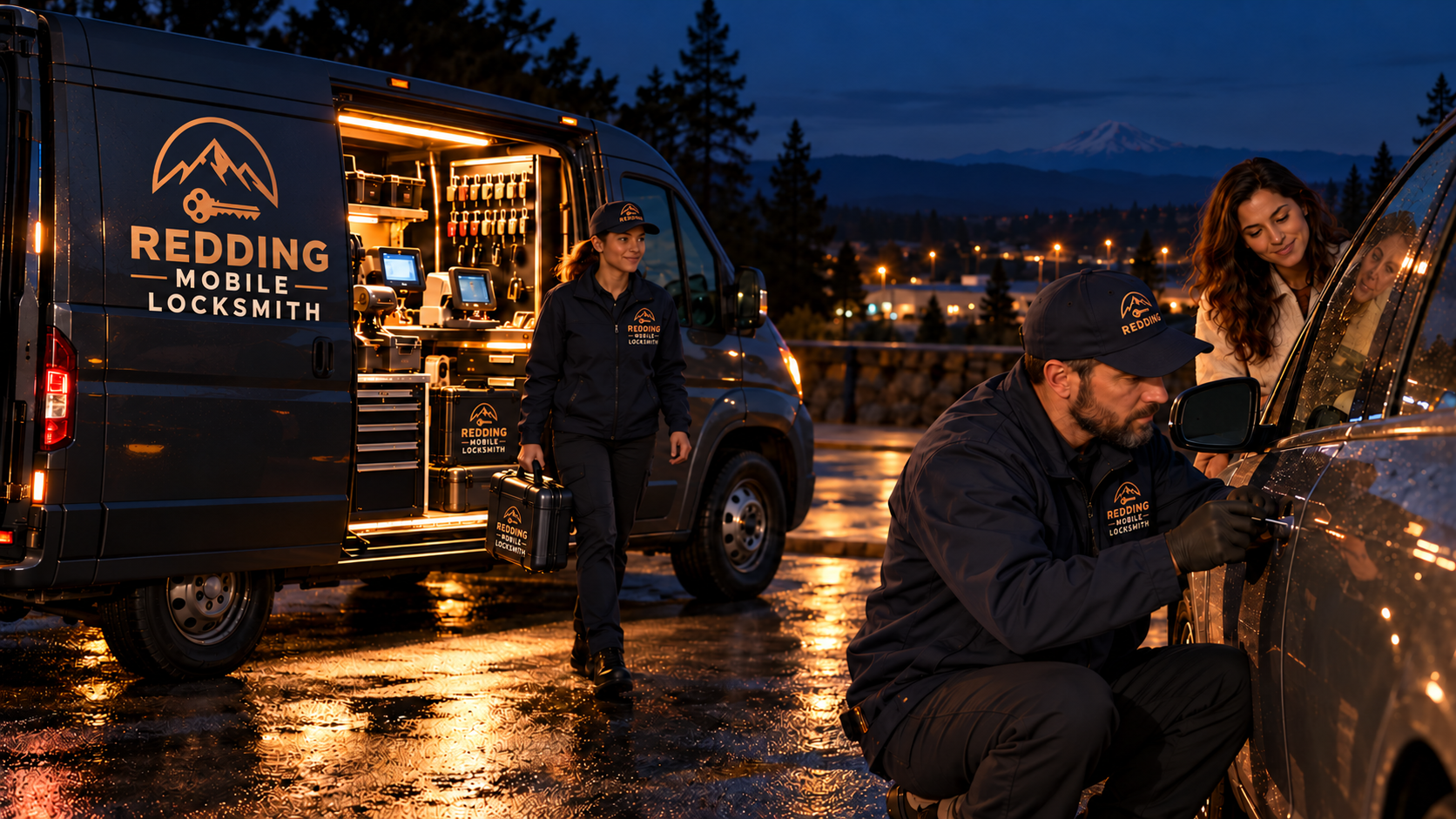
A branded team in uniforms and a branded service van arrives, introduces itself, and confirms the details you gave. They look at the lock and the door, choose a careful method and explain what they plan to do. You are welcome to ask questions, and a professional answers them in plain terms.
Once the door is open, the technician checks that the lock works. If it is worn or damaged, they tell you what they found and what the options are. You decide. If it is fine, you are done. Before they leave, test your key and confirm that the door closes and latches properly.
Offer the team a safe place to park and a light by the door. Tell them about any animals. If you live alone, it is fine to ask a neighbor to be present. A visit goes smoothly when everyone knows what is happening.
Keep your own conduct simple. Stay out of the way of the tools, keep animals clear of the door, and leave the technician space to work. If you are anxious, say so, and ask for a short explanation of each step. Good professionals are used to nervous customers at odd hours, and a few plain words from them often settle the whole mood of the visit.
After the night: simple fixes for next time
In daylight, think about why this happened. Did the door lock behind you? Is there no spare? Is the lock sticking? A simple change may prevent a repeat: a lockbox you control, a spare key with a neighbor, a keypad lock, or a weighted doorstop for trips to the barn.
Check each lock on the property. Try each key. Replace any that stick. If you have lost track of who has keys, consider a rekey in Millville. If a car key is part of the problem, see vehicle key replacement in Millville.
For nearby communities, the pages for Palo Cedro and Redding cover similar situations, and the Millville coverage page lists every local service. The after hours emergency service page explains the service in general.
Common questions
What should I do in the first ten minutes of a lockout in Millville?
Stop forcing the door, check your safety and the weather, walk the outside gently and look for a spare key in vehicles and outbuildings. Then pick a safe waiting place, tell someone you trust, and send clear details through the request form so help can be prepared.
How do I describe a long private road to a locksmith?
Name the main road, the direction of travel, the number of turns, the surface type and the first visible marker such as a mailbox or gate. Mention locked gates and loose dogs. Leave an outdoor light on or place a flashlight at the end of the drive.
What if I live alone and have no phone with me?
Walk carefully to a neighbor you know and ask to use their phone, or ask them to send your request. Stay on paths you know and carry a flashlight. If you feel unwell at any point, ask them to contact emergency services first.
Can a locksmith help with a barn or well house lock?
Yes, locks on outbuildings are part of the work, though the approach differs from a house door. Tell the team what is locked and whether animals or equipment are inside. If animals are in distress, contact someone who can act on that right away.
What should I avoid doing while I wait?
Do not pry doors, break windows, spray lubricant into the lock or climb in the dark. Do not hand information to strangers who show up unrequested. Stay somewhere safe and lit, keep your phone charged and wait for the people you contacted.
Is there a phone number to call?
The phone line is coming soon. For now, use the request form on the contact page and include your road, gate details, the lock involved and how you can be reached. Clear written details help the team prepare for the visit.