
What rekeying actually means
A rekey changes the inside of a lock so that a different key operates it. The lock stays on the door. The deadbolt, the handle and the strike all stay where they are. Only the part that reads the key is changed, and the old keys stop working.
Most house locks use a pin tumbler cylinder. Inside it are small pins of different lengths, stacked in pairs. The correct key lifts each pair to exactly the right height, and the cylinder turns. Rekeying replaces some of the pins so that a different cut lifts them correctly, and the old cut no longer does.
The result is a lock that looks the same and works the same, but answers to a new key. It is a tidy way to reset who has access, with no change to the door and little disruption to the household.
A seasonal cabin owner arriving after weeks away
Picture an owner who opens a seasonal cabin near Weed after several weeks away. The place has been empty. A neighbor checked on it. A cleaner, a contractor or a guest may have held a key at some point. The owner no longer knows who has a copy, and cannot easily find out.
This is the kind of uncertainty that rekeying settles. The owner does not need to prove that anything is wrong. A key that cannot be accounted for is reason enough. After a rekey, every old key is dead, and the owner holds the only live ones, or has chosen who else gets one.
Arriving after dark makes the point clearer. A property left empty for a while is a property you want to be certain about. A technician can rekey the locks on arrival, test each new key and leave the cabin secure, so that the first night of the season is a restful one.
There is a practical side as well. A cabin owner often arrives with a car full of supplies, a cold house and a short evening. Dealing with keys on top of that is a burden. If you can arrange the rekey in advance, or on the first evening, the rest of the stay is simpler.
Tell the dispatcher how long the property has been empty and how many locks it has. A cabin may have a main door, a back door, a shed, a gate and a few padlocks. Each is a separate question, and a technician who knows the number can bring enough pins and enough time.
How the pins and the key work together
It helps to see why the old key stops working. Each pin stack has a driver pin above and a key pin below, with a spring pushing down from the top. The key lifts each stack so that the gap between the pins sits exactly at the edge of the cylinder, called the shear line. When every gap lines up, the cylinder turns.
In a rekey the key pins are swapped for ones of different lengths. The new key is cut to lift them to the shear line. The old key, cut for the old lengths, lifts them to the wrong height, and the cylinder stays locked. Nothing about the door or the latch needs to change.
This also explains why a rekey is not a substitute for security upgrades. The mechanism is the same as before. If the original lock was easy to defeat, so is the rekeyed one. A technician can point out weak points, such as a short strike screw or a loose frame, and suggest improvements while on site.
Some locks have more than five pin stacks, and some use different designs such as wafer or disc locks. The technician will know which you have. Most home locks can be rekeyed, though a few cannot, and you will be told if yours is one of them.
When rekeying is the right choice
Rekey when you have moved into a new home and do not know who holds the old keys. Rekey when a tenant leaves, or an employee, a contractor or a roommate has returned only some keys. Rekey after a key is lost or stolen, especially if the key had an address on it or could be tied to the property.
Rekey when you want several locks to share one key. A household with a front door, a back door and a garage entry may carry three keys. A technician can rekey all three so that one key fits all of them. That is a convenience as well as a security step.
Rekey also when a lock is in good shape but the key situation is not. Replacing a good lock when only the key is the problem is a waste. Rekeying is often the less disruptive choice, and the technician can tell you whether it fits your hardware.
- You moved into a house and have no idea who holds copies.
- A tenant, contractor or guest returned only some of their keys.
- A key was lost, stolen or copied without your knowledge.
- You want one key to open the front, back and side doors.
- The locks are sound but the key situation is not.
When replacing the lock is the better choice
Rekeying does not fix a worn lock. If the cylinder is loose, if the latch sticks, if the deadbolt does not throw fully, or if the finish has failed, a replacement lock is a better answer. A new key in a failing lock will fail with it.
Replacement is also sensible if you want a different grade of hardware, a keypad, a smart lock or a lock with a different style. The technician can help you pick something that suits the door and the frame. The page on installing new locks sets out the options.
If you are unsure, the technician will look at the lock first and give a plain answer. A good technician does not push a larger job than the situation needs, and will tell you when rekeying is enough. You are entitled to ask which choice costs less trouble in the long run.
What happens on the visit
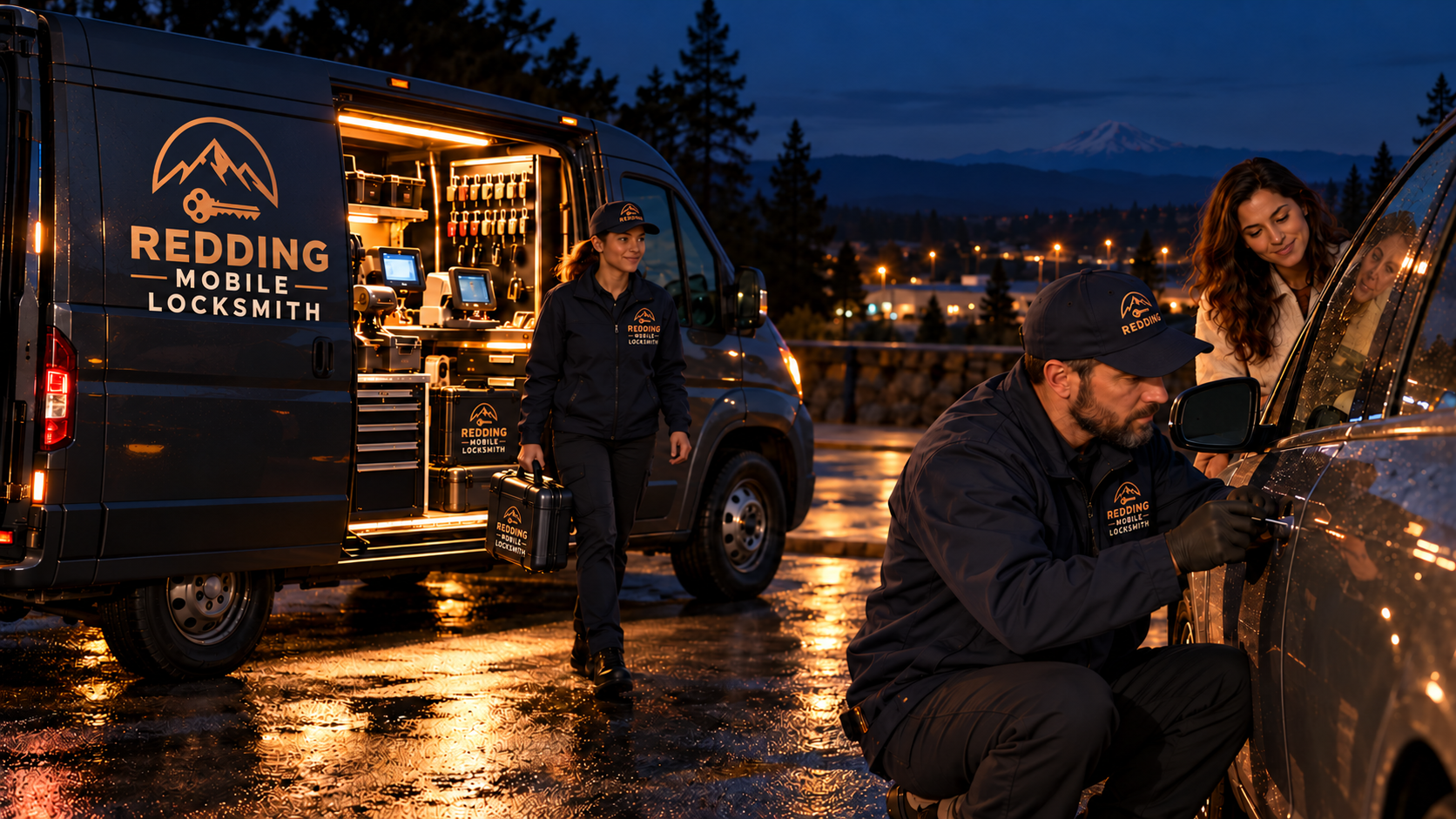
The technician arrives in a uniform and in a branded service van carrying the tools and parts needed. The first step is to check your identity and your connection to the property. A rekey changes who can enter, so the technician needs to know that you are entitled to ask.
Next, the technician removes each cylinder to be rekeyed, takes out the old pins, fits new ones to match the new key, and puts the cylinder back. This is done at the door or on the van, depending on the lock. Each lock is tested with the new key before the technician moves on.
When the work is finished you will be given the new keys and asked to try them yourself. Lock and unlock each door from outside and inside. Try the deadbolt. If a key sticks or turns stiffly, say so. A smooth key is a sign of good work, and a rough one can be put right on the spot.
How a rekey differs from a lock change
People often use the words lock change and rekey to mean the same thing. They are different. A lock change replaces the whole lock hardware with a new unit. A rekey keeps the hardware and alters the inside. The key is new in both cases, but the cost and effort differ.
A rekey is usually the lighter job to carry out and keeps the look of the door. It does not alter the grade of the lock. If the old lock was weak, the rekeyed lock is equally weak. A lock change gives you the chance to improve the hardware.
Which you want depends on what you need. If the problem is only who holds keys, rekeying fits. If the problem is also the strength or condition of the hardware, a replacement fits. The technician will help you weigh it, and you can read about the options on the rekey locks service page.
Rekeying in Weed's setting
Weed sits north of Mount Shasta where Interstate 5 meets Highway 97, and the town draws people who come and go. There are residents, college staff and students, local business owners and travelers who stay for a time. Homes, rentals and vacation properties all change hands or users now and then.
The climate matters to locks. Cold winters and wind can stiffen a lock, and a lock that has not been used for weeks may be sluggish. A technician will test it after the rekey and may recommend a graphite based lubricant for the cylinder. Avoid household oils, which can attract dust and gum up the pins.
Properties with outbuildings, gates and sheds often have several different keys. Rekeying them to match, or at least keeping a record of which key opens which lock, saves a lot of confusion later. Ask the technician to label the keys when the job is done, and keep the labels short and private.
A cabin or second home also deserves a thought about the entry that gets forgotten. A crawl space hatch, a basement door or a window over a deck are doors in every sense. They do not usually take a key, but they may take a hasp and a padlock. Walk the outside of the property in daylight and ask what a stranger would try first.
The guide on deadbolts and door frames at night explains why the frame and the strike matter as much as the cylinder, and what to look at when you check a door.
What to prepare for the visit
List the locks that need attention. Walk around the property and count them: front, back, side, garage entry, shed, gate, padlocks. Note which ones you want rekeyed and which can be left alone. A clear list lets the technician bring the right number of pin kits.
Gather the keys you have now, including spares and old ones. The technician may need one working key to take apart the lock. If you do not have one, say so, because the job is slightly different without it. Do not throw away old keys until the work is done.
Have your identification ready, along with something that ties you to the property, such as a utility bill, a lease or a deed. Rules vary, and the technician will tell you what is acceptable. If you are away from the property, ask someone you trust to be present, and let the dispatcher know.
Think about how many keys you want at the end. Count the people who need access, then add one for a spare that stays in a safe place. Too many keys defeats the purpose of the rekey, and too few leaves someone stranded. Tell the technician the number so that all of them are cut and tested together.
If the property has a key that must stay in use, such as one held by a property manager, a caretaker or a family member, say so before the work begins. The technician can plan to cut that key in the same visit, and you avoid a second trip.
Habits after the rekey
Once the work is done, keep control of the new keys. Decide who gets one and who does not. A spare for a trusted neighbor or relative is sensible. A spare under a flower pot is not. Write down who holds each key so that you can ask for it back when plans change.
Consider a short routine on arrival. Walk the property, test each lock, and note anything that has changed since your last visit. For a seasonal property, this routine catches problems early. The guide on a bedtime lock check routine may give you ideas for your own.
If a key goes missing again, call at once. Another rekey is a small job compared with the worry of not knowing. The more often you are honest about where your keys are, the less often you need an emergency visit.
Finally, keep a simple record. A short note listing each lock, the date it was rekeyed and who holds a key is enough. When the next season comes, or when you sell or rent the place, the note will save a long afternoon of guesswork and make the next decision a matter of reading, not remembering.
More help in Weed and across the region
This page is part of the local set for Weed. The same town has notes on an after hours emergency, a night house lockout and business security. The Weed coverage page gives the overview.
If your cabin is farther up the mountain, the pages for Mount Shasta and McCloud may also help. The page on home locksmith service covers the wider range of residential work.
Our phone line is coming soon. For now, use the request form. Say how many locks you have, whether you hold a working key, and when you will be at the property.
Common questions
Does rekeying make my old keys useless?
Yes. After a rekey the old keys no longer turn the lock, because the pins inside have been changed to match a new key. That is the whole point. Anyone who held a copy, whether you remember them or not, is locked out unless you give them a new key.
Do I need to replace the lock hardware as well?
Not always. If the lock is in good condition, rekeying is enough. If it is worn, loose or weak, a replacement may be wiser. The technician will inspect the lock and tell you honestly which choice fits your door. Ask about both before deciding.
Can all my locks work with one key?
Often yes. A technician can rekey several locks so they share a single key, which is convenient for a house with front, back and garage doors. Some locks cannot be matched this way, such as certain brands of padlock or high security cylinders, and the technician will tell you.
Do I need to be at the property for a rekey?
The technician needs to confirm that you are entitled to ask, and someone should be present to receive and test the new keys. If you are away, ask a trusted person to stand in, and tell the dispatcher in advance. Rules vary, so ask what is acceptable.
How is rekeying different from changing the lock?
A rekey alters the inside of your existing lock so it takes a new key. A lock change removes the hardware and fits a new unit. The rekey keeps the look of the door and is often the lighter job. A change is better when the hardware itself is worn or weak.
Is rekeying worth it for a seasonal cabin?
For many owners it is. A cabin may sit empty for weeks, and you may not know who has been inside or who holds a copy. A rekey on arrival gives you a clean start with keys you can account for. Whether it suits your situation is your decision.