
Home / Dunsmuir / After Hours Emergency in Dunsmuir
Dunsmuir after hours
After Hours Emergency in Dunsmuir: Stay Safe, Stay Calm, Give the Right Details
Picture someone finishing a long shift in Dunsmuir and finding they cannot get in. This page sets out how to stay safe, stay calm and give the details that matter when a lock stops you after dark.
The kind of night this page is for
Picture a person who has worked a long shift and is heading home, tired, wanting only a warm room and a bed. They reach the door and the key is not where it should be, or the key turns and the lock does not respond, or the car door clicks shut with the keys on the seat. It is late. The street is quiet. The cold is already settling in.
Dunsmuir is a small town in the upper Sacramento River canyon in Siskiyou County, along Interstate 5 and the railroad. Many homes are older and sit on steep lots among forest, and winters are cold. A lockout here is rarely an emergency in the sense of danger, but it can become uncomfortable within a short while and sometimes unsafe, because the weather and the hour leave little room for waiting.
This page speaks in a steady voice because that is what a night like this needs. It lays out what to do first, what to prepare, and what to avoid, so that you can make clear decisions while you are standing in the dark.
Safety comes before the lock
Before anything else, ask whether anyone is in danger. If a person or a pet is trapped inside a home or a vehicle, if someone is unwell, or if you feel threatened where you are, call emergency services at once. A locksmith is the right help for a locked door. An ambulance, a fire crew or the police are the right help for a person at risk. Do not wait on a locksmith in those cases.
Next, look after yourself. Find a place with light and shelter, ideally where other people can see you. If you have a vehicle, sit in it with the doors locked, as long as the engine is off and you are not in an enclosed space. If the temperature is dropping, add layers, keep moving a little and stay out of the wind. A cold night in the canyon asks for respect.
Then think about who knows where you are. Send a short message to someone you trust to say that you are locked out and where you are waiting. It takes a moment and it means that, if anything changes, someone will notice.
- Call emergency services at once if a person or a pet is in danger.
- Move to a lit, sheltered spot where you can be seen.
- Keep the engine off and doors locked if you wait in a vehicle.
- Tell someone you trust where you are and what has happened.
- Keep your phone charged and your hands warm.
Stay calm: the first steps
Calm is a skill, and it starts with slow breathing and a simple plan. Do not pull on handles, kick doors or climb at windows. Most of the damage people do in a lockout comes from the first frustrated minute. A scratched door can be fixed, but a broken frame or a cut hand is a real cost, and a fall from a ladder at night can end the evening badly.
Check the easy things once. Try the door you are standing at, because it may be unlocked and merely stuck. Look in your bag, your pockets and your car. Think about who else has a key, such as a partner, a roommate, a neighbor or a relative. A spare held by someone close is the simplest answer, and a message costs nothing.
If those steps do not work, you are ready to ask for professional help. The aim from here is to give clear information, so the person helping you can plan the visit and arrive with the right tools.
The details that matter when you cannot get in
A dispatcher at two in the morning can only help with what you tell them. The most useful detail is your location. Give the town, the street or road name if you know it, the cross road, and a landmark that can be seen at night. In Dunsmuir, where homes sit on steep lots, mention whether the entrance is up a stair, a driveway or a path, and whether there is a gate.
Second, describe the lock. Is it a front door, a back door, a garage entry or a vehicle? Is there a deadbolt, a knob lock or an electronic keypad? Do you think the deadbolt is thrown? If it is a car, say the make, model and year, whether the key is inside, and whether the engine is running. These facts decide the tools and the approach.
Third, explain what you have tried and what happened. A key that broke off, a lock that will not turn, a door that slammed shut and a lost key are each different problems. The page on what to tell the dispatcher gives a fuller checklist you can keep on your phone.
Describing a steep, wooded Dunsmuir address
Older homes in Dunsmuir often sit on steep lots, with narrow streets, stairs from the road to the door, and trees that crowd the lights. At night, house numbers can be hard to read. If you know your number is hidden, say so. If you can reach a porch light, switch it on. If your phone has a flashlight, use it to mark the entrance or the stairs.
Mention anything that affects access: a steep or icy path, a narrow road with no space to park, a gate that is locked, a dog on the property. A driver who knows this can plan the approach and park safely, and a technician can bring a light and the right footwear. The less surprise they meet, the smoother the work.
If you are waiting in a vehicle, say where it is parked and what color it is. If you are waiting by a road, stay clear of traffic and the rail line, and stand where you can be seen. The railroad runs through the canyon, so keep away from tracks and crossings as you wait.
Proving who you are, politely and without delay
A technician will ask you to show that you belong at the address or that the vehicle is yours. This is routine, and it protects you as much as anyone. The usual items are photo identification and something that connects you to the place or the car, such as mail, a lease, a registration or a message with the address in it.
If your identification is locked inside, say so right away. There can be other ways to establish who you are, such as a neighbor who knows you or a document in your vehicle. Rules differ between owners, renters, guests and managed buildings, so ask what is needed for your situation and gather it while you wait.
Our guide on confirming who is arriving at your door also covers the other side: how you can check that the person who shows up is the one you called. A branded van and uniform are part of that picture, and you are always welcome to ask for identification in return.
What to do while you wait
Waiting is part of the job, and a few small habits make it safer. Stay in the same place you described so that the technician can find you. Keep your phone on and in your hand. Do not wander off to find a spare key unless you are certain it is close, and tell the dispatcher if your plans change.
Use the time to gather what you will need. Get your identification ready. Find the vehicle details, such as the registration or the plate. Think about whether you will want a spare key made, or the lock changed. If the keys were lost rather than left behind, decide whether you want the lock rekeyed, so the lost key stops working.
If anyone else is with you, give them a job. One person can watch for the technician, another can gather identification, and a third can keep the phone ready. Shared tasks keep nerves steady and make the wait feel shorter. If you are alone, narrate the plan quietly to yourself: location sent, identification ready, warm layers on, phone charged.
Keep warm. In Dunsmuir, nights drop low even outside winter, and the canyon holds the cold. A coat, gloves and a hat in the car make a difference. If you are in a vehicle with the engine off, keep a window cracked so the glass does not fog, and never run the engine in a closed space.
Lockouts that need a different kind of help
Some problems look like lockouts and are something else. A key that broke off in the lock is a repair job. A deadbolt that spins freely is a failed mechanism. A door that will not close is often a frame problem. An ignition that will not turn may be a steering lock or a worn key. Tell the technician the symptoms, not only the label.
Think, too, about what you are asking the lock to do. Some situations call for opening, such as a key left inside. Others call for a new key, such as a loss. Others call for repair, such as a lock that was damaged before you ever arrived. Naming the likely category helps the technician pick the right kit from the van before leaving.
Say so if the vehicle has a dead battery. A car with a flat battery may not respond to the remote at all, and a fob with a weak cell can look like a bigger problem. The page about key fob battery failure at night explains how to tell the difference.
If a house has an alarm, mention it. An unexpected alarm adds stress to a stressful night, and a technician who knows in advance can plan for it. Similarly, tell them about pets that might be inside, so that a door does not open onto a surprise.
The general emergency service, explained
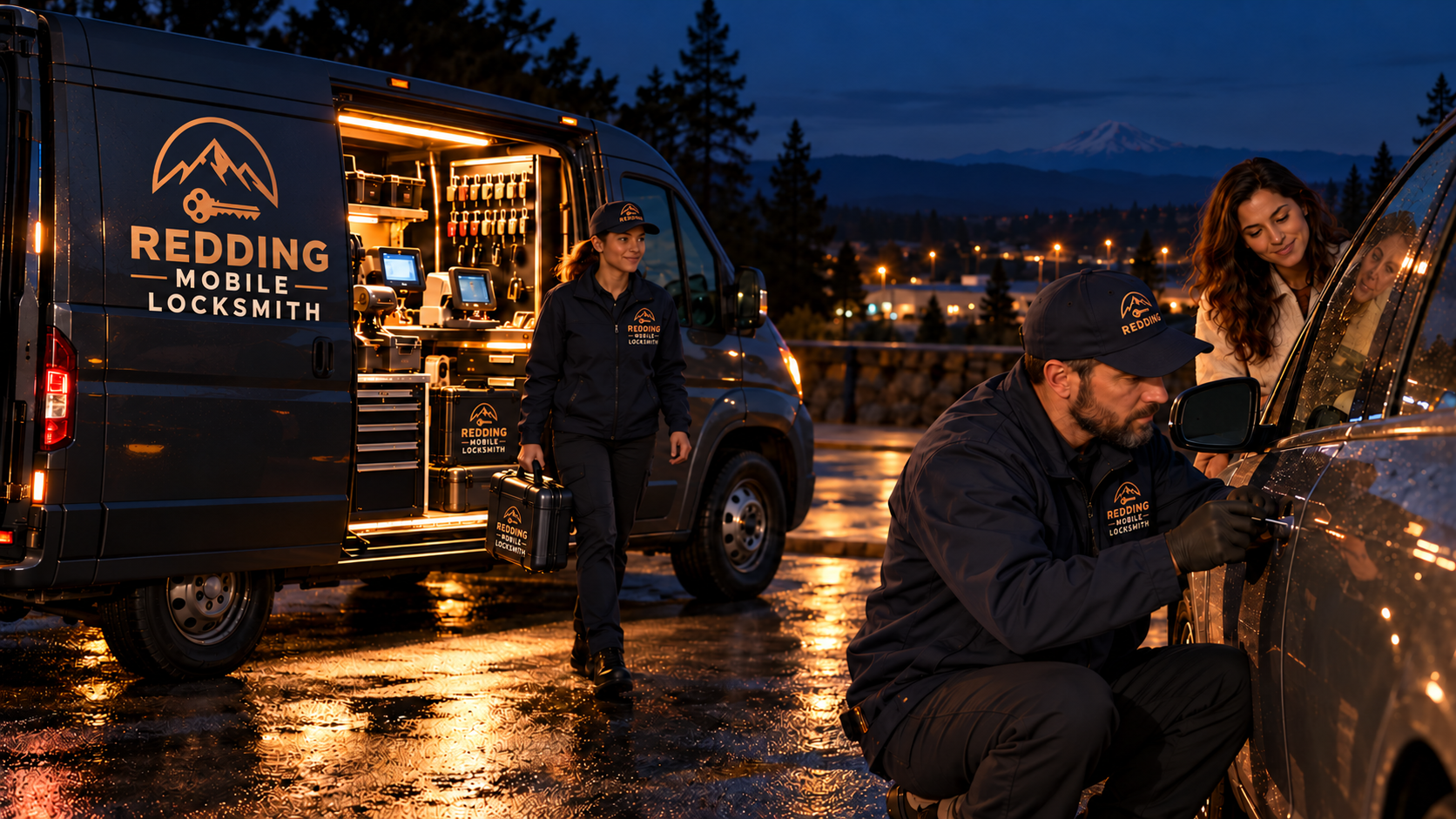
The service is built for hours when most businesses are closed. A branded van and uniformed team carry professional tools, key cutting and programming equipment and common hardware, so that many jobs can be finished at the door. The after hours emergency page describes the service in general.
Depending on the problem, a visit can involve opening a door, cutting a key, programming a transponder, repairing a damaged lock or replacing hardware. The related pages on night house lockouts and night car lockouts describe those jobs in more detail.
It helps to know what a technician will not do. They will not pry at a lock they can open cleanly, they will not leave a door unlatched when they go, and they will not hand over a key before they are satisfied about who you are. If something about a visit feels off to you, say so, and expect an honest answer. Calm, plain dealing is what a night call is about.
Because the phone line is coming soon, the way to ask for help right now is the request form on the contact page. Send the details described above, and keep your phone with you.
Afterward: making the night end well
When you are back inside, take a minute. Check that the lock works smoothly and that the door closes and locks as it should. If a key was lost, decide on rekeying while the technician is still there, since it is easier to do it once than to repeat the trouble later. Ask about spares and where to keep them.
If the visit left you with questions, ask them before the technician goes. How does the new key differ from the old? What should you do if the lock feels stiff in cold weather? Is there a sign that the hardware is wearing out? A calm conversation at the door is worth more than a vague worry the next morning.
Think about a small routine that prevents the next lockout. Put the keys in the same pocket every time. Keep a spare with someone you trust. Check the pocket before you pull the door shut. For a person who works long shifts, a simple habit is worth more than any gadget.
Rest, too. A lockout at the end of a hard shift is a tiring thing, and the right way to end it is a warm room and a closed door that answers to your key.
Dunsmuir pages and nearby towns
For specific needs in town, see the night car lockout page for Dunsmuir, the night house lockout page and the page on vehicle key replacement in Dunsmuir. The overview of Dunsmuir brings the set together.
Nearby communities along Interstate 5 have their own pages, including McCloud, Mount Shasta and Weed. Redding Mobile Locksmith serves 17 communities across Shasta and Siskiyou Counties, around the clock.
Common questions
What should I do first when I am locked out in Dunsmuir at night?
Check that nobody is in danger, and call emergency services at once if a person or pet is trapped or unwell. Then move to a lit, sheltered spot, tell someone you trust where you are, and try the easy things once: the door you are at, your pockets, your car, and anyone who holds a spare.
What details should I give when I ask for help?
Give your location with a landmark, and mention stairs, gates or steep paths. Describe the lock or vehicle, say whether a deadbolt is thrown or the engine is running, and explain what you tried. Include any alarm, pets or dead battery. Clear detail lets the technician bring the right tools.
Is it safe to wait in my vehicle?
Waiting in a locked vehicle with the engine off is usually safer than standing in the cold, as long as you are in a visible, lit place and not in an enclosed space. Keep warm layers on, and never run the engine in a closed garage. Stay clear of roads and the railroad.
Will I need to prove the home or car is mine?
Yes, a technician will usually ask for photo identification and something that connects you to the address or vehicle. Rules vary between owners, renters and guests. If your identification is locked inside, say so right away, and ask what other proof can work in your situation.
Can anything go wrong if I try to force the door myself?
Yes. Forcing a door can break the frame, damage the lock or injure you, and a climb to a window at night is a real fall risk. A scratched lock can usually be fixed, but a broken frame cannot be fixed as easily. It is better to wait and ask for help.
How do I ask for help if the phone line is not available yet?
The phone line is coming soon, so use the request form on the contact page. Give your location in Dunsmuir, the kind of lock or vehicle, what you tried and any safety concerns. Keep your own phone on and nearby so the technician can reach you.