
A traveler who stops in Etna and starts over
Imagine a traveler driving Interstate 5 through Siskiyou County who decides to leave the highway and settle for a while in Scott Valley. A small house in Etna becomes home. The seller hands over a ring of keys, but nobody can say how many other copies exist. A former tenant had a set. A contractor had a set. A relative of the seller may have had one. This is an illustration, not a real customer.
Everyone who moves faces the same question on the first night: who else can walk through this door? You cannot answer it by looking at the lock. You can only answer it by changing the lock so that earlier keys no longer work. That is what rekeying does, and it is one of the most practical security steps a household can take.
This page explains rekeying in plain terms. It covers how a lock holds a key pattern, how a technician changes it, which situations call for it and which situations call for a full replacement. It is written for people in Etna and the surrounding area who want to understand the choice before they make it.
You do not need any special knowledge to get started. Walk to each door, look at the lock and count them. Note whether each one has a deadbolt, a knob or both. That small list is all a dispatcher needs to begin planning, and it gives you a clear picture of how big the job is.
What rekeying really is
Most house locks use a pin tumbler cylinder. Inside the cylinder sits a column of small pins of different lengths. When the right key goes in, its cuts raise each pin to exactly the right height, and the cylinder can turn. A different key lifts the pins to the wrong heights, and the lock stays shut.
Rekeying means changing those pins so the lock responds to a new key. The technician removes the cylinder, replaces the pins with a new combination and builds a key to match. The old key now lifts the pins to the wrong heights, so it does nothing. The lock body, the handle and the deadbolt hardware stay in place.
The result is a lock that looks the same and works differently. That is why rekeying is a favorite for people who like their hardware but do not trust the keys. It is also useful when you want several doors to use one key, since the technician can set them all to the same pattern.
One limit is worth knowing. Rekeying works with the lock you already have, so it can only be as secure as that lock. A cylinder that is badly worn or poorly made will still be a weak point after the pins change. A technician can tell you honestly which of your locks are worth keeping and which would serve you better as replacements.
Rekey or replace: how to choose
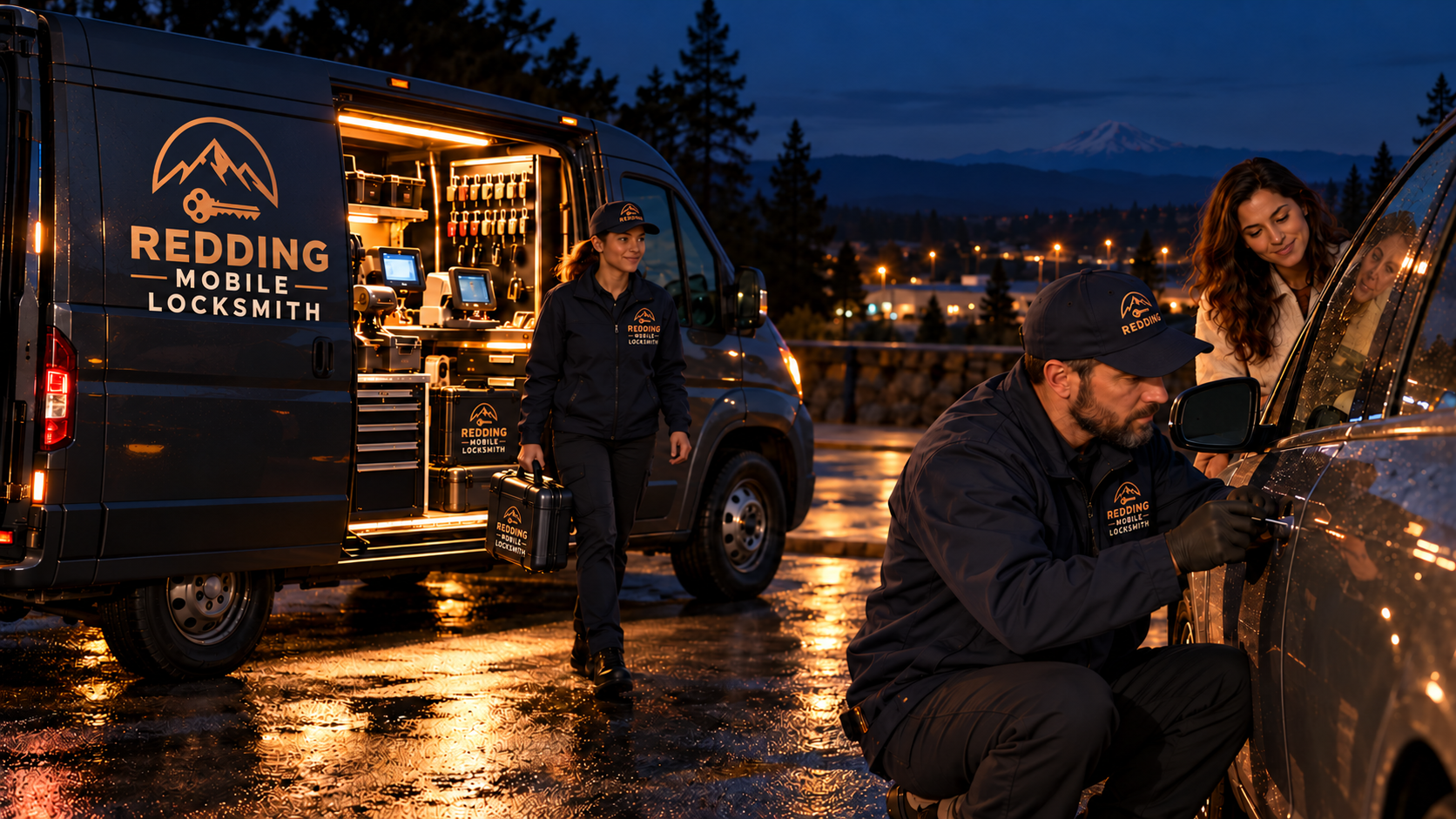
Rekeying is a good choice when the lock is in decent condition and you only want to cancel old keys. It is simple, it keeps your existing hardware and it can usually be done at your door with the tools in the van. The branded service van carries pin kits, key cutting equipment and common hardware for this purpose.
Replacing a lock is the better choice when the hardware is worn, damaged, loose or out of date. If the deadbolt sticks, the latch is bent, the finish has failed or the lock is a weak style, a new lockset gives you more than new keys. See installing new locks and broken lock repair for those cases.
You can also combine the two. Rekey the doors that are sound and replace the ones that are not. A technician can inspect your doors during the visit and recommend a mix. Ask for a plain explanation of why a given lock should be changed, and decide for yourself.
- Rekey when the lock is sound and the keys are the problem.
- Replace when the hardware is worn, damaged or weak.
- Combine both when some doors are fine and others are not.
- Ask the technician to explain each recommendation.
Moving into a home
A move is the most common reason to rekey. You cannot know how many keys the previous residents made, who got a copy or where those copies are now. Rekeying on the day you arrive turns a question mark into a settled answer. Every key you hold becomes the only key that works.
Think about all entries, not just the front door. Back doors, side doors, garage entry doors, sheds and shop doors should all be on the list. On a ranch property, gates and outbuildings count as well. A good plan covers every door that matters and uses a small number of keys so you are not carrying a huge ring.
If you are renting rather than buying, check what your agreement says about changing locks. We do not give legal advice, and rules vary, so ask your landlord or property manager before you proceed, and ask what you may do on your own. Often the landlord will be glad to have a locksmith do the work.
Plan the visit for daylight if you can. Walk the property together with the technician and point to every door and gate. Mention any lock that already sticks or any key that you know is worn. A short walk through saves a second trip and gives you a clear count of how many keys you will need at the end.
After a breakup or a household change
Relationships end and households change. When someone who had keys no longer lives in the home, many people feel uneasy until the locks are changed. Rekeying is a practical, low drama response. It does not require an argument. It simply makes old keys stop working.
Be thoughtful about the legal side. Who has the right to change locks can depend on whose name is on a lease or a deed, and rules vary. We cannot advise you on that. If you are unsure, check with the appropriate authority or an advisor before you act, and keep records of what you do.
If you feel unsafe, treat that as the priority. Contact emergency services if needed, and ask a locksmith about changing the locks as soon as it is safe to do so. For a plan for the evening, read locked out of your home late at night and night house lockouts in Etna.
Think about the other things that might have changed hands. A garage door code, a gate code, a smart lock code or a spare key hidden outside should all be updated at the same time. Rekeying the cylinders is one piece of a wider reset, and a good habit is to walk through the home and list every way in before the visit.
Tenants coming and going
Landlords and property managers have a repeating problem. Every time a tenant leaves, a set of keys is unaccounted for. Rekeying between tenants is a straightforward way to start fresh, and it takes less effort than replacing every lock. It also helps a new tenant feel secure on the first day.
A tidy approach is a key log. Record how many keys exist for each door, who holds them and when they are returned. At move out, collect all keys, rekey, make a fresh set and log it. The process is steady and repeatable, which is what a property needs.
Tenants have a part to play. Tell the landlord immediately if a key goes missing, and do not make unapproved copies. If your rental has a shared entry, such as a gate or a common door, ask who controls those keys. Details vary between buildings, and plain questions up front prevent later problems.
Keep notes on each unit. Record the lock type, the number of keys cut and the date of the last change. When a lock begins to feel stiff or worn, schedule replacement rather than another rekey. That record lets a manager see patterns and plan work in a calm way instead of reacting to every problem as it appears.
A lost or stolen key
Losing a key is stressful, and the stress depends on how likely it is that someone can find your door. A key lost in a field is a small risk. A key lost along with a wallet that shows your address is a bigger one. In the second case, rekeying is a sensible move.
Make the decision based on facts. Where was the key lost? Is there anything on it that identifies the home? Is the vehicle also at risk? If the key ring includes a vehicle key, look at vehicle key replacement in Etna as well, since the vehicle may need attention too.
You do not need to panic. If the loss happens at night, you can wait until daylight in most cases, as long as the doors are secure and you take reasonable steps, like using the deadbolt and any other locks. If you feel at risk, call the team and explain your situation.
If the key is found later, do not assume it is safe to reuse. Once you have rekeyed, the old key is simply an unused piece of metal. Keep it only if it is clearly labeled, or discard it. It is better to have one set of keys you trust than several you cannot account for.
What happens during a rekey visit
The visit is usually simple. The technician looks at each lock, confirms its type and checks its condition. They will ask for your name, the address and some proof that you live there, in the same way as for any home service. Rules for that check vary, so ask what is accepted when you call.
Then the work begins. The cylinder is removed, the pins are changed, the lock is reassembled and new keys are cut. The technician tests each lock several times, checks the strike plate and the latch and hands you the new keys. You should test each key in each lock before the technician leaves.
Ask for a short explanation of what was done. Keep the old keys until you are sure the new set works everywhere, then dispose of the old keys thoughtfully. Do not leave them on a ring where someone might pick them up. If you want to understand more about the overall process, see our rekey locks service page.
Before the technician leaves, ask how to keep the lock working well. A small amount of the right lubricant, applied sparingly, can help a cylinder through damp winters. Ask what to avoid, since some products attract dust. Plain care advice from the person who just worked on the lock is worth hearing.
Beyond rekeying: better habits and extra security
Rekeying solves the key question. It does not solve a weak door. After the visit, look at the door frame, the strike plate and the screws. A deadbolt is only as strong as the frame it sits in. Long screws in the strike plate and a solid frame add real resistance. A technician can point out weak spots.
Lighting and routine add more protection. A well lit entry, a habit of locking the door at bedtime and a routine of checking the back door before sleep all help. Read about a bedtime lock check routine and deadbolts and door frames at night.
Winter in Scott Valley is hard on doors. Frost, moisture and the swing of temperature can swell wooden frames and stiffen hardware, and a door that rubs against its frame all season can bind the bolt in the strike. Ask the technician to check that the bolt slides freely, so the new keys work smoothly in the cold and you are not fighting a stiff lock on the coldest morning.
Think about key control too. Give copies only to people you trust. Keep a note of who has a key. If someone no longer needs access, ask for the key back or plan another rekey. A few simple habits keep the work you paid for effective.
Finally, think about the keys you keep outside the home. A key in a flower pot, under a mat or in a fake rock is the first place a burglar looks. A neighbor you trust is safer. If you rely on a lockbox, change its code whenever someone who knew it no longer needs access.
Getting started in Etna
If you are ready to talk about rekeying, gather a short list: how many doors, what type of lock each uses, why you want the change and what proof of residence you have. Then send your request through the contact page with the town and a clear description of the property.
Redding Mobile Locksmith serves Etna and nearby communities like Fort Jones. You can read about our Etna coverage, our general home locksmith service and our after hours emergency service in Etna.
Rekeying is a small step with a large effect. It turns a ring of unknown keys into a clear set you control. For anyone who has just moved, parted ways with a housemate, managed a tenant change or lost a key, it is often the most sensible first move.
Common questions
Does rekeying change the lock itself?
No. The lock body and hardware stay in place. The technician changes the pins inside the cylinder and cuts a new key to match. The old keys no longer lift the pins to the right heights, so they stop working while the lock looks unchanged.
Should I rekey or replace the locks?
Rekey if the locks are in good shape and you only want to cancel old keys. Replace them if they are worn, damaged or weak. A technician can inspect your doors and suggest a mix, and you decide which doors get which work.
Can all my doors use one key?
Often yes. The technician can set several locks to the same pattern so one key opens them all. This is handy for a house with front, back and garage entry doors. Compatibility depends on the lock types, so ask about your hardware.
I rent my home. Can I rekey?
Check your lease and talk to your landlord or property manager first. Rules vary, and we do not give legal advice. Many landlords welcome the change, especially between tenants. Get approval in writing if you can, and keep a record of the work.
Is rekeying worth it after a lost key?
It depends on risk. A key lost with an address or a wallet is a stronger reason to rekey than a key lost in an open field. Think about what the key could be tied to, and ask the technician about the options.
What do I need to show for a rekey visit?
Expect to show that you live at or control the property, such as mail, identification, a lease or closing papers. Requirements vary, so ask what is accepted. Have the number of doors and lock types ready to keep the visit short.