
Home / McCloud / Night House Lockout in McCloud
McCloud home lockouts
Night House Lockout in McCloud: Know Which Problem You Have
A lockout and a failed lock feel the same at midnight, yet they are different problems with different fixes. This page shows a McCloud homeowner how to tell them apart and what to say when asking for help.
Two problems that feel like one
When you cannot get into your house at night, it feels like a single problem. In truth there are two. The first is a simple lockout: the lock works perfectly, but you do not have the key. The second is a failed lock: the key is in your hand, but the lock will not turn, the bolt will not move, or the door will not open.
The difference matters. A simple lockout usually ends with the door open and the lock still in working order. A failed lock may end with a repair or a replacement. The tools, the time and the questions are different, so naming the problem early helps the technician arrive ready.
McCloud is a forest town east of Mount Shasta on Highway 89, with older wood frame homes, cabins and snowy winters. All of those details shape which problem is more likely. Cold, moisture and aging hardware make failed locks more common than many people expect, and a quiet small town makes a call for help feel more personal.
A contractor, a work truck and a late job site
Picture a contractor who has spent the day at a job site on the edge of town. The work truck is loaded with tools, the light has gone, and the contractor heads to a client's house to leave a key or collect materials. At the door, the key slides in and will not turn. Or the key is somewhere in the truck, and the truck is across the yard.
That scene is a good test of the two problems. If the key is missing, it is a lockout. If the key is in hand and the lock is stuck, it is a failed lock. The contractor has a work truck full of useful gear, but none of it should be used on a customer's lock. A forced lock becomes a damage claim.
The contractor's wisest move is the same as anyone's. Stop, check the facts, and ask for help. The rest of this page lays out how to check the facts in a few calm steps.
A contractor also has a business reason to be careful. A door that is damaged by a visitor, even a well meaning one, can lead to arguments about who pays. Calling a professional creates a clear record: a technician who opened the door, tested the lock and explained what was found. That record protects the homeowner and anyone who works on the property.
Tradespeople often carry keys for several properties. A ring with many keys is easy to mix up, and the wrong key forced into the wrong lock is a common cause of a jam. If you work this way, label your keys with codes, not addresses, and keep jobs separate. A tidy ring prevents many late calls.
How to tell a lockout from a failed lock
Start by asking one question. Do you have a key that should work? If the answer is no, you are dealing with a lockout and the rest of the list does not apply. If the answer is yes, test the key gently. Try it in the lock. Does it enter smoothly? Does it turn even a little?
Never force the key. A key that is bent or snapped in the cylinder turns a small problem into a larger one. If the key sticks, stop and describe exactly what you felt: gritty, stiff, loose, or hard stop. That description helps the technician choose tools and parts before leaving the van.
- If you do not have the key, it is a lockout.
- If the key goes in but will not turn at all, the lock may have failed or frozen.
- If the key turns but the bolt does not move, the mechanism inside may be broken.
- If the bolt moves but the door will not open, the door may be binding on the frame.
- If the key is bent, worn or broken, the key may be the problem and not the lock.
Why locks fail in a mountain town
Locks are mechanical devices, and they wear. A cylinder contains small pins and springs that rise and fall each time a key is used. Over time, dirt, wear and moisture can slow them. In McCloud, winter humidity and freezing temperatures add stress. Water can enter a keyway and freeze, locking the pins in place.
Doors move too. Wood absorbs moisture and swells, and a door that closed freely in summer can bind in winter. When that happens the bolt may hit the edge of the strike plate rather than slide into the hole. The key turns, but the door still will not open, and it can look like the lock has failed when the real issue is alignment.
Inside a standard pin tumbler lock, each key cut raises a set of pins to exactly the right height so the plug can turn. If a pin sticks, the plug stays locked. If the springs are weak, the pins may not return. A little grit, a bit of ice or a worn key can each cause the same symptom, which is why a stiff lock is worth a look before it stops entirely.
Older hardware adds another layer. A cabin or older home may have a lock that is decades old. Parts wear, springs weaken and screws loosen. A lock that has worked for years can fail on a cold night, and it will often have given warning signs, such as a key that needed jiggling.
What to do in the first ten minutes
Check safety first. If you are cold, find shelter. If you are alone in the dark, move to a lit spot. If someone is inside who needs help, such as a child, an elderly relative or a person who is unwell, call emergency services first. A locked door should never delay an emergency response.
Then check every other entry you own. Try the back door, a side door, a garage entry door. Do not climb or break glass. If you have a spare key with someone trusted, reach them. If the lock is frozen, warm the key in your hand and try gently, but do not use hot water or force. See locked out of your home late at night for the full list.
Keep your phone close and the battery protected from cold. If a landlord, relative or housemate has a spare, a message may settle the matter. If not, do not stand outside waiting for a reply. Decide on a time limit, such as stopping the search for a spare once it is clear nobody will answer, and then move on.
If nothing works, prepare for the call. Know your location, the type of door, and the problem: lockout, stuck key, stuck bolt, or binding door. Have identification ready or know where it is. If you can reach the request page, describe what you see.
What the technician does for a simple lockout
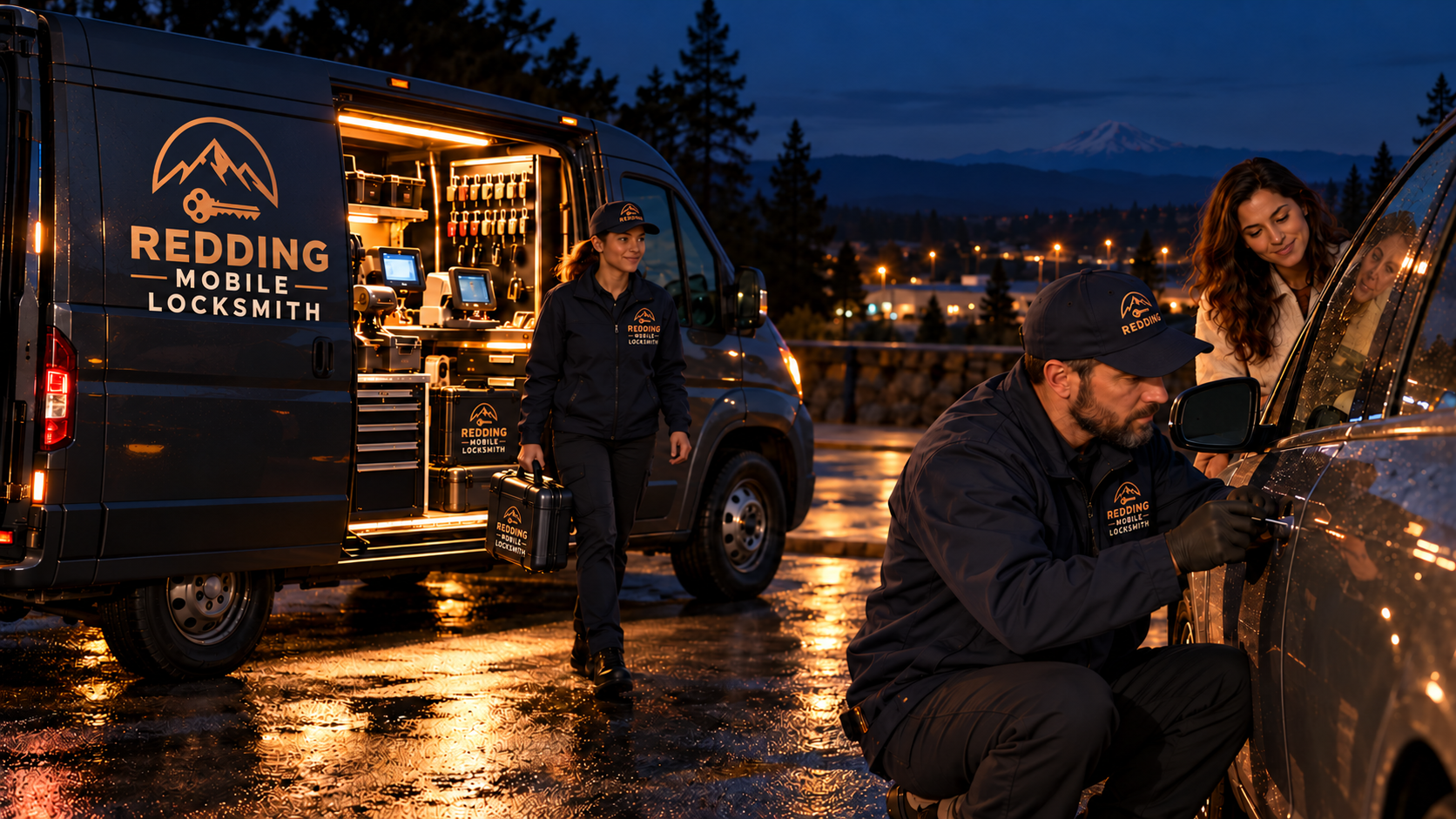
For a simple lockout, the lock is healthy and the aim is to open the door without harming it. The technician arrives in a branded service van with professional tools and begins by looking at the door, the lock type and the frame. Most standard residential locks can be opened without damage.
The method depends on the lock. A knob lock, a deadbolt, a lever handle, a smart lock and a high security lock all behave differently. The technician chooses an approach that suits the hardware and explains it to you in general terms. No part of the process is a trick. It is trained work with the right tools.
Once the door is open, the technician confirms the lock still works. You test the key if you have one. If not, you may talk about a spare, a rekey, or a new key. For general help at any hour, see night house lockout service.
What the technician does for a failed lock
A failed lock calls for a different mindset. The first step is to understand why it failed. Is the cylinder worn? Is the bolt jammed? Is the latch damaged? Did the strike move? The technician looks, tests and then explains. Sometimes the fix is a cleaning and a small adjustment. Sometimes it needs a new cylinder or a full lock.
The van carries common hardware, so many repairs can happen on the spot. If a part is not on hand, the technician will explain the options. A temporary measure may be possible to secure the door for the night, with a proper repair after. Ask what is possible and what is wise.
Deadbolts and knob locks fail in different ways. A deadbolt may have a bent bolt, a loose thumb turn or a worn cylinder. A knob lock may have a broken latch spring or a stripped screw. A lever handle may sag and stop retracting the latch. The symptoms sound similar, but the repairs differ, and the technician will check each part in turn.
If the lock is old, consider replacing it instead of repairing it. A worn lock can fail again. The pages on broken lock repair and installing new locks explain how each path works and when each is the right call.
A cold, snowy night changes the work
McCloud snow can pile on a porch, cover a path and hide a step. If the technician has to work in the dark, light matters. Switch on an outdoor light if you can, or hold a flashlight. Clear a path to the door where you safely can. Mention steep steps, ice and gates when you ask for help.
Cold affects tools and hands too. A technician works more carefully in poor conditions and may ask you to step aside for a moment. Be patient. If you are cold, wait in a warm place nearby, not at the door. The technician will call you over when it is time to test the lock.
After the work, check for ice around the door. Ice on the threshold or the strike can cause the next lockout. Clearing it and keeping the keyway dry helps the lock work for the rest of winter. For more on cold weather, see mountain roads, cold nights and lockouts.
When the door is damaged or forced
Sometimes a door has been forced before the technician arrives. Maybe you tried to kick it, or someone tried to break in. A forced door may have a cracked frame, a split jamb or a bent strike. The lock may still work, but the door will not stay secure.
If you suspect an attempted break in, do not enter alone. Call emergency services and let them check the property. A locksmith can help secure the door afterward, but personal safety comes first. Take notes and photographs if it is safe to do so.
Once the area is clear, the technician can repair or reinforce the door. Short term, this may mean a temporary fix to close the door for the night. Longer term, it may mean replacing the frame section, adding a reinforced strike or upgrading the lock. Decide what you need and what you can plan for later.
Frame strength matters as much as the lock. A strong deadbolt set in a weak jamb gives little protection. Long screws that reach the framing stud, a reinforced strike plate and solid hinges all help the door resist force. These parts are inexpensive compared with the harm a forced entry can cause, and the technician can fit them during the same visit.
Proof, permission and rented homes
A technician will ask you to show you have a right to be at the property. This protects you. A lease, a utility bill, mail, an identification card with a matching address, or contact with the owner can serve. If your documents are inside, say so. The guide on why a locksmith may ask for identification explains the thinking.
If you rent, the landlord may need to approve certain work. Opening a door is one thing, changing a lock is another. Rules vary, so ask your landlord or check your lease. If you cannot reach the landlord, the technician can explain what is possible without making changes that could cause trouble later.
If you are a guest, a house sitter or a short term occupant, explain that. The technician may need to contact the owner. This can take time at night, so give accurate details as soon as you can.
Preventing the next call
Spare keys are simple and effective. Leave one with a trusted neighbor or relative. Avoid hiding keys near the door, because they are easy to find. If your lock is stiff, have it checked before winter. A small repair on a quiet day beats a failure at midnight.
Lubricate the lock lightly with a product made for locks. Do not use heavy oil that attracts dirt. Check that the door closes smoothly and that the latch lines up with the strike. If you share a home, agree on who has a key and where spares live. Consider a rekey in McCloud if keys have gone missing.
For a broader look at how the team serves this town, visit the McCloud coverage page. For related first steps, read after hours emergency help in McCloud.
Common questions
How do I know if my lock has failed or I am only locked out?
If you have no key, it is a lockout. If you have a key that goes in but will not turn, or turns without moving the bolt, the lock may have failed or frozen. Describe exactly what happens when you try the key. Do not force it, because a broken key makes the job larger.
Can a frozen lock be fixed without replacing it?
Often yes. Moisture that froze inside the keyway usually clears once the lock is warmed and cleaned. Do not pour hot water on it, because it refreezes. A technician can warm and lubricate the lock properly and check whether the cylinder is worn enough to need replacement.
What if the door is binding and not the lock?
A door that swells or shifts can press the bolt against the frame, so the key turns but the door will not open. The technician can adjust the strike or the hinges, or plane the edge. Mention when it happens, such as after rain or only on cold mornings.
Will the lock still work after a lockout is fixed?
In a simple lockout the lock is normally undamaged and works as before. The technician tests it with you before leaving. If the lock shows wear or damage, you are told and given options. Ask for the test if it is not offered, and tell the technician about any odd feelings.
What if I think someone tried to break in?
Do not go in alone. Call emergency services and let them check the property. A locksmith can help secure the door afterward. If it is safe, note what you see and take photographs. Personal safety comes first, and the door can be repaired once the area is clear.
What proof will the technician ask for?
Something that links you to the property, such as a lease, a utility bill, mail or an identification card with the address. If it is inside, say so, and explain who you are. The technician may suggest other ways to confirm, such as contacting the owner. Rules differ between situations.