
Home / Montague / Night House Lockout in Montague
Montague house doors
Night House Lockout in Montague, California
Not every locked door is the same problem. This page helps Montague residents tell a simple lockout from a failed lock, share the right details at night, and understand what each situation calls for.
A shared rental and one missing key
Imagine a college student sharing a rental with two roommates, coming home late from a study session to find the porch dark and the door locked. The student's key was on the desk. One roommate is out of town. The other is not answering. The landlord's number is in an email somewhere on a phone that is nearly out of battery.
That is a very ordinary night, and it is full of small decisions. Who can authorize help? What proof will be asked for? Is the lock fine, or is something wrong with it? Getting these answers straight early shortens the whole evening.
This page is for house doors in Montague, a small town in the Shasta Valley of Siskiyou County near Yreka. For the full service description, see Night House Lockout. For related home work, see Home Locksmith.
Students and young renters are not the only ones in this spot. Anyone who shares a home with others, from a family with grown children to two neighbors splitting a house, faces the same set of questions. The answers are easier to find when the details are plain and the room is calm.
The two kinds of locked door
There are two broad situations. In the first, the lock works properly and you simply cannot get in. That is a simple lockout. In the second, the lock itself has failed or is damaged. That is a failed lock. The distinction decides what tools and parts the technician brings, how long the job takes and what happens afterward.
A simple lockout is about access. The key is inside, lost, locked in a car, or held by someone who is away. The lock, the door and the frame are all intact. The aim is to open the door without harming any of them.
A failed lock is about mechanics. The cylinder is jammed. The key is broken off. The bolt is stuck. The latch is worn through. The aim is to open the door, then repair or replace what failed. Both can happen on the same night, and one can look like the other.
There is also a middle case. A lock may work, but the door may have shifted, so the bolt no longer lines up with the strike. In that case the lock is fine and the door is the problem. The result feels like a failed lock, and the repair is a door adjustment rather than new hardware. Mention any change in how the door closes or sticks.
Signs of a simple lockout
In a simple lockout, everything about the lock feels normal until you try to open it without the key. The knob turns or the key slides in smoothly and feels familiar. The door sits square in its frame. The lock worked yesterday. The only change is that you do not have access.
You may also notice that the deadbolt is thrown, which you remember doing, or that the door clicked shut behind you as you stepped out. Spring latches on many entry doors lock automatically when the door closes. That is a design feature, and it explains many lockouts.
If these signs match your situation, tell the dispatcher it looks like a simple lockout, and describe how the door closed. This helps them bring the right plan, and it often means the lock can be left as it was.
Cold and damp can fool a simple lockout into feeling like something more. A key that sticks in frost may loosen after a moment of warmth. Hold the key in your hand and try again gently. If it still will not turn, do not force it, because a key that snaps in the cylinder turns a simple lockout into a failed lock.
- The key slides in and turns smoothly when you have it.
- The door closed behind you and locked on its own.
- The lock worked normally earlier in the day.
- There is no sign of damage to the door, frame or lock.
- You know where the missing key is, or that it is lost.
Signs of a failed lock
A failed lock gives warnings, though people often ignore them. The key goes in hard. It turns with a grind. It needs to be wiggled or lifted. The bolt moves partway and stops. The latch hangs up when you close the door. The knob feels loose or spins without engaging.
Tonight's trouble may be the end of a longer story. If the lock has been getting stiff for weeks, tonight's failure is the last step. If the key has been getting thin or rounded at the edges, it may have finally broken off. The page on a key broken off in a door lock covers that case.
In older Montague homes the hardware can be decades old. Springs tire, pins wear and finish flakes away. A lock that has served for a very long time is entitled to retire, and the repair side of that work is covered at broken lock repair.
Pay attention to what you hear, too. A lock that clicks, grinds or rattles when you work the key is telling you something. A smooth, silent lock that simply will not turn without the key is behaving as designed. Neither sound is proof, but both help the person on the other end of the request.
- The key grinds, sticks or needs to be wiggled.
- The knob or handle feels loose or spins freely.
- The bolt moves partway and stops.
- A broken piece of key is stuck in the cylinder.
- The door will not latch when you pull it shut.
Why it matters which one it is
With a simple lockout, a technician can often open the door and leave the lock in place. You end the night with the same hardware and a working key. The cost is the cost of access.
With a failed lock, the technician may need to remove the cylinder, drill, or replace the lock to open the door. Then the night ends with new hardware. The cost includes parts and the extra time. If the lock is on a rental, the landlord may have a say in the replacement.
Telling the truth about what you saw makes a difference. If you call a failed lock a simple lockout, the technician may arrive with the wrong parts. If you call a simple lockout a failed lock, you may be told to expect a replacement that is not needed. Honest detail wins every time.
Think of the choice in terms of time and tidiness. A simple lockout resolves cleanly once the door is open. A failed lock ends with a decision about repair or replacement, and with a rental that decision may not be yours alone. Ask the technician which they expect before they start, and agree on the plan.
Shared homes and who may authorize
Shared housing raises a question that a single owner never faces: who can say yes? A person on the lease generally has the right to enter, but may not own the lock. A landlord owns the building but does not live in it. A roommate who is away may be the only one with the key. Rules vary, so this page names the questions rather than the answers.
Start by reaching the people involved. A short message to roommates and the property contact may produce a key and end the problem. If it does not, tell the technician who you are and your link to the address. A lease, an email from the landlord, a utility bill or an identification card with the address are all useful.
Some landlords want to be informed before a lock is changed or replaced. Some want a copy of the new key. Some do not care. Ask. The page a late night apartment lockout, management first explains the order of calls in a multi unit setting, and why a locksmith may ask for identification explains the safeguard.
A shared home is also a shared secret. Do not announce to the whole street that the house is empty and the door is locked. Keep conversations about the lockout among the people who need to know. This is ordinary caution, and it protects everyone who lives there.
What to do while you wait
The wait is easier with a plan. Find a safe, lit place close by. Charge your phone if you can. Tell one person where you are. If the weather is cold, wear what you have and find a windbreak. In summer, find shade and water.
Do not try to get in through a window, a roof or a crawl space. A fall in the dark is a worse night than a lockout. Do not break glass. Do not force the door. If you are on a rental, damage to the property can become a dispute with the landlord on top of the lockout.
Use the time to prepare. Write down what you know about the lock. Take a photo of the door in the light of your phone. Gather what proves where you live. Send the request and keep the line open for a reply.
If you are alone with a phone that is low on battery, spend what remains on the request itself. Send the message first. Then turn off screen brightness, close other apps and keep the phone warm in an inside pocket. Cold drains batteries, and a late night in the valley can be cold.
What to say in the request
Be specific. Name the town and give the address or the nearest road. Say whether the door is a front, back or side door. Say whether it has a knob, a lever, a deadbolt, or more than one. Say whether it looks like a simple lockout or whether the lock is failing.
Say who you are. Owner, tenant, roommate, family member or guest. Say who else has a key, and whether they can be reached. If you know the landlord's name, include it.
Say whether anyone is inside. A person who cannot open the door from inside, a child or a medical issue changes the priority. In any danger, call emergency services first.
If the situation is complex, say so in plain words. A shared rental, a landlord who is away, a roommate who is traveling, and a lock that has been sticky for weeks is a lot to explain, but the dispatcher would rather hear it all than guess. A clear story helps the visit go smoothly.
What the technician does at the door
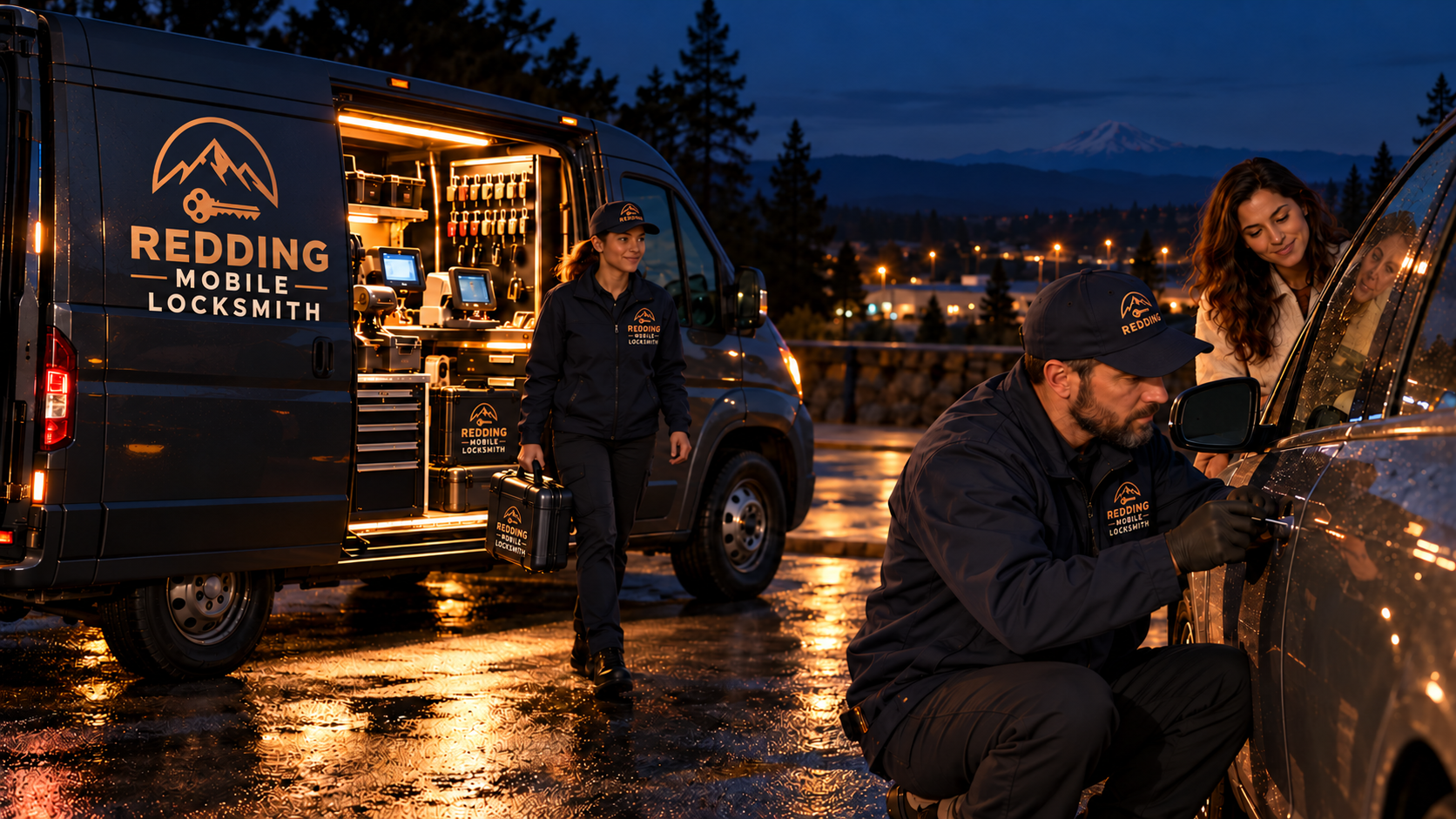
The technician arrives in a branded service van, in uniform, and asks the same first question every time: who are you and what is your link to this address? Expect that. Then they inspect the lock and the door and tell you what they plan to do.
If it is a simple lockout, they open the door with tools made for the purpose and test the lock. If it is a failed lock, they explain what failed and what options exist: repair, rekey, replace. You choose. If the lock belongs to a landlord, you may want to confirm with them before replacement.
Once the door is secure, they check that it locks and unlocks smoothly with a key. They may offer to cut an extra key. They will not leave a door that cannot be locked.
The conversation after the door is open is just as important as the one before. Ask what the technician saw. Ask what to watch for in the next week. Ask whether anything about the lock or the door should be handled in daylight. The answers cost nothing and often prevent the next call.
Preventing the next one
The strongest prevention for a house lockout is a plan for the missing key. In shared housing, give each person a key and agree on where a spare lives. A lockbox, a trusted neighbor or a roommate's room can all work. Hiding a key under a mat is the worst option.
If the lock is showing signs of wear, deal with it before the next bad night. A stiff key is a warning. A loose handle is a warning. A door that must be lifted to latch is a warning. A daytime visit costs less stress than a midnight one.
And if a key goes missing without explanation, consider rekeying. It resets the system and removes the doubt. See After Hours Emergency in Montague for the emergency view.
If you decide to rekey after a lockout, make the decision with everyone who lives there. A new key should reach each person, and old keys should be collected. In a rental, work out in advance who pays for the change and who keeps the spare. Clear agreements make shared housing easier.
Asking for help in Montague
The phone line is coming soon. For now, use the request form: send a request. Include the details above and keep the message short.
The general guide for house lockouts is locked out of your home late at night. For the town, see Montague, and for the neighbor to the north, Yreka.
If you smell smoke or gas, hear someone in trouble, or see signs of a break in, step away and call emergency services first.
Common questions
What is the difference between a simple lockout and a failed lock?
In a simple lockout the lock works and you just have no key. In a failed lock the mechanism is damaged, such as a key that grinds, a bolt that sticks or a broken key in the cylinder. A failed lock often needs repair or replacement as well as opening.
How can I tell which one I have?
If the lock felt normal until tonight and the door closed behind you, it is probably a simple lockout. If the key has been stiff, the handle is loose, or a piece of key is stuck, the lock may have failed. Describe what you noticed and let the technician judge.
I share a rental. Who can ask for help opening the door?
Usually someone with a right to live there can, but the lock may belong to the landlord. Try to reach roommates and the property contact first. Bring a lease, a utility bill or identification with the address. Rules vary, so ask early.
Will the lock have to be replaced after a lockout?
Not always. In a simple lockout the lock is often left in place and still works. If the lock has failed or was damaged, it may need repair or replacement. The technician will explain the options and you decide, with the landlord if you rent.
Should I climb through a window if I can reach one?
No. Falls in the dark cause more harm than most lockouts, and a broken window or forced frame becomes a repair or a dispute. Wait for help in a safe, lit place. Call emergency services first if anyone inside is in danger.
What details should I put in my request?
Give the town and address or nearest road, which door, what kind of lock, whether it looks like a simple lockout or a failing lock, who you are in relation to the home, and who else holds a key. Say if anyone is inside and how to reach you.