
Home / McCloud / Night Car Lockout in McCloud
McCloud vehicle lockouts
Night Car Lockout Help in McCloud for Every Vehicle
A sedan, a pickup, a work van and an SUV all lock differently. This page explains how a night lockout works for each, using a McCloud landlord who owns several vehicles as the example.
One lockout, four different vehicles
A car lockout sounds like one problem. In practice it is several. A compact sedan, a full size pickup, a cargo van and a family SUV each use different doors, latches, windows and security systems. The approach changes with the vehicle, and so does the information a dispatcher needs from you.
Imagine a landlord in McCloud who looks after a few rental cabins and older homes. The landlord drives a pickup for hauling, a van for tools and supplies, a sedan for errands, and sometimes borrows a family SUV. On a given night, any one of those could be the vehicle with the keys inside.
That picture is useful because it shows the range. A night car lockout in a forest town on Highway 89 can involve a cold truck cab, a van loaded with equipment, or a quiet sedan at the edge of a small lot. This page walks through each one and explains what to say and what to expect.
Start with safety and with the basics
Before anything else, check your own safety. McCloud winters bring snow and hard cold, and a dark roadside is not a place to stand around. If you are in a vehicle that has stalled or stopped, keep the engine running only if you are sure the exhaust is clear. If you are outside, move to a warm, lit place.
Then check the doors one at a time. Try every door, including the rear doors and the tailgate or hatch. A lockout is often only a front door problem, and another door may be unlocked. Do not force any door and do not pry at a window. A bent frame or a broken seal creates a second problem.
If a child or a pet is inside the vehicle, call emergency services first. Do not wait for a locksmith. This is the single most important rule on this page. Once emergency services are on the way, you can request a locksmith as a second step.
Sedans and compact cars
A sedan is usually the simplest case. Most have four doors, a trunk and a standard set of power locks. The key is often a transponder key with a small chip in the head, or a fob with a push button start. A lockout on a sedan usually means the key is inside on a seat or in a cupholder.
The technician will look at the door type, the window seals and the lock mechanism. Newer sedans have side airbags and wiring inside the door, which means the approach must be careful. A trained technician knows where not to put a tool. This is one reason to avoid trying coat hangers and wedges yourself.
Sedans also have a trunk, and a trunk release is sometimes tied to the same system. If the trunk is open but the cabin is locked, the rear seat may offer no access because most seat backs are fixed. Do not crawl into a trunk or force a seat. Describe what you see, and the technician will tell you what is realistic.
If you have a spare key at home, tell the dispatcher. Sometimes the simplest path is to get the spare to the vehicle. If no spare exists, the technician can open the door and, if needed, discuss a new key. See night car lockout service for the general process.
Pickup trucks and work trucks
A pickup has a taller cab and often a sliding rear window, a crew cab or an extended cab. Door types vary a great deal between model years. An older work truck may have manual locks and a plain metal key. A newer truck often has power locks, a key with a chip, and sometimes a keypad on the door.
Trucks often carry tools, ladders and supplies in the bed. A lockout means you may be stuck with valuable equipment nearby. Keep an eye on the bed and tell the technician what is in it. If the truck has a tonneau cover or a bed lock, mention that as well, because those have their own keys.
Heavy duty and three quarter ton trucks may have thicker door glass and stiffer seals. Doors are heavier and hinges are stronger, so the approach differs from a light passenger car. The technician takes the weight and the tension of the door into account and works to avoid scratching paint or bending trim.
A truck in a rural setting may be parked off pavement, on gravel or on a muddy shoulder. Tell the dispatcher about the surface and the slope. A branded service van needs room to park safely and a stable place for the technician to work. For rancher style trucks, the guide on keys for pickup trucks on ranches covers the common key types.
Cargo vans and work vans
Vans are workhorses. A landlord with a maintenance van keeps tools, hardware and supplies inside, and a lockout can stop a whole day of work. Many vans have a driver door, a passenger door, a sliding side door and rear doors, each with its own latch. Some vans lock the cab and the cargo area separately.
A van with a shelving system or a locked cabinet raises extra questions. The technician will focus on the door and leave the contents alone. You may be asked to confirm ownership or your right to the vehicle. For fleet vans, see the guide on fleet vehicle night lockouts, which explains how company details help.
- Tell the dispatcher whether the cargo area has its own lock.
- Mention any shelving or locked cabinets that matter for the job.
- Say whether the van is a company vehicle or a personal one.
- Have the registration or a company document ready if you can reach it.
- Explain whether the van is a single key or a multi key setup.
SUVs and family vehicles
SUVs combine features from cars and trucks. They have a rear hatch, a third row on some models, and often a complex locking system with child safety locks on the rear doors. A lockout in an SUV can be complicated if the child locks are set, because a rear door may not open from inside even when the front is unlocked.
Newer SUVs often use a smart key that stays in a pocket or bag. The vehicle detects the key nearby and allows the doors to be opened and the engine to start with a button. If the key is inside the vehicle with the doors locked, the car may refuse to lock, or it may lock itself after a delay. Details vary by model.
Family SUVs often carry car seats and cargo, so a lockout can involve a worried household. If anyone is in the vehicle, even briefly, treat it as an emergency until everyone is out. If everyone is outside and safe, there is time to describe the problem clearly and let the technician plan the opening.
If you have a smart key, read the guide on smart key replacement in plain words and push to start vehicles and lockouts. They explain what is different about these vehicles and why a lockout may involve more than a simple door opening.
A landlord turning over a unit and a lost key
The landlord in this picture is in the middle of a turnover. A tenant has left, the unit is being cleaned, and the landlord is moving between the cabin and the supply van. In the hurry to finish, the van keys are set down inside and the door closes. It is evening, cold, and the unit still needs attention.
This is a typical case where vehicle and property issues overlap. The same ring may hold the van key and the keys to the unit. A van lockout can then lead to a house lockout, or the other way around. If the ring is stuck inside, both problems appear together.
Think too about the order of the night. If both the van and the unit are locked, ask which one matters more right now. A van with tools may be needed to finish a job, while a unit may simply need to be secured until morning. Tell the dispatcher about both, so the visit can be planned around the most urgent door.
If you manage property, keep the van key and the unit keys on separate rings. Keep a spare van key somewhere other than the van. If a unit has just changed hands, consider a rekey in McCloud so old keys no longer matter. A turnover is a good time to sort out who has what.
What information helps the dispatcher
Give the vehicle type, make, model and approximate year, if you know them. Say whether it uses a metal key, a key with a chip, a key fob or a push button start. Say which door you can see locked and whether any windows are open. Mention if the engine is running.
Describe where you are. A road, a lot, a driveway, or a trailhead. Mention the side of the road and any permanent landmark. Note lighting, snow cover and whether the van will have room to park. A short, clear description saves time. The guide on preparing your vehicle information for the call gives a full list.
Mention anything that could confuse a standard approach. A vehicle with an aftermarket alarm, a remote start kit, or a window tint film may need extra care. Tell the technician if the vehicle has been in a recent repair, because new hardware sometimes changes how a door behaves. These details take a moment to share and save a lot of trouble.
Have proof ready. Registration, an insurance card, or an identification card helps. If those documents are in the vehicle, say so. The technician will explain what other proof is acceptable. Rules about ownership checks exist to protect you, so expect the question and answer it calmly.
What the technician does and what you should not do
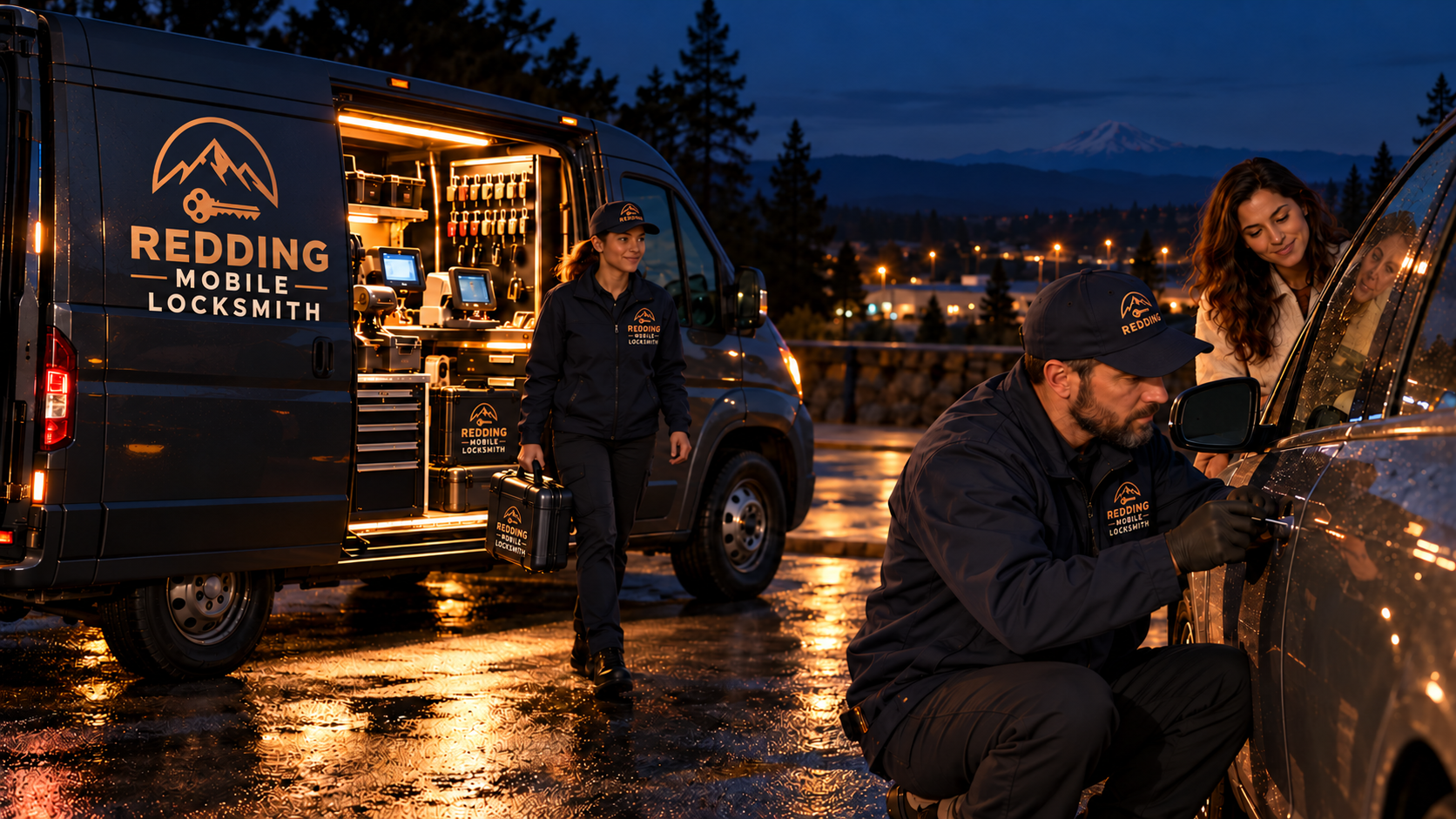
The technician arrives in a branded service van, in uniform, with professional tools. Ask to see how they identify themselves. A real professional is glad to be asked. Before starting, the technician will explain the plan and check the door and window condition.
Do not coach the technician on the method. Do not push or lean on the vehicle. Do not stand in the way of the work. Keep your distance, and keep pets and children away from the area. If you have a pet in the vehicle, say so at once and remember the emergency rule.
A professional does not describe the method as a trick. The technician uses tools made for the job, protects the paint and the weatherstripping, and avoids anything that could harm the airbag wiring in the door. If a part is damaged during the work, a trustworthy technician says so at once and explains the next step. That honesty is part of why you ask the questions at the start.
Once the door is open, the technician helps you confirm that the keys are there and that the vehicle locks and unlocks. If the key has been lost or damaged, this is a good time to discuss a replacement. Vehicle key replacement in McCloud covers that in detail.
Cold weather and car doors
Cold affects vehicles. Rubber seals stiffen, door locks freeze and batteries lose strength. A lockout on a frozen night can be complicated by a door that is stuck shut with ice. Do not pour hot water on the door or the lock. It can crack glass and refreeze into a worse seal.
If the door is frozen shut, gentle pressure on the handle can break the ice seal. Do not slam or yank. A dead vehicle battery can also affect power locks. A key fob may not respond, and the technician may need to use a different approach. The guides on frozen car door locks on winter nights and a dead car battery and door locks explain what is happening.
Keep warm while you wait. Layers, a hat and gloves matter more than you think. If you have a blanket or a coat in the vehicle, that is useful for the next time. A small emergency kit stays in many drivers' trunks, but a trunk lockout makes it unreachable, so consider keeping a few items where you can reach them.
Preventing the next lockout
Make a spare key. A spare that lives with a trusted person or in a safe place at home saves a night like this. Check that the spare works. Some modern keys need programming, and a cut key alone may not start the engine. Ask about both when you request the spare.
Build habits. Check your pocket before you close the door. Do not leave a key on a seat or in a cupholder. Keep one key on a ring you always carry. If you share a vehicle, agree on where the spare lives. The guide on why a spare key matters before you need it adds more.
If you need help tonight, use the request form. The phone line is coming soon. Include the vehicle type, the town and the situation. The McCloud coverage page explains how the team serves this part of Siskiyou County.
Common questions
Is a truck lockout different from a car lockout?
Yes, in several ways. Trucks sit higher, have different door and window designs, and often carry tools in the bed. Older trucks may use plain metal keys while newer ones use chipped keys or keypads. Tell the dispatcher the make, model, year and anything stored in the bed so the technician can plan.
What if my SUV has child locks on the rear doors?
Child locks can make a rear door impossible to open from inside, even when the front is unlocked. Mention this when you describe the lockout. The technician will check which doors can be opened from outside and choose the safest approach. Never leave a child inside a locked vehicle.
Can a locksmith open a van with a locked cargo area?
The cab and the cargo area often use separate locks. Tell the dispatcher which one is the problem. The technician will focus on the door you need opened and leave the contents alone. You may be asked to confirm that you own the vehicle or are authorized to use it.
What if the engine is running with the keys inside?
Say so right away. A running engine changes the plan, because the vehicle can be driven off or run out of fuel. Stay close, keep the doors in view and keep warm. If the exhaust is blocked by snow, move away from the vehicle and do not sit inside it.
What do I do if there is a child or pet inside?
Call emergency services first and follow their instructions. Do not wait for a locksmith. Cold or heat can become dangerous in a closed vehicle. After the emergency is handled, a locksmith can help with the vehicle if it is still needed.
Do I need a new key after a lockout?
Not always. If the key is inside the vehicle and undamaged, opening the door is usually enough. If the key is lost, broken or worn, a replacement may be needed, and some keys need programming. Ask the technician which applies to your vehicle before any work starts.