
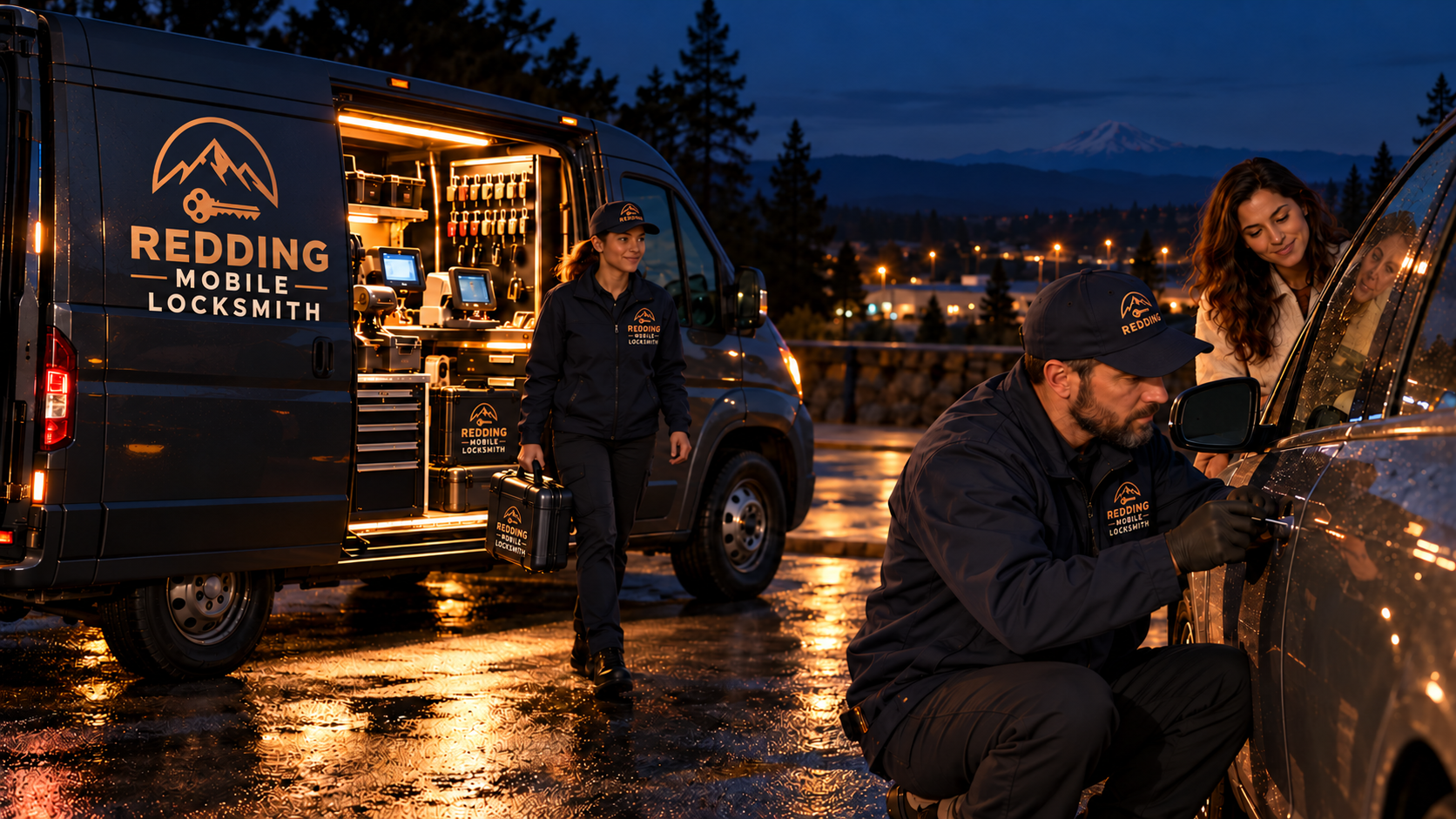
A newcomer on the porch at night
Imagine someone who closed on a house in Etna only days ago. The boxes are half unpacked, the rooms still smell like fresh paint and the key ring has four keys that look nearly identical. They step outside to bring in the last carton, the wind pulls the door shut and the lock catches. This is a made up illustration, not a real customer, but it is a story that plays out in many small towns when people are still learning their own front door.
That newcomer faces a few special problems. They do not yet know which neighbor has a spare. They do not know the quirks of the door, such as whether it sticks when damp. Their identification may still show an old address, and the paperwork that proves the purchase may be in a box inside the house. Nothing about this is unusual, and none of it is a dead end.
This page is a calm guide for that evening. It is written for owners, renters and families in the Etna area, and it explains what to do, what to say on the call and what to expect when the service van pulls in. The aim is to turn a tense night into a short one.
Keep one idea in mind as you read. A lockout is a logistics problem, and logistics respond well to clear information. The more precisely you can describe the home, the door and your own situation, the less back and forth it takes to get a professional to the right place with the right tools. Everything below builds on that idea.
Stop and check the basics
Before you call anyone, take two minutes to be sure of what you face. Walk around the home in the light you have and gently test each door and window. Many people find that a back door, a side door or a garage entry door was left unlocked. Check whether someone else in the household is home and can open the door from inside.
Look for a spare key you may have hidden. Think about who might have one: a previous owner, a landlord, a property manager, a relative or a neighbor. Do not climb onto a roof, force a window or pry a frame. A cracked pane or a bent door costs more than the visit, and a fall in the dark is a far worse outcome than a night spent waiting.
If a child, an elderly person or a pet is inside and cannot open the door, call emergency services before anything else. They are the right first call for that situation. Once everyone is safe, you can focus on the lock. If the household is secure and only you are outside, then waiting for a professional is the calm and sensible move.
- Try every normal entry gently.
- Think of everyone who might hold a spare key.
- Never force a window or climb at night.
- Call emergency services first if someone inside needs help.
Owners, renters and the question of who decides
Who has the authority to open a door depends on your situation. An owner decides for their own home. A renter lives there but may share authority with a landlord or property manager, and some rental agreements say how lock changes must be handled. We do not give legal advice, and rules vary, so the safest approach is to ask what applies to you and to check your lease or agreement when you can.
If you rent, think about whether to call your landlord or property manager first. They may have a spare key or a preferred process, and they may ask to be informed of any hardware work. On a late night, a message to them is a sensible step even if you decide to call a locksmith right away. For simple entry, the question is usually just proof that you live there.
If you recently bought the home, keep that in mind. You may have documents from the purchase, but you may also have changed nothing yet. Those older keys could be with the former owner, a real estate contact, a contractor or a cleaning crew. That is a strong reason to think about rekeying your locks in Etna soon after you move in.
What proof of residence really means
Proof of residence is a way to show that you live at the home where the locksmith is about to open the door. It protects your household from anyone who might want in, including a stranger with a convincing story. A responsible technician will ask. Please do not take it personally. It is one of the clearest signs that the service takes your safety seriously.
Common examples include mail addressed to you at the property, an identification card with that address, a lease, a utility statement, a mortgage or closing paperwork and a photo of you at the home. If you just moved, you may have only some of these. A newcomer might show a closing document on a phone, a message with the seller or a delivery notice with their name and the address.
If your documents are inside, you can still make progress. Photo identification helps to confirm who you are. Details only a resident would know, such as what is inside, can add to the picture. Rules about what counts can vary, so ask what the team accepts. What you should expect is a respectful, short check, not a refusal to listen.
What to say on the call
Good information makes the job smoother. State the town, which is Etna, and describe the property in terms a stranger could follow: the type of home, the road you reached it by, any gate or driveway marker and whether there is a light on. Because contact details are not posted on this site, send your request through the contact page with those details.
Describe the door. Is it the front, side or back? Is it a knob, a deadbolt, a double cylinder, a keypad or a sliding door? Is the deadbolt thrown, or is only the latch holding it shut? Did a key break? Is there damage from a prior attempt to get in? Tell the team if the lock has felt different lately, since a worn lock behaves in unusual ways.
Say who is with you, how long you have been outside and whether anyone inside needs attention. If it is cold, say so. If you are alone, say so. A dispatcher who knows these facts can decide what to bring and how to stay in touch while the team is on the way. Keep your phone charged and answer calls from unknown numbers during this time.
If you cannot describe the exact location, stand at a visible spot and describe what you see around you. Note landmarks such as a fence line, a mailbox, a large tree or a barn. In a small town with ranch properties, these details are often more useful than a number, especially after dark when signs are hard to read.
Waiting safely outside your own home
Choose a safe place to wait. A lit porch is better than a dark yard. If there is a neighbor you know, you can wait with them. If not, you can sit in your car if you have its keys, or stand near the road where headlights can see you. In the colder months, dress for waiting. In warmer months, find shade and water.
Be careful about who you let near you. You do not need to share your situation with a stranger who offers help, and you can say no to any ride. The van you are waiting for is a branded service van, and the team wears uniforms. When they arrive, ask for identification and confirm they are the people you called. A professional will not mind.
If anything feels wrong, trust that feeling. Move to a lit area with other people, and call emergency services if you feel threatened. A lockout is an inconvenience, and personal safety always comes first. The same quiet attitude carries through our guide to being locked out of your home late at night.
How the lock gets opened
A trained locksmith treats the door as property worth saving. Methods depend on the lock type and the condition of the door. A standard deadbolt, a knob lock, a worn mortise lock and an electronic keypad each call for different tools and different care. The goal is to open it with no damage and to leave the lock working afterward.
Sometimes a lock cannot be saved. It may be corroded, broken inside or already damaged by a forced attempt. In that case, the van's stock of common hardware lets the technician replace the cylinder or the whole lockset so you are not left with a door that will not secure. Before any such work, the technician explains the issue and you decide whether to go ahead.
We do not publish step by step methods for opening locks. That information helps burglars, not residents. What we can tell you is the process: confirm who you are, inspect the door, explain the plan, open it carefully, test it and talk through what to fix. That order is the same for every household.
If you want to know more before you decide, ask. A good technician will describe the lock type, the likely approach and any risk to the finish. Ask about the condition of the lock, too. Learning that a cylinder is nearly worn out is useful, because it lets you plan a repair during daylight rather than waiting for the next lockout.
Families, children and bedtime
A night lockout with children is a different kind of problem. Children get cold, hungry and frightened, and they pick up on adult stress. If the children are with you outside, keep them close, warm and distracted. If the children are inside and awake, speak to them calmly through the door or window and tell them to stay put. Never ask a small child to try to unlock a door they cannot reach.
If a baby or toddler is alone inside, treat it as an emergency and call emergency services. If an older child is inside and safe, you can wait for a locksmith. Make sure they know to answer the door only to you, and to stay away from stoves, heaters and other hazards while you work it out.
Afterward, make a simple family rule. Keys have one home, usually a hook by the door. Children are taught not to pull the front door shut behind them. A trusted neighbor holds a spare. These small habits turn the next lockout into a minor event, and they cost nothing.
Consider a short walk through of the whole house on the next sunny day. Test each lock, note which ones stick, and put a small label on each key. A new homeowner who learns the doors in daylight is far better prepared for the one dark night when it counts.
Older homes and ranch properties around Etna
The Etna area mixes older downtown buildings and ranch properties. Older homes may have original doors with worn mortise hardware, wooden frames that have shifted and old locks that have been patched many times. A door like this can look locked when it is simply stuck. Cold winters and damp conditions swell wood and stiffen metal.
Ranch properties often have several entry points: a front door, a mudroom door, a shop door and gates. Each may use a different lock. Keep track of which key opens which entry. When you call, mention which entry is the problem so the team can bring the right parts and tools.
After the visit, ask the technician to look over the other doors. If a lock is nearly worn out, replacing it may be wise. For work beyond a lockout, see our pages on home locksmith services, broken lock repair and installing new locks.
After you are inside: what to do next
Once the door opens, lock it and test the key. Make sure the bolt throws smoothly and the knob turns. Look at the strike plate and the frame for any damage. Ask the technician what was done and whether any follow up is needed. Keep any note or record of work so you know what was changed on your lock.
Then think about the keys. If you have just moved in, you cannot know how many copies of your old keys exist. Rekeying changes the inside of the lock so those old keys no longer fit, and you keep your current hardware. If a key was lost, the same logic applies. It is a simple step that adds real peace of mind.
Finally, keep a note of the work done on your locks. Write the date, the door and what changed. If you sell or rent the home later, that record helps the next person. It also makes any future call shorter, since you can describe the hardware accurately from the start.
Redding Mobile Locksmith serves Etna and nearby towns such as Fort Jones. To learn more about your area, see our Etna coverage page, and to understand the broader service, read about our night house lockout service and our after hours emergency help in Etna.
Common questions
I just moved into a house in Etna and cannot prove my address yet. What can I do?
Bring what you have. A closing document, a lease, a message from the seller or landlord, a delivery notice or photo identification can each help. Explain that you recently moved. Requirements vary, so ask the team what they accept, and expect a short, respectful check before any door is opened.
Should I call my landlord before a locksmith?
If you rent, a message to your landlord or property manager is sensible, since they may hold a spare or have a process for hardware work. We do not give legal advice. Check your lease for any lock rules, and ask what applies in your situation.
What if my child is inside and alone?
Call emergency services first. A locksmith is not the right first call when a young child is inside and cannot open the door. Stay close, speak calmly through the door if you can and follow the instructions of the emergency dispatcher until help arrives.
Will opening my door damage it?
The aim is to open it without damage. Older doors, worn hardware and previous forced attempts can complicate things, so the technician inspects the lock and explains what they find. If a part must be replaced, you are told before work proceeds.
Why would I rekey after a lockout?
If keys were lost, or you just bought or rented the home, you cannot know who holds copies. Rekeying changes the inside of the lock so old keys stop working while you keep your current hardware. It is often a simple job that can be done in a visit.
What should I have ready when I send my request?
The town, a clear description of the property and the road, the door and lock type, any damage or broken key, who is with you and what identification you can show. If you are cold or alone, say so, since it helps the team plan.