
What rekeying means, in one clear sentence
Rekeying is the process of changing the inside of a lock so that a different key operates it, while the lock itself stays in the door. The old key no longer turns the cylinder. A new key does. Nothing about the outside of the door changes, and in most cases the handle, the deadbolt and the faceplate stay exactly where they are.
It is worth saying plainly because people confuse the three common options. Replacing a lock means removing the hardware and installing new hardware. Changing a lock is a casual phrase that could mean either. Rekeying is a narrow, precise job that works on the key pattern inside the lock and leaves the rest alone.
For a lot of households in Yreka, rekeying is the sensible middle road. It restores control over who can enter without the expense and the work of new hardware, and it can be done on the spot at the door by a technician with the right tools.
A rental, a few roommates and a question nobody can answer
Picture a college student who has moved into a shared rental. Three people live there now, but the house has had other tenants, a former roommate who moved out, and a landlord who keeps a copy. The student does not know how many keys exist, who has them, or whether one was copied at a hardware counter years ago.
That uncertainty is the most common reason people rekey. It is not that something bad has happened. It is that the number of unknown keys is larger than zero, and the only way to bring that number back to what you can count is to change the pattern the lock responds to. After a rekey, the keys in your hand are the keys that exist.
Rules for rentals vary. In some arrangements the landlord handles locks and in others the tenant may ask. Check your lease and talk to the property manager before changing anything. A technician can describe the work, and you can share that with the person who decides.
How a pin tumbler lock responds to a key
To understand rekeying, it helps to picture the inside of a typical house lock. A cylinder holds a plug, the part you turn with a key. Small spring loaded pins sit in vertical channels across the plug and the housing. When no key is inserted, the pins bridge the gap between the plug and housing and stop the plug from rotating.
Each pin stack is made of two or more pieces of different lengths. When the right key slides in, the cuts on the blade lift every pin stack to exactly the right height, so the break between the pieces lines up with the gap between the plug and the housing. The plug is now able to turn. A key with even one cut off will leave one stack blocking the plug.
The pattern of cuts on your key is the secret the lock keeps. To rekey, a technician changes the lengths of the pieces in each stack, so a different pattern of cuts is the right one. The old key still goes in but now lifts the stacks to the wrong heights, and the plug stays put.
What happens during a rekey visit
The technician begins by checking each lock you want changed: the front door, the back door, any side door, the garage entry and any gate. They remove the cylinder or work with the plug in place, depending on the lock design. The plug is taken out, the old pins are removed, and new pins are set to match the new key.
The cylinder is reassembled and tested with the new key. The technician checks that it turns smoothly, that the bolt extends and retracts without sticking, and that the old key no longer works. If you want several locks to open with one key, they can be matched to the same pattern, so you carry a single key for the whole house.
Some locks use a different method. Certain modern deadbolts let the owner reset the key pattern with a small tool and the old key, without removing the cylinder at all. If your lock is built this way, the technician may use that feature. If the old key is lost, the plug generally has to come out so the pins can be changed directly.
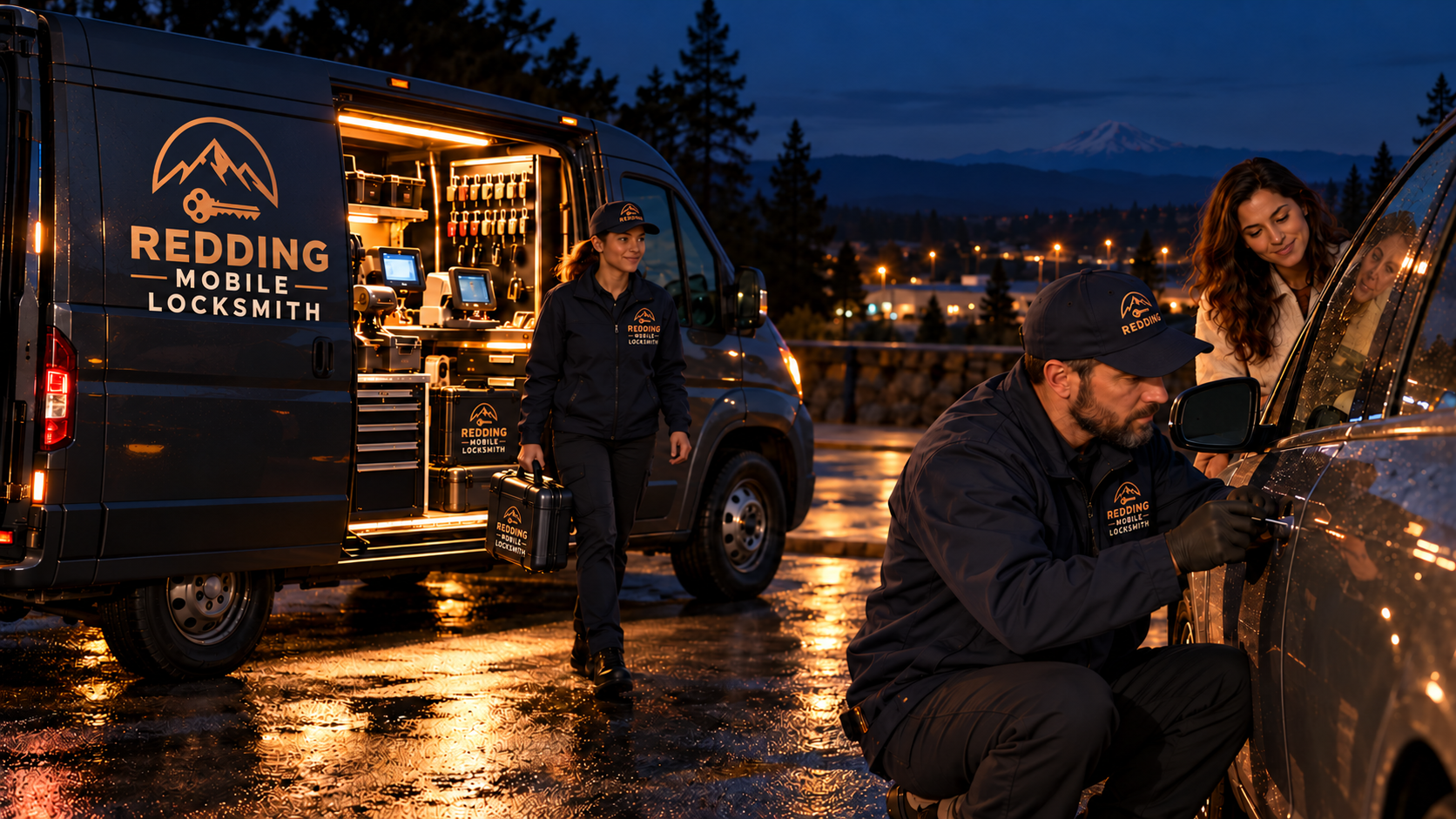
Because the hardware stays where it is, a rekey usually does not leave marks. A van that carries a pinning kit, spare pins and a key cutting machine lets this work happen at your door. You are left holding fresh keys and a home whose locks answer only to them.
- The technician checks each lock that will be rekeyed.
- The plug is removed and the old pins are taken out.
- New pins are fitted to match the new key pattern.
- The new key is tested, and the old key is tried to confirm it fails.
- Several locks can be matched so one key opens them all.
When rekeying is the right choice
Rekeying suits many common moments. You have just moved into a place and do not know who has copies. A roommate or partner has left. A key was lost or stolen. A contractor, house sitter or relative returned a key but you cannot be sure no copy exists. A former employee had access to a small office. All of these point to the same fix.
It also suits the case in which the lock is in good condition. If the cylinder turns smoothly, the bolt is solid and the door is sound, there is no reason to replace the whole lock. Rekeying keeps what works and fixes what does not. It is gentle on the door and gentle on the budget.
If you want to compare, the rekey locks service page covers the topic in general, and the page on installing new locks explains the other path. A technician can help you choose between them at your door.
When rekeying is not enough
There are cases where a rekey will not do the job. A lock that is worn, loose or damaged should be replaced, because new pins in a failing cylinder will not fix a failing cylinder. A deadbolt that is too short to reach deep into the frame, or a door with a weak strike plate, gains little from a new key pattern. The key was never the weak point.
Older or low grade hardware can also be hard to rekey. Some locks have no easy way to remove the plug, and a few are built so that rekeying costs about as much work as replacing. In those cases a technician may recommend new hardware and explain why. That is honest advice, and it is worth hearing.
Weather and time are factors too. A lock that has sat through hot dry summers and cold winters collects dust, grit and a little moisture inside the cylinder. A technician may clean and lightly lubricate the cylinder during the work, which can make an old lock feel new. That small bit of care often removes the stiffness people blame on the key itself.
If you are unsure about the state of your locks, ask for an opinion at the door. Describe the symptoms: sticking, a key that must be wiggled, a door that does not close squarely. Our page on broken lock repair covers the other side.
Older Yreka buildings and the locks they carry
Yreka has older downtown buildings and older neighborhoods, so rekeying here often touches older hardware. Some doors still carry mortise locks that sit in a pocket in the door edge. These can usually be rekeyed, although the cylinder may be a separate screw in piece that comes out through the faceplate. A technician who knows the old designs will find it.
Older doors can also hide a mixed set of locks. A front door may have one brand of deadbolt and a different latch, with a back door that differs again. You can ask to have all of them matched to one key if the hardware allows it, or leave some separate if different people need different access.
Keep an eye on the condition of the door itself. A rekeyed lock on a door that sags will still stick. If the bolt hits the frame, mention it, and read about deadbolts and door frames for the wider picture.
Key control: counting what you hand out
A rekey resets the count to zero. What you do next decides whether it stays that way. Decide who needs a key and cut only that many. Write down who has each one. When the student shares a rental, a fair rule is that every roommate gets a key and the group agrees not to copy it without telling the others.
Be cautious about keys that say Do Not Duplicate. The stamp is a request, not a lock, and copy machines at a store may ignore it. For real key control you need a restricted key system, which is a different kind of product. Ask a technician whether such a system is practical for your property.
Think about the people who come and go without living in the home. A cleaner, a dog walker, a relative who stays for a week and a contractor who needs access for a few days may each hold a key. Write down when each key was given and when it should come back. If you do not get it back, you know exactly when to consider another rekey, and you will not have to wonder.
Treat spare keys with the same care as the main ones. A key hidden under a mat or in a planter is easy to find. A better plan is to leave a key with a person you trust. Small habits like this are what keep a rekey meaningful month after month.
What to prepare before the visit
Gather the existing keys before the visit if you can. Having them on hand lets the technician test each cylinder with its current key, and some rekey methods work more smoothly that way. If a key is missing or does not fit, mention it, since it tells the technician which locks may need extra work.
Walk around the property and make a list of every lock you want to include, including side doors, a garage entry, gates, sheds and any padlocks. Note which doors you use daily and which you rarely open. A technician can plan the work and bring enough pinning supplies once they know how many cylinders are involved.
If you rent, find out who needs to approve the change. Many landlords and managers will want to know and some will want a copy of the new key. Settle that before the work, since the technician cannot decide on your behalf. If you own the property, write down who will receive new keys.
Be ready to show that you live at the address, since a technician needs to know that the person asking has the right to change the locks. Photo identification and something that ties you to the place are the usual requests. The request form is the place to describe all of this ahead of time.
After the rekey: a short checklist
When the work is done, test each lock with the new key from outside the door, with the door open and then closed. Try the deadbolt and the latch separately. Confirm that the old keys no longer work, and set them aside or dispose of them in a way you are comfortable with. Walk through with the technician if anything feels stiff.
Make a plan for spares. A key with a trusted relative or neighbor is a better safety net than a hidden one. If you share a home, decide who is responsible for replacing a lost key. A tidy plan prevents a night of locked doors and a long search for a missing copy.
Give the lock a little time to settle in. New pins sometimes feel a touch different from worn ones, and a fresh key may need a few uses before it feels smooth. If a key sticks or turns hard after a day or two, say so and have it looked at. A rekeyed lock should operate easily, and a stiff one usually has a simple cause.
If you ever lose a key, remember that rekeying works again. It is not a one time fix. It is a tool that lets you reset access whenever your situation changes. The page about night house lockouts in Yreka covers what to do if the lockout happens first.
Rekeying around Yreka and across the region
The same service is described for nearby communities, including Montague, Weed and Fort Jones, and the overview of Yreka lists the pages available in town. For vehicle needs, see vehicle key replacement in Yreka.
Redding Mobile Locksmith serves 17 communities across Shasta and Siskiyou Counties with a branded van and uniformed team. The phone line is coming soon, so for now the way to ask is the request form on the contact page.
Common questions
What is the difference between rekeying and replacing a lock?
Rekeying changes the inside of the lock so a new key works and the old key does not. The hardware stays in the door. Replacing removes the old lock and installs a new one. Rekeying is usually the gentler option when the lock is in good condition, and replacing makes sense when the lock is worn or damaged.
Will my old keys still work after a rekey?
No. The technician changes the pin lengths inside each cylinder to match a new key pattern. The old key still slides in, but it lifts the pins to the wrong heights and the plug will not turn. The technician should test the old key to confirm that it no longer works.
Can all my doors be set to one key?
Often yes, if the locks are compatible. A technician can set several cylinders to the same pattern so one key opens the front door, back door and garage entry. If different people need different access, some locks can be left on separate keys instead. Mention your preference when you send your request.
I rent my home. Can I rekey the locks myself?
Rules vary by lease and by landlord. Many tenants need permission, and some landlords handle locks themselves. Check your lease, speak with the property manager, and share what the work involves. A technician can describe the job so the decision is easy for the person responsible.
Is every lock able to be rekeyed?
Not every one. Most standard pin tumbler locks can be rekeyed, but a worn, damaged or poorly made lock may be better replaced. A technician can tell you which at the door. If the lock sticks or the door does not close well, mention it so they can advise honestly.
How do I request rekeying if the phone line is not available yet?
The phone line is coming soon, so use the request form on the contact page. List the doors and gates you want included, say whether you own or rent, and mention how many keys you want. Those details help the technician bring enough pinning supplies and key blanks.