
Home / Shasta Lake / Rekey Locks in Shasta Lake
Rekeying, Shasta Lake
Rekey Locks in Shasta Lake: Counting Doors and Planning the Key Set
A rekey gives the locks you already own a new key and takes the old keys out of play. In Shasta Lake the work starts at the kitchen table: how many locks, how many keys, and who should hold them.
What a rekey really changes
A rekey changes the inside of a lock, not the outside. The housing, the deadbolt and the handle stay on the door. What changes is the set of small pins that sit in the cylinder and decide which key can turn it.
In a common pin tumbler lock, each pin stack has to line up at one exact height before the cylinder can rotate. A technician removes the cylinder, swaps the pins for a new combination and cuts a key to match. The old key still enters the lock but no longer lifts the pins to the right place.
That is the whole idea. Anyone who held the old key, a former tenant, a past contractor or someone who simply lost a copy, is shut out the moment the work is done. The door looks the same and costs you no new hardware.
Think of it as changing the question a lock asks. The lock still asks for a key, but the answer it accepts is now different. Nothing about the door frame, the strike plate or the latch has to change. That is why a rekey is often a sensible first move for a household that is nervous about old keys but happy with its hardware.
Why Shasta Lake households ask for it
Shasta Lake sits along Interstate 5 close to Shasta Dam and the lake itself, and the housing mix is wide. Family homes, rental units and properties that change hands often all create the same question: who still has a key?
People here also move around. Some commute to Redding for work, some come in for lake weekends, and some rent out a room or a whole house to visitors. Every one of those arrangements puts a key in somebody's pocket for a while.
A rekey is the tidy answer when the number of keys in circulation has grown beyond what you can account for. It is also the calm answer after a move, a breakup, a roommate change or a lost set, when you simply want a fresh start without replacing the hardware.
Lake visitors add another layer. A home near the water may host guests, relatives or a short stay renter, and each of them may leave with a key in a bag or a glove box. If you cannot say with confidence where every key is, a rekey closes the question for good. See the wider picture for the area on the Shasta Lake coverage page.
A neighbor helping a neighbor
Picture a homeowner in Shasta Lake whose next door neighbor has just bought a house and asks for advice. The neighbor has three keys from the seller and no idea who else has copies. The homeowner says what they learned the hard way: do not wait for something to go wrong.
The two of them walk the property with a notepad. They count the front door, the back slider, the side gate and the shed. They note which locks are keyed to the same key and which are not. By the end of the walk they have a short list a locksmith can use.
This is an illustration, not a story about a real customer. It shows the strongest habit in any rekey: do the counting before you call, because the answers shape the job from the first minute.
Notice what the two neighbors did not do. They did not guess at the number of locks, and they did not assume a key fits just because it looks right. A notepad and ten calm minutes saved them from a half finished job, a second visit and a drawer full of keys that fit nothing.
Counting locks before you call
The number of cylinders drives the length of the visit. A technician can only plan well if you can say how many locks need new keying and what type each one is. A short walk around the property gives you that answer.
Do not forget the locks people overlook. Garage entry doors, side gates, mailbox locks and outbuilding padlocks are often keyed separately and sometimes forgotten until the key goes missing.
Count twice if you have acreage or older outbuildings. Padlocks that look identical can be keyed differently, and a gate lock that was never part of the house set will not be covered unless you say so. Tell the technician about every lock you want included, and ask which ones cannot be rekeyed so you can plan a replacement.
Take the notepad outside after dark as well. A lock you can find by feel in daylight may be hard to spot at night, and a gate lock hidden by a bush is easy to leave off the list. Counting in the evening light, with a flashlight, catches the doors that a daytime walk skips.
- Count every exterior door with a deadbolt or a knob lock.
- Add the garage entry door, the back slider and any side gate lock.
- Note any outbuilding, shed or storage room with a keyed lock.
- Mark which locks already share one key and which use their own.
- Write down any lock that sticks, spins loosely or feels worn.
What a key set means
A key set is the group of locks that all open with the same key. When every exterior lock on a house is keyed alike, you carry one key for the front door, the back door and the garage entry. That is simple, and for most households it is the sensible choice.
Sometimes you want separation. A rental room might get its own key. A workshop might be keyed apart from the house so a visitor can use one without the other. A good plan states this up front: which locks share a key and which stand alone.
Also think about how many copies you want cut. Two or three working keys per set is common, one for each adult and one spare held somewhere safe. Every extra copy is another key that can be lost, so cut what you will really use.
If you are unsure how to group the locks, start with how you move through your day. The doors you use together should usually share a key. The doors you want to lend out, such as a guest room or a workshop, can stand alone. This simple rule keeps the key ring short and makes it easier to spot a missing key at a glance.
One more point on key sets: keep a record of the key number or code the technician gives you, if one is used. Ask how to order extra copies later and who is allowed to request them. A clear answer now prevents a stranger from ordering a copy of your key down the road.
Planning the visit, day or night
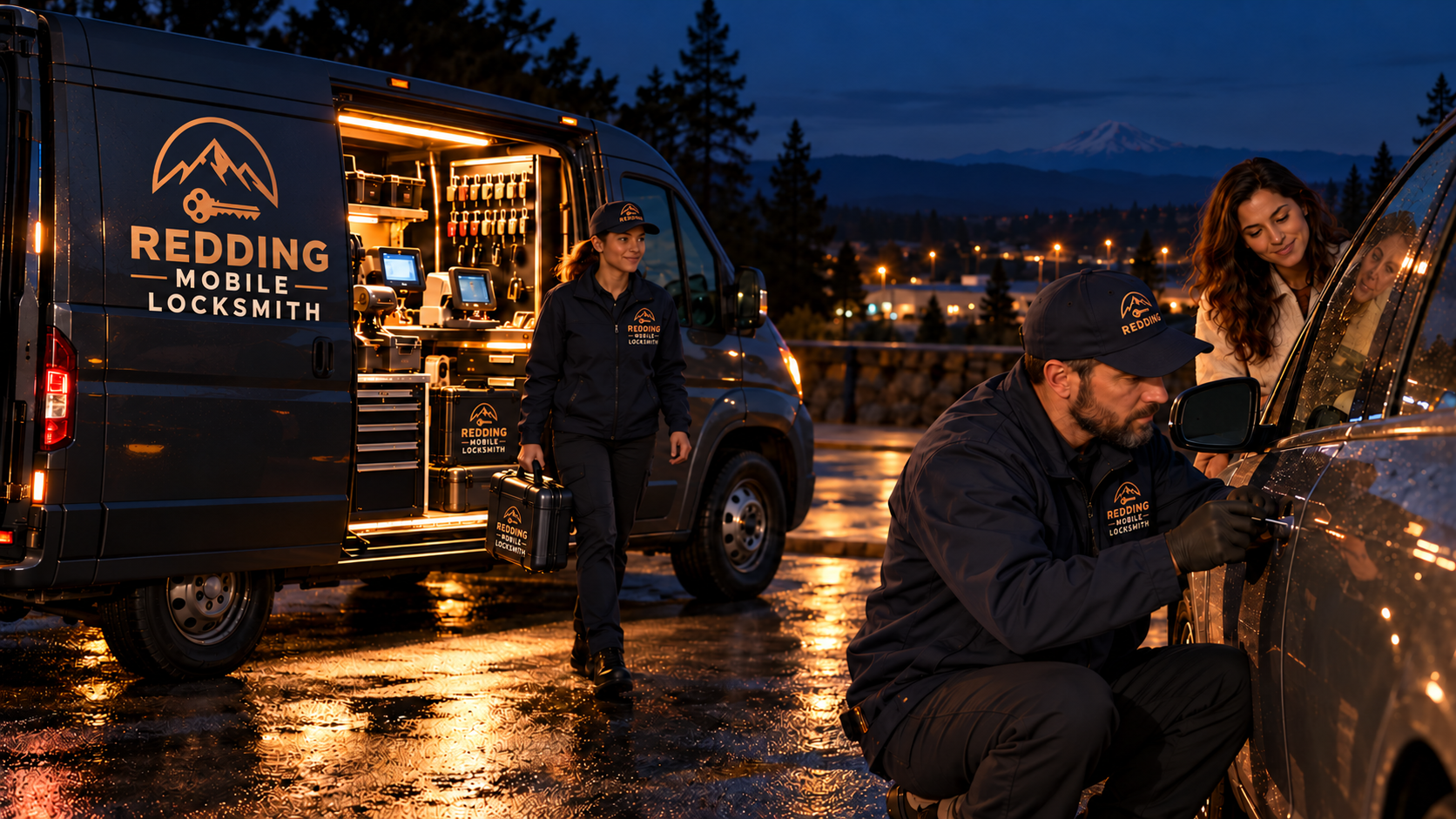
Redding Mobile Locksmith is a 24 hour mobile service, and the technician arrives in a branded van with key cutting equipment and common hardware aboard. For a rekey that matters, because the work can often be finished at your door without a trip to a shop.
A rekey is usually planned rather than urgent, so choose the time that suits you. If the reason is an emergency, such as a key lost at the lake or a former tenant who never returned theirs, say so, and the same team can treat it as a night call.
Have the current keys on hand, because the technician may need one to remove a cylinder cleanly. Clear a path to each door, move a car if it blocks the garage, and keep pets inside. These small steps keep the visit calm and orderly.
If your situation is urgent, the same team handles after hours emergencies in Shasta Lake, and a locked out customer can be helped through night house lockout service before a rekey is scheduled. Finish the emergency first, then decide on the rekey when you are rested and the facts are clear.
What happens at the door
The technician starts by checking each lock. A worn or damaged cylinder is better replaced than rekeyed, and it is much easier to find that out before the work begins than halfway through.
Then each cylinder is taken apart. The old pins come out, the new pins go in, and a key is cut for the new combination. The technician tests it in the lock several times, turning the bolt in and out, and checks that the door still latches properly when closed.
Finally you receive the new keys and try them yourself. Test every lock while the technician is still there. If a door sticks or a key feels rough, that is the moment to say so, not a week later.
Keep a short written note of what was done. Record how many cylinders were rekeyed, how many keys were cut and the date. Months from now, if a lock starts to stick or a key goes missing, that note tells you what you are dealing with and saves a lot of guessing at the door in poor light.
Rekey or replace the lock
Rekeying is the right call when the lock is in good shape and you only want to cut off old keys. It keeps the hardware you already like and avoids replacing parts that work.
Replacing makes more sense when a lock is damaged, loose in the door or simply tired. It is also the better route if you want a different style, a stronger deadbolt or a keypad. For that, see the notes on installing new locks.
Ask the technician to be plain about which path suits each door. A mixed answer is common: rekey the sturdy front deadbolt and replace the worn back door knob. You decide, with the facts in front of you.
A rekey does not make the door itself stronger, so ask for a short look at the rest. A loose strike plate, a short screw or a gap between door and frame can matter as much as the cylinder. The technician can point these out, and you can decide whether to fix them now or later. Neighbors near Redding and Anderson ask the same question.
Rental housing and shared keys
Rental units turn over, and every turnover raises the same question about old keys. Many property owners in Shasta Lake rekey between tenants so each new household starts with keys nobody else holds.
If you manage more than one unit, plan the key sets deliberately. Decide whether each unit gets its own key, whether shared spaces share a key, and where the spares are kept. Rules about what a landlord or tenant may change can vary, so check your lease and local rules before you book.
A roommate who is leaving is another common case. Rekeying after a move out is a clear, respectful way to keep a home secure without any argument about who returned what.
Whichever route you take, keep the paperwork that comes with the job. A lease, a purchase record or a note from a property manager can matter later if a question comes up about who authorized the change. Do not assume the rules are the same for every property, and ask your manager or owner when in doubt.
A property owner with more than one door to manage can benefit from writing a simple key chart. List each door, who holds a key, and the date of the last rekey. When tenants change, the chart tells you at a glance what to redo, and nothing gets missed because someone forgot a side door.
Keeping control after the job
A new key set is only as good as the habits around it. Write down who holds each key. Keep one spare in a place that is not obvious and not outside the door.
If a key is lost later, you will know exactly which locks it opens and can act. A well kept list turns a vague worry into a simple decision.
For a wider plan, read about adding a spare or replacing every key, and look at the full home locksmith page to see what else a visit can cover.
Finally, make a small habit of checking. Once a season, try every key on its lock. A key that begins to stick is warning you that it is wearing, and a spare cut from a worn key inherits the wear. Cut fresh spares from a clean original whenever you can.
Questions to settle before the technician arrives
A short list of decisions makes the visit smooth. Settle them at the table, not on the doorstep, when everyone is tired or the light is poor. The technician can then spend the time on the work rather than waiting for the household to agree.
Decide who is allowed to hold a key. Decide whether anyone should lose access, such as a former roommate or a contractor whose job is finished. Decide whether you want a spare kept with a trusted person nearby, which in a small community can be a sensible safeguard if you ever lock yourself out of your own home.
Then think about the future. If you plan to add a keypad, a smart lock or a new deadbolt later, mention it now. A technician can often suggest an order of work that avoids paying twice for the same door. The rekey locks service page explains the process in more general terms if you want to read ahead.
- Who should hold a working key, and who should not?
- Which locks share a key and which stand apart?
- How many copies do you want cut, and who keeps the spare?
- Is any lock worn enough that replacing it makes more sense?
- Do you plan other upgrades that should be done in the same visit?
Common questions
Does a rekey change the lock itself?
No. The lock stays on the door. A technician swaps the internal pins to a new combination and cuts a key to fit. The old key still goes into the lock but will not turn it, so anyone who held it can no longer get in.
How many keys should I have cut after a rekey?
Cut the number you will actually use. Two or three is common: one for each adult and one spare kept somewhere safe. Every extra copy is a key that can be lost, so avoid making more than the household needs.
Can all my exterior locks work with one key?
Usually yes. Locks can be keyed alike, so one key opens the front door, back door and garage entry. Tell the technician which locks should share a key and which should stay separate, such as a rental room or workshop.
What if one of my locks is too worn to rekey?
The technician will check each lock first. If a cylinder is damaged or loose, replacing it is the better choice. You will be told which doors suit rekeying and which need new hardware before any work is started.
Should I rekey when I move into a new house?
It is a sensible step. You cannot know how many copies of the old keys exist. A rekey cuts off every previous key and gives you a clean start while keeping the locks that are already on the doors.
How do I request a rekey in Shasta Lake?
Use the request form on the contact page and list your locks, how many keys you want and any trouble spots. The phone line is coming soon, so the form is the way to start for now.