
Two problems that look like one
A lost key and a broken key sound alike, but the repair is different. If a key has snapped, you may still have the half with the chip, or the fob may be fine and the blade damaged. If a key is gone entirely, the vehicle needs a new one made from nothing but the lock and the car's own records.
The dispatcher will ask which situation you are in. Tell them plainly. If a part of the key remains, keep it and bring it to the call. A broken blade can sometimes be used to cut a copy. A cracked fob case can sometimes be replaced while the chip inside is kept.
Either way, the goal is the same. You want a key that opens the doors, turns the ignition or starts the engine, and works every time. A technician with cutting and programming equipment on the van can often deliver that at your location.
Whether the whole key is new or only part of it, write down what you know about its history. How many keys did the car come with. Were any copied, and where. Did a family member borrow one. These small facts help the technician decide whether older keys should be removed from the vehicle's memory once the new one is in place.
A retiree living alone
Picture a retiree in Weed who lives alone and has one car key left. The spare vanished years ago in a move, and today the key has snapped in the ignition or slipped out of a coat. There is no one at home to ask for help, and a trip to a distant dealer is more than the day allows.
For someone in this position, the details matter. The call should be unhurried. The dispatcher should confirm who is arriving. Ownership papers should be easy to find. And a plain explanation of the work should come before any work begins, in words that need no translation.
If this sounds like you or a relative, ask a trusted friend or neighbor to be present when the technician arrives. A second person at the door is not a sign of distrust. It is simply a good habit at night, and it makes the whole visit calmer for everyone, including the technician.
Ask for the time to be taken. A key is a small object that controls an expensive machine, and there is no reason to be hurried through the work. A technician who is patient with questions is a technician worth keeping. If something is unclear, ask again until it is plain.
Keep a written note of what was agreed. Write down the work to be done and what you were told about the limits of the key. If a relative helps you with paperwork later, the note will save a good deal of confusion.
Different ways a key can fail
Keys fail in several ways, and the cause shapes the cure. A key that has snapped in the lock leaves a piece that must be removed before anything else. A key that is bent will not enter the cylinder smoothly. A key that is worn smooth will turn only with effort, and sometimes not at all.
A fob can fail even when the key blade is perfect. The battery may be flat, the case may be cracked or the circuit board inside may have been damaged by water. A flat battery is the simplest case and the easiest to put right. A damaged board means the fob must be replaced and programmed again.
A chip can also fail. If the car starts and then stalls, or the dashboard shows a key symbol that stays lit, the chip may not be reading properly. This is rarer, but it explains why a key that looks fine will not start a vehicle. The technician can test the chip and tell you which case you have.
If a key breaks off in the ignition or a door lock, stop turning it. Extra force can push the broken piece deeper. Describe what happened to the dispatcher, and read the guides on a key broken off in the ignition and a key broken off in a door lock for the sensible steps.
What kind of key does your vehicle use
Car keys fall into a few families. An older vehicle may use a plain metal key with no chip. A vehicle from the late nineties onward often uses a key with a transponder chip, which the car reads before the engine will start. Newer vehicles may use a smart key, which stays in a pocket, and a push button start.
Each family needs different equipment. A plain key is cut on a machine. A transponder key is cut and then programmed so that the vehicle accepts the chip. A smart key is programmed to the car's computer and often has an emergency blade hidden inside. A technician needs to know the kind before arriving.
If you are not sure, look at your remaining key. A thick plastic head often hides a chip. A key with buttons is a remote or a fob. A key with no head at all is usually a plain one. Read more on the transponder programming page, or in the guide on transponder keys explained for night emergencies.
What to gather before the technician arrives
A new key is made only for the person who owns the vehicle, so the technician will ask for proof. Gather your driver license and a document that ties you to the car. A registration or title is the usual choice. An insurance card can help. If you cannot find any of these, tell the dispatcher at once.
Write down the make, model and year of the vehicle, and the vehicle identification number if you can read it. The number is often visible through the windshield at the driver side base of the glass. A photo from outside is enough. Do not damage the car or climb on it to see it.
Collect any key you still have, including broken pieces, old keys from the same car and a fob. Even a key that no longer works can help the technician by showing the cut. Place everything in one spot and keep it dry. The guide on proof of ownership for key replacement explains the reasoning in more detail.
- Photo identification such as a driver license.
- A registration, title or insurance card for the vehicle.
- The make, model, year and color of the vehicle.
- The vehicle identification number, if you can read it safely.
- Any key, fob or broken piece you still have.
How a new key is cut and programmed
Cutting comes first. The technician uses the vehicle's code or a remaining key to cut a blade that matches the lock. Modern cutting machines are accurate, and a good cut turns smoothly in the door and the ignition. A rough cut can wear the lock, so the technician checks it before moving on.
Programming comes second. The vehicle's computer must learn the new key. The technician connects equipment to the car, tells it to accept a new chip, and then tests the key in the ignition. For some vehicles, older keys must be deleted from memory at the same time, which is a security benefit if a key was lost.
Testing comes last. Every function is tried: door lock and unlock, trunk, remote buttons, ignition, push button start if fitted. You should see the key work before it is accepted. If something does not work, say so, and the technician will adjust it or explain the limits of that model.
Why a lost key is more than a lost key
A lost key is not only an inconvenience. If it was lost near home or in a place where someone could identify the car, it is a possible security risk. A person who finds a key can sometimes try it on a vehicle that looks like the one they found.
The sensible response is to delete the old key from the vehicle's memory during programming. This means the lost key will no longer start the engine, even if it still opens the door. The technician can tell you whether this is possible for your model.
If the key was stolen, not lost, tell the dispatcher. The advice is different, and the technician may suggest additional steps. The guide on a lost key and vehicle security reprogramming questions goes into the thinking, and the page on stolen keys and how to protect your vehicle covers the next steps.
Whatever happened, write down when and where you last had the key. It may help you retrace your steps, and it tells the technician how serious the risk might be. A key lost in your own kitchen is a different matter from a key lost in a parking lot far from home.
What it means to be in Weed
Weed sits north of Mount Shasta where Interstate 5 meets Highway 97, in open and often windy country. A mobile service matters here. Travel to a dealer can be long, and a vehicle with no working key cannot be driven. A technician who comes to you removes that problem.
Mobile service also helps people who are working or traveling. A driver on the highway, a student near the college, or an employee at a local business can have a key made without leaving the spot where the vehicle sits. The van carries key cutting and programming equipment and common hardware.
Not every key can be made on the spot. A few models need parts or codes that are not carried on a van. The technician will tell you honestly if that is the case, and will explain what the sensible next step is. Honesty about limits is part of good service.
Weather plays a part. Winter in the higher country can be cold enough to make a battery sluggish and a lock stiff. Summer can be hot and dry, and plastic key heads grow brittle with age. Mention the conditions on the call, since a technician working outdoors in the wind will plan for them.
Think about where the vehicle sits. A car in a garage is easy to work on. A car at the edge of a lot or on a roadside needs a safe place for the van and a lit area for the technician to work. Tell the dispatcher what the surroundings are like so the visit can be planned around them.
Safety and comfort for someone waiting alone
If you are alone at night, pick a lit and safe place to wait. A parked car is a better room than a dark yard. If you are at home, wait inside with the door locked and the porch light on. Tell the dispatcher where you are, and say if you would prefer to meet the technician at the door.
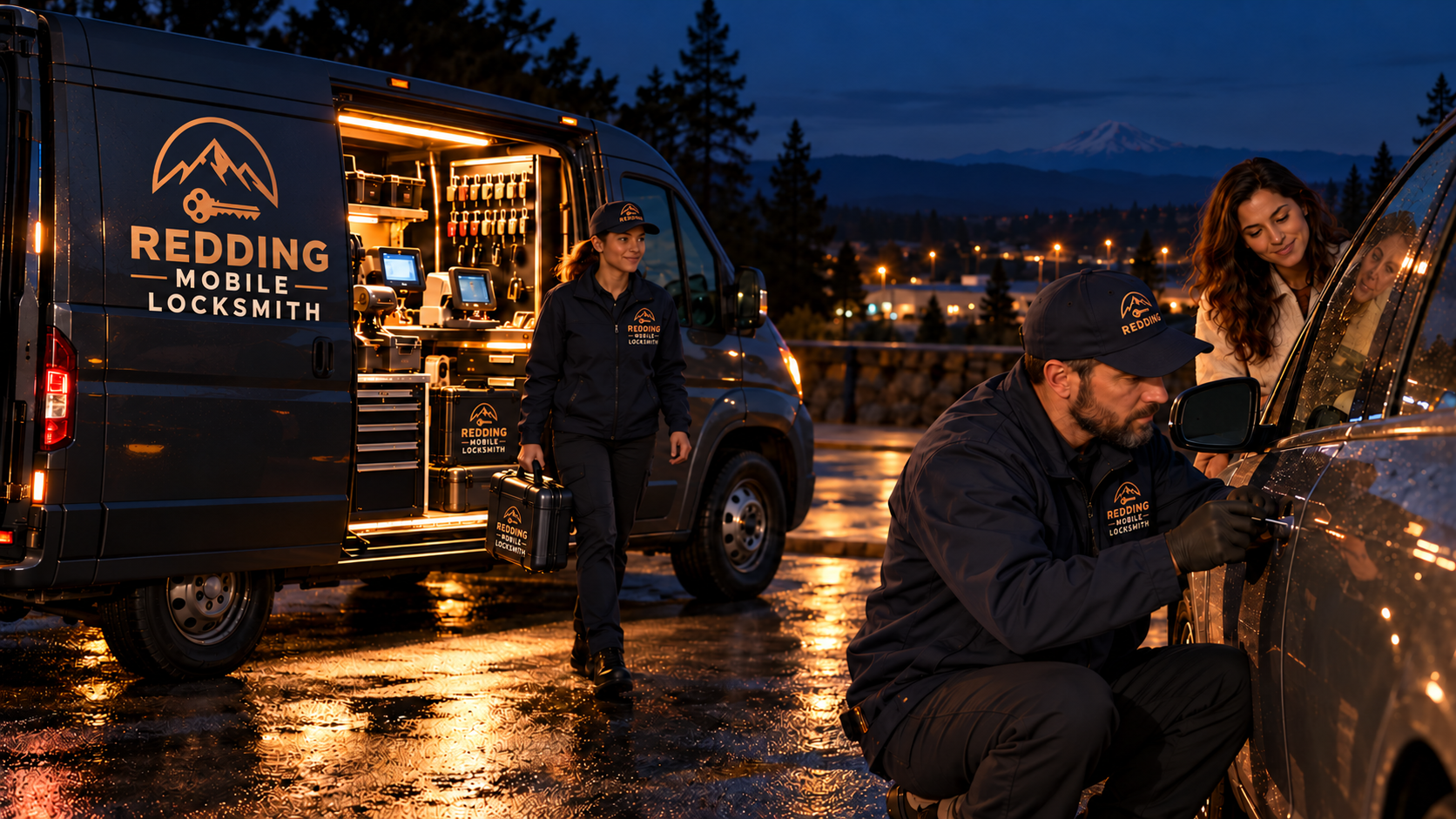
When the van arrives, look at the vehicle and the uniform. A branded van and a uniformed technician are there so that you can recognise who has come. Ask questions if anything does not match what the dispatcher said. A legitimate technician will not mind.
Do not feel pressed. You can ask for a plain explanation of the work before it starts, and you can decline anything that you do not understand. The guide on confirming who is arriving at your door gives a short checklist that you can print or write down.
Spare keys and habits that prevent a repeat
The right time to make a spare is before you need one. A technician who is already programming a key can often add a second at little additional effort. A spare kept in a safe place at home turns the next lost key into a minor event.
Think about where the spare should live. A hook inside the house, a locked drawer or a trusted relative are all better than a hiding place on the car. Tell one person where it is. For someone who lives alone, a relative or friend who can reach the key is a sensible backup.
Think also about wear. A key that has been used for years can wear down, and a worn key can fail without warning. If yours feels loose in the lock or needs a jiggle to turn, ask about a fresh copy. The guide on worn key symptoms lists what to watch for.
More help in Weed and nearby
This page is part of the local set for Weed. The same town has notes on a night car lockout, an after hours emergency and rekeying locks. The Weed coverage page gives the overview.
For the full service, read the vehicle key replacement page. Neighbors in Mount Shasta and Montague have pages of their own.
Our phone line is coming soon. For now, use the request form. Give your location, the vehicle, and what you still have of the key. If anyone is in danger, call emergency services first.
Common questions
Can a new key be made if I have lost every key?
In many cases yes. The technician can work from the vehicle's identification number and the lock itself, then cut and program a new key. Some models need parts or codes that a van does not carry, and the technician will say so. Bring proof of ownership either way.
What proof of ownership will be needed?
Usually photo identification and a document that ties you to the vehicle, such as a registration, title or insurance card. A photo on your phone may help if the papers are in the car. Rules vary, so ask the dispatcher what is acceptable before the van arrives.
Will the old key stop working once a new one is made?
Often it can, depending on the vehicle. During programming the technician may be able to delete older keys from the car's memory, so a lost key no longer starts the engine. Ask about this if your key was lost or stolen. Not every model allows it.
I have one working key. Should I still call?
Yes, and sooner is better. Making a copy from a working key is simpler than starting from nothing. A spare also protects you from the next loss. Bring the working key, and ask the technician to cut and program a second one while the van is there.
I live alone. Is it safe to have a technician come at night?
It can be, with sensible habits. Wait inside with the door locked, check the uniform and the branded van before you open the door, and ask for identification. Having a trusted friend or neighbor present is a good idea. You can decline anything you are not comfortable with.
What if my key is a smart key with push button start?
These can often be replaced too. The technician programs a new smart key to the vehicle's computer and tests every function. Tell the dispatcher the make, model and year so the right equipment is brought. Some models have limits, and you will be told honestly what can be done.